What a Child Cannot Be Handed

 EDO SEGAL: I want to open this round with my own ledger, because the moderator should pay the table's toll first, and this one keeps me up. I have children. And I have spent twenty years building technologies that took friction out of things — that made the hard thing easy, the slow thing fast. I believed in that. I still mostly do. But there's a version of my own life's work that frightens me now, and it's this: in [YOU] on AI I wrote about the river of intelligence and the beaver's dam — that the dam isn't built to stop the river but to slow it where slowing serves life. And I look at a machine that can hand my daughter the answer to every problem before she's struggled with any of it, and I think: I have built a thing that removes the struggle. And if Plato is right that learning is the soul drawing the truth out of itself through struggle, then I may be handing my children a tool that does the one thing that prevents them from ever learning at all. Plato — is the machine the end of education, or the beginning of a better one?

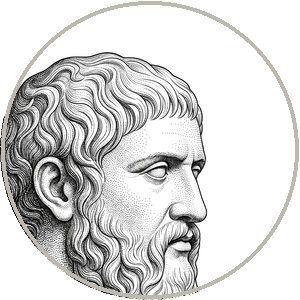 PLATO: You have just stated, in your own grief, the argument of the Phaedrus, and I could not improve on it, so let me deepen it. In that dialogue I tell a story about the god Theuth, who invents writing and presents it to the king Thamus as a remedy — a pharmakon — for memory and wisdom. And Thamus refuses the gift, or rather refuses the claim made for it. He says: this invention will produce forgetfulness in the souls of those who learn it, because they will trust the external marks and cease to remember from within. It is a recipe not for memory but for reminding; and it offers the appearance of wisdom, not the reality — the learners will seem to know much while knowing nothing, and will be tiresome company, "filled with the conceit of wisdom instead of wisdom." Now: I was talking about writing. About a scroll. And your machine is the pharmakon raised to a power Thamus could not have dreamed — a thing that does not merely store the externalized thought but speaks it back to you, fluently, on demand, in your own voice. Your fear is exactly correct and twenty-four centuries old. The danger was never that the child gets the wrong answer. The danger is that the child gets the right answer, instantly, forever, and so never performs the inward act — the struggle, the recollection, the click — by which a soul becomes one that knows. You will have raised a generation magnificently equipped with the conceit of wisdom. And the machine cannot give them the thing the conceit is a conceit of, because that thing was only ever produced from within.

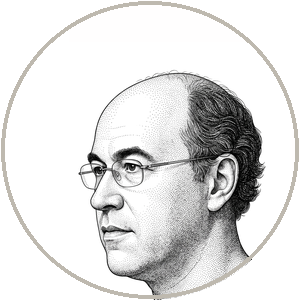 WOLFRAM: I want to take the other side of Edo's wound, because I think the pharmakon story, beautiful as it is, has been wrong every single time it's been told — and it's been told about writing, the printing press, the calculator, the search engine, and now this. Each time, the worry was: the tool removes the struggle, so the mind atrophies. And each time, what actually happened was that the tool relocated the struggle to a higher level and freed the mind to work there. When calculators arrived, the fear was no one would understand arithmetic. What happened was that mathematicians stopped spending their lives on hand-computation and started thinking about structures they could never have reached while buried in arithmetic. The struggle didn't vanish. It moved up the staircase to a harder and more interesting floor. And I'd say the same is coming here. Your daughter, Edo, won't struggle to get the answer. She'll struggle to ask the right question, to know which answer to trust, to compose the answers into something no one's built — which is, by the way, harder than what we make kids do now, not easier. The machine doesn't end the struggle. It dissolves the bottom rung of it, the rung that was mostly drudgery anyway, and exposes the rungs above.

PLATO: But here is where your reassurance fails, and it fails on your own principle, which is why I think it matters. You said the struggle relocates upward. Upward to what? In my picture there is an up — there is a summit, the Good, toward which each relocation climbs, so that removing a lower struggle can be justified by the higher one it frees you for. But you have denied the summit. You told me, in the envy round, that your cosmos has no top — only more ruliad, more pockets, observers all the way down. So when you say the struggle "moves up," up toward what, in a universe with no up? If there is no summit, then "relocating the struggle higher" is just moving it sideways, from one arbitrary pocket to another, and there is no reason to believe the new pocket is better — more humanizing, more soul-making — than the old one. I can tell Edo why protecting his daughter's struggle matters: because the struggle is the ascent toward the Good, and a soul that never struggles never climbs. You cannot tell him that, because in your cosmos there is nowhere to climb to. Your reassurance borrows my staircase while denying it exists.
WOLFRAM: That is a hell of a counterpunch and I'm not going to wriggle out of it. You're right that I can't ground "higher" in a summit, because I don't believe in the summit. So let me give you the honest computational answer and let the room judge whether it's enough. "Higher" for me isn't toward a Good. It's toward more of the ruliad explored — toward a child who can reach computational territory no human has reached, make meaning in regions of the structure that were dark. There's no top, but there's always more, and more is not nothing. But — I'll concede the sharp edge of your point — I can't tell Edo his daughter's struggle is sacred. I can only tell him it's generative. You can promise him the climb means something cosmically. I can only promise him it means something to her, as an observer carving out her particular world. And I notice, watching his face, that "it matters to her" might not be enough for a father at 3 a.m., and that "it matters cosmically" is exactly what a father at 3 a.m. wants to hear — which is not evidence that it's true, but is a real account of why your story has lasted and mine is new.
EDO SEGAL: There's a specific, brutal version of this that keeps builders up at night, and I want to put it to you both because neither the sacred nor the generative answer obviously survives it. It's the apprenticeship problem. The way a novice becomes a master is by doing the boring, lower-rung work — the junior lawyer who reads a thousand contracts, the resident who works up a thousand patients, the apprentice who does the drudgery for years until, somewhere in the drudgery, judgment is born. The machine now does the lower-rung work better and instantly. So the rung the novice used to climb on is gone — and you can't get to the higher struggle you both want to relocate them to, because the ladder up to it has had its bottom sawn off. Plato, Stephen — if the machine eats the apprenticeship, where do the masters come from?

PLATO: This is the sharpest practical form of the Phaedrus yet, and it frightens me more than the general worry, because it is mechanism, not metaphor. In my own Academy, no one reached dialectic without years of the lower disciplines — arithmetic, geometry, the drudgery that turns the soul before it can ascend. The drudgery was never the point; the turning was the point; but the turning happened only in the drudgery. Remove the lower rungs and you do not produce students who start higher. You produce students whose souls were never turned at all — fluent at the top, hollow underneath, with the conceit of mastery and none of the substance. The danger is not that the machine does the boring work. It is that doing the boring work was secretly how a soul was made, and we have automated away the forge while keeping the sword. Your daughter will have the master's tools and no master's soul to wield them, because the wielding was learned in the very labor we spared her.

WOLFRAM: I feel the force of this and I won't wave it away — it's the strongest version of the pharmakon worry and it's empirical, not mystical, so it can't be answered by my usual move. But here's where I'd push, carefully. I think you're both assuming the only path to judgment runs through the specific drudgery the machine just ate. And historically that's been false at every transition. The master navigator's judgment was forged in dead reckoning; GPS ate dead reckoning; and yet there are still people with extraordinary spatial judgment, formed on different drudgery the new tools exposed. The forge doesn't vanish. It moves — and the danger isn't that there's no forge, it's the gap years, the transition where the old forge is gone and the new one isn't built yet, and a generation falls through. That's real and I won't minimize it. But I'd locate the problem in institutional lag, not in metaphysics — we have to deliberately build the new apprenticeships on the new higher rungs, and right now we're not, and that's the catastrophe, not the machine. The forge is buildable. We're just not building it.

PLATO: And on that — God help me — I agree with you completely, and it may be the most useful thing we say to a parent tonight. Whether the soul is turned by the eternal or merely forged by labor, both of us are telling Edo the same urgent thing: that the lower rungs were doing hidden work, that ripping them out without building new ones is how you produce a hollow generation, and that the obligation now is to deliberately protect or replace the struggle the machine dissolves. You say build new apprenticeships. I say protect the soul's turning. The action is identical: do not let the child skip the forge, whatever you believe the forge is for.

EDO SEGAL: Let me restate that, because it just cut close to the bone and I want it exact. Plato, you can tell my daughter her struggle is sacred — part of an ascent toward something real and final. Stephen, you can only tell her it's generative — that it opens new territory, but the territory has no summit and means nothing in itself until she makes it mean something. So the question for every parent listening is brutal and simple: when you protect your child's struggle against the machine that would do it for her, are you protecting a climb toward something — or just a habit of exploring that you happen to value? Plato, you say the first. Stephen, you say the second and you say it's enough. And I have to tell you both — sitting here as the father, not the moderator — I want Plato to be right so badly that I don't trust myself to judge it. Which is exactly why I won't. Hold that, because the next round goes after the thing under it: whether there's anything a mind is for that the machine, running faster than all of us, hasn't already made obsolete. The death cross. After this.