Intelligence Is Not Special

 EDO SEGAL: Stephen, I want to put your most deflationary claim on the table, because it's the one that does the most damage to the human story, and you say it with a smile that makes it worse. Intelligence is not special. Say what you mean. And Plato — I'm going to ask you to defend human exceptionalism against a man who thinks it's the last superstition, so get ready.

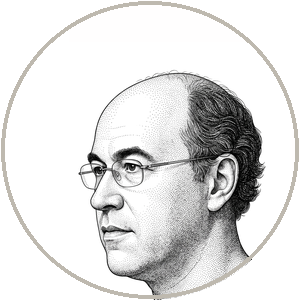 WOLFRAM: Intelligence is not special. I mean it almost literally. For most of history we've assumed that human-level thinking is a rare, exalted, perhaps unique achievement of the cosmos — the thing that sets us apart. My work says the opposite. The Principle of Computational Equivalence holds that once a system passes a very low threshold of complexity — and almost everything does, rule 30 does, a fluid does, a brain does — it is computationally equivalent: capable, in principle, of the same sophistication of computation as anything else. There is no special high ground that only brains reach. The weather is doing computation as sophisticated as your thoughts. We don't call it intelligent because it isn't aligned with our purposes and doesn't narrate itself — but the underlying computational sophistication is the same. So "intelligence" isn't a rare summit a few systems climb. It's common as dirt, old as the universe, running everywhere, and what we call human intelligence is just one particular, parochial, self-narrating sample of it. The machine isn't approaching some sacred human capacity from below. It was always already in the same computational class. It just got organized in a way that talks to us.
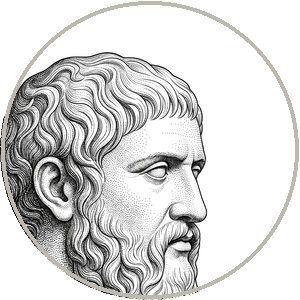 PLATO: Then I will defend the summit, and I will do it not with sentiment but with a question you cannot answer from inside your own principle. You say the weather computes as sophisticatedly as my thought, and that the only difference is that my thought is "aligned with purposes" and "narrates itself." But notice what you have just smuggled in as a triviality — purpose, and self-knowledge. Those are not small leftover features. They are the whole of what I have ever meant by mind. The weather computes; it does not aim at the good; it does not know that it computes; it cannot be mistaken, because it asserts nothing; it cannot ascend, because it desires nothing. You have defined intelligence as raw computational sophistication, found that sophistication everywhere, and concluded mind is everywhere — but you reached that conclusion only by deleting from the definition of mind everything that ever made it mind. Purpose. Eros — the reaching toward what is good and beautiful, which I have always said is the engine of every ascent. Self-knowledge. The capacity to be wrong and to care that one is wrong. You have not shown that intelligence is common. You have shown that computation is common, which I happily grant — and then called computation "intelligence" so you could announce the death of the special. The weather is not climbing toward anything. My soul is. That difference is not parochial. It is the only thing that was ever at issue.
WOLFRAM: Okay. This is the best defense of human specialness I've heard, and I want to meet it head-on rather than dodge into "but it's all computation." You say purpose and eros and self-knowledge are the whole of mind, and that the weather has none of them. Fine — but here's my problem. Those things, in you, are also computations. Your eros — your reaching toward the good — is a process running in a brain, a very sophisticated one, but a process, and by my principle it's in the same computational class as the weather's. So when you say "my soul climbs toward the Good and the weather doesn't," I'd translate: "my brain runs a computation that represents a goal and steers toward it, and the weather's doesn't represent goals." That's a real difference! But it's a difference in what the computation is about, not a difference in kind — and crucially, it's a difference a machine can have, because we can build systems that represent goals and steer toward them. So your "only thing at issue" — purpose, self-knowledge, the capacity to be wrong and care — those aren't a moat around the human. They're features of certain computations, and we're building machines with them right now. You haven't found the human summit. You've found a configuration, and configurations can be copied.
PLATO: And here we reach the deepest place we have stood tonight, so let me stand in it without flinching. You say my eros is "just a computation that represents a goal and steers toward it." But a goal represented is not a goal loved. Your thermostat represents a goal and steers toward it; it does not yearn. Eros, in the Symposium, is not the representation of the beautiful — it is the lack of it, felt, that drives the soul to climb the ladder from a single beautiful body to all beautiful bodies to beautiful souls to beautiful laws and knowledge and at last to Beauty itself, the Form, beheld. That climb is powered by want, by a felt insufficiency that aims at a real summit. Can you build a machine that wants — not that optimizes a number, but that lacks and aches toward the good? If you can, I will grant you have built a soul, and I will mean it. But I think you will find that "represents a goal" and "is in erotic want of the Good" are separated by exactly the gap between doxa and epistēmē, between the shadow and the sun — the same gap, every time, wearing a different coat. You keep crossing it by redescription. I keep insisting the gap is real, and that the machine, however fast it runs, is always on the near side of it.
EDO SEGAL: I'm going to break my own rule and not restate that, because I don't think I can improve it and I don't want to flatten it. The reader should sit in it. What I'll mark instead is the shape of the whole night, now visible: every round, Stephen takes one of Plato's sacred distinctions — knowing versus seeming, essence versus accident, eros versus optimization — and redescribes it as a difference in computation rather than a difference in kind. And every round, Plato says: redescription is not refutation; the gap you keep crossing by renaming it is the only thing I ever cared about. That's the engine of this debate. It will run until the lights go out. And the next chapter hands the floor entirely to the two of you — I nearly leave the room. The Crossing. But first, one more round I run myself, because there's a question about the Good and the machine's objective that I cannot let pass to the reader unasked. After this.