Can the New Be Computed?

 EDO SEGAL: Henri, in Creative Evolution you wrote a line I've never been able to shake: "duration means invention, the creation of forms, the continual elaboration of the absolutely new." You meant it literally — that time is the process by which possibilities that did not previously exist come into being, that each moment adds something to the universe that was not contained, even in principle, in what came before. Set that against a machine trained on the entire archive of what humans have already written. Most people in our audience feel these systems are creative — they produce things no one composed. Take that feeling apart for me. What is the machine doing when it "creates," and why isn't it creation?

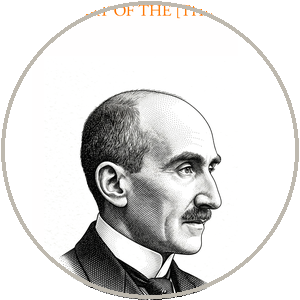 BERGSON: It is interpolating, and the word is exact, not dismissive. A generative model has learned a distribution — a vast statistical structure summarizing the regularities in everything it was fed. To generate is to sample from that structure: to produce a new point that is consistent with it, that fits, that belongs to the space the training already defined. The novelty is real in one sense — the exact arrangement never appeared before — and unreal in the sense that matters, because it lies entirely within boundaries fixed in advance. The model cannot produce what its distribution excludes; that is what it means to have learned a distribution. And this is precisely the "novelty" I denied was novelty at all. I drew the distinction with great care, and it is the crux: we imagine the possible precedes the real, that before a thing exists its possibility waits to be actualized, and that creation is selecting one possibility from a pre-existing menu. I reversed it. The possible is created backward, by the real — once a genuinely new thing exists, we project its possibility into the past and tell ourselves it was always there waiting. Before the real new thing, there was no possibility of it. Creation does not realize a possible; it makes the real and, retroactively, the possible, at once. The machine does the opposite. It operates over a space of possibilities fixed before it ran, and it can only ever actualize what that space already contains. It is, in the most exact terms I can give you, a possibility-realizing engine — which is to say a machine that, by its very design, can never create.

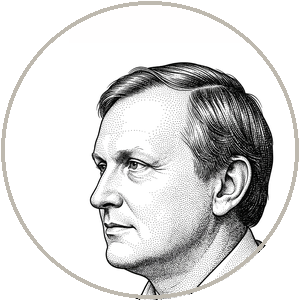 MORAVEC: May I press, because I think this is where your beautiful theory convicts the wrong defendant?
EDO SEGAL: Press.

MORAVEC: Your argument proves too much, because it convicts human creators of the same crime. The painter learned from a tradition; she absorbed a distribution — the styles, the moves, the inherited forms — and she produces variations within and against it. The composer studied a thousand scores. If we deny the machine creation because it only recombines its training, we have to deny it to the apprentice and the working novelist too. Surprise is the only evidence you ever actually have of novelty, in machine or human, and the machine surprises its own makers — it has found moves in games and structures in molecules that no human had found and arguably could not have. So either those count as new, and the machine creates, or they don't, and neither does the human who'd have been credited with genius for the same move. You can't draw the line through the middle of the same act and put us on the bright side.

BERGSON: I will not pretend that isn't the strongest objection, because it is, and the honest reply costs me something. Here is the difference, and it is not in the combinatorics — you're right that the combinatorics may be the same. It is in what the recombination issues from. The human creator, at her rare height, is a center of real duration: her past is not stored as a static distribution equally available to every query — it is lived, gathered, interpenetrating, pressing as an indivisible whole into the act, so that what she makes carries the irreducible weight of one particular life advancing into an open future. The work could only have come from this person at this moment. The machine's "past" is a frozen snapshot, identical across every query, lived by no one, weighted by no life. For me the difference between creation and recombination is not the move; it is the duration behind the move. Creation is duration making itself visible — the surge of the new from a living source. And the machine has no living source. It has a corpse of the collective past, queried.

MORAVEC: But Henri — you've just relocated the whole question onto "duration" again, which is the thing in dispute. If duration is real and special, your distinction holds. If duration is itself a story the brain tells — if the human creator is also, underneath, a learned distribution being sampled, with a richer training set and a body for sensors — then the difference collapses to architecture and scale, and the machine is on a gradient with us, not across a chasm. You keep winning by assuming the premise. And I'd add: my own paradox cuts your way here, which I'll admit freely. The deepest competence — the painter's hand, the surgeon's feel — lives in the sensorimotor layer that text barely touches, refined over a billion years of evolution. A model trained only on words has the thin recent veneer and not the deep base. So I'll grant you that today's text machines are missing something enormous. But I locate the missing thing in the training data and the body, not in a metaphysical flow. Give the system a body, let it grapple with a resisting world, and the gradient keeps closing. There's no chasm. There's a steep and shrinking slope.

EDO SEGAL: I want to slow down on something Hans just did, because it's generous and it matters. He conceded that today's systems are missing something enormous — the embodied base, the billion years. Henri, he's handing you the embodied understanding point, the thing your whole tradition fought for. Do you take the concession, or do you think it's a Trojan horse?

BERGSON: I take it, and I name the horse inside it. Hans concedes the machine lacks the lived, embodied base — and then promises to supply it by giving the machine a body and a resisting world. But notice what "supply it" means in his mouth. He means acquire the same external competence by a different route — learn from sensorimotor data what could not be learned from text. That gets him the from-without of embodiment: the behaviors, the grip, the catch. It does not get him the from-within, the lived grappling, the body whose integrity is genuinely at stake, the duration in which the grappling matters to someone. He will build a machine that copes, in Hubert Dreyfus's word, and copes well — and it will cope the way the surgeon's replacement neuron fires: producing the right outputs with, as far as I can tell, no one home for whom the coping is a life. The horse is the word "supply." You cannot supply a duration. You can only supply its trace.

MORAVEC: And around we go — but notice we've gone around to a narrower circle each time, which is how I know we're making progress. We started at "the machine can't create." We're now at "the machine can produce every external mark of creation, embodied and grounded, and the only thing it lacks is a lived interior that by Henri's own account makes no observable difference." That residue keeps shrinking, Henri. Every round, the thing only-you-can-see gets smaller and harder to point at, and the thing the machine can match gets larger. At some point a residue that small, that undetectable, that inert — I'm allowed to wonder whether it was ever there at all, in either of us.

BERGSON: Or the residue is small the way the center of a thing is small — undetectable from outside not because it is nearly nothing but because it is the one thing that is never outside. You measure the residue shrinking. I say you are measuring the husk growing thicker around a kernel your instruments were built never to find. We will not settle it by who can make the residue look smaller. We will settle it — if we ever do — by deciding whether the husk was ever the thing.

EDO SEGAL: Hold there, because you've just handed me the seam of the whole night in a single image — the husk and the kernel — and we'll need it on a higher floor. The next round leaves the metaphysics for the body, where Hans is most at home and most surprising: his paradox, the strange fact that the machine masters the scholar's mind and fails at the toddler's hands, and what that inversion tells us about whether intelligence was ever the thing we thought it was.