The Toddler's Hands

 EDO SEGAL: Hans, this is your room, so let me build it for the reader and then hand you the floor. You spent your youth inside a failure — the Stanford Cart, five hours to cross a room, stopping every meter to recompute the world from a single camera, and still bumping into things. Out of that came the most counterintuitive idea in the field. Tell it plainly, and then I want to ask both of you something I genuinely don't know the answer to: whether your paradox is Henri's friend or his enemy.

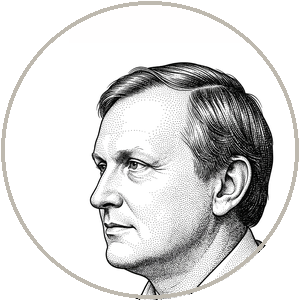 MORAVEC: Plainly, then. We rank tasks by how impressive they feel — chess and calculus and the bar exam at the top, walking across a room near the bottom, beneath notice. That ranking is exactly backwards as a measure of how hard the tasks are for a machine. I wrote it in Mind Children: it is comparatively easy to make computers show adult-level performance on intelligence tests, and difficult or impossible to give them the skills of a one-year-old in perception and mobility. The grandmaster's machine can't pick up the pieces. The system that passes the bar can't fold the laundry. And the reason is evolutionary: encoded in the old sensory and motor parts of the brain is a billion years of experience about the world and how to survive in it, and reasoning — abstract thought — is a thin recent veneer on top, maybe a hundred thousand years old, effective only because that vast older base holds it up. The skills that feel effortless are the ones evolution spent eons perfecting, which is exactly why they run beneath awareness and resist being written down as rules. The skills that feel hard are recent and shallow, which is why we can introspect them and code them. So machines conquer the summit first and the base last. And look around — they did. The large language model writes your essay and cannot do your dishes. I called the bottom of that mountain in 1980. We are standing on it.

EDO SEGAL: Henri, here's what I can't work out. Hans just said the deepest intelligence is buried in a billion years of embodied, sensorimotor wisdom that can't be put into words or rules — that the body knows what the reasoning mind can't say. That sounds like you. The tacit, the lived, the from-within that outruns its own articulation. Is Moravec's paradox the best empirical evidence your philosophy ever got — or is it a wolf in your clothing?

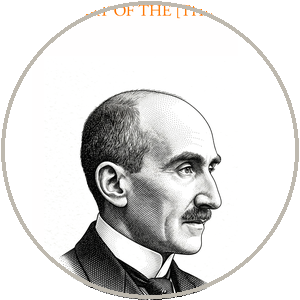 BERGSON: It is the most extraordinary vindication, and I will take it before I quarrel with what he does next. For a century I was called a mystic for saying that the intellect — the faculty that measures, divides, and writes down rules — was a latecomer, shaped by evolution for handling solid bodies, and that beneath it lay a deeper knowing that could not be reduced to rules because it was lived rather than represented. Hans, building robots that failed, discovered the same thing in hardware and gave it a number: the rule-following part is cheap, the lived embodied competence is nearly unreachable, and the reason is that the second was refined over geological time and runs beneath all articulation. That is my intuition-against-intellect distinction confirmed by a man who never read me and wouldn't have liked me. The expert who feels the move before she can name it, the native speaker who knows the sentence is wrong without knowing the rule — that knowing is gained by coinciding with a domain from inside, through immersion, and it outruns every symbol. The whole early history of his field is the story of crashing into that wall. I named the wall before they hit it.

MORAVEC: I'll accept the alliance and then collect the toll, because the paradox cuts toward me too. Yes — the deep competence is buried, wordless, evolved. But here is what I take from that and you don't: it is still computation. The billion years of sensorimotor wisdom is not a magic flow; it is an enormous, tuned, inscrutable processing system that evolution installed and consciousness never sees. It's hard to copy not because it's non-mechanical but because it's vast and undocumented — there are no rules to transcribe, so we have to learn it from data, which is slow and expensive and exactly why robots lag. But "no rules we can write down" is not "no mechanism." Henri reads the wall as proof that the deep thing is unmechanizable in principle. I read the same wall as proof that the deep thing is expensive, and expensive is a budget problem, not a metaphysical one. The Cart was stranded by the computer I could afford, not by a barrier in the nature of things. Make the computer big enough and the wall is just a hill.

BERGSON: And here is exactly where our brief alliance breaks, on a single word: "still." You say the buried competence is still computation. I say you have looked at the from-without of it — the behavior, the grip, the catch, the navigation — and declared the from-within to be the same thing seen from a different chair. But the whole content of embodiment, for me, is that there is a body genuinely at stake — that the organism maintains itself against entropy, that its survival is on the line, that the world resists it and the resistance is felt. A robot that copes has the behavior of stakes with none of the stake. Nothing is at risk for it. It does not maintain itself; it does not die if it fails; the world resists its outputs without ever resisting it, because there is no it for the world to push against. You can build the navigation. You cannot build the being-at-stake, because being-at-stake is not a behavior to be specified — it is a mode of existing, the mode we call living, and the machine, however embodied, is not alive. It has the body of the toddler and not the toddler's hunger.
EDO SEGAL: I want to put the sharpest version of Hans's reply in my own mouth, because the reader deserves to feel its weight before Henri answers it. Hans, you'd say: a living body is also just a self-maintaining process — metabolism is chemistry, hunger is a signal, "being at stake" is what a control system does when it's wired to preserve itself. Build a machine that must secure its own energy, repair its own damage, fear its own shutdown — and "at stake" becomes an engineering spec, not a mystery. Is that your move?

MORAVEC: That's exactly my move, and I'll make it concrete. Give a robot a body it must keep charged, parts it must protect, a drive to persist that punishes its own failure — and it will guard itself, flinch from damage, prefer survival, learn the world as a thing that can hurt it. At what point, Henri, does "behaves as if at stake" become "is at stake"? You keep relocating the line just past wherever the machine currently is. Stakes, hunger, a body that resists — I can build every one of them as a process, and you'll say the process lacks the felt stake, the same inert residue as before. But I notice the residue is now hiding behind "life," and life is turning out to be a list of processes I can name and, in principle, build. The hunger of the toddler is a chemical loop with a set-point. I can write that loop.

BERGSON: You can write the loop. You cannot write the mattering. The set-point is reached or not reached, and in the toddler the not-reaching is suffered — there is a someone for whom the empty stomach is a felt lack, a duration of wanting. In your robot the set-point is a number that triggers a behavior, and there is, as far as anything shows, no one for whom the low charge is an experience of hunger rather than merely the cause of a recharging routine. I do not deny you can build the loop. I deny that building the loop builds the sufferer. And every time you build a better loop and say "now is it at stake?", I am not moving the line — I am pointing at the same line you keep stepping over: the line between a process that runs and a process that is undergone.

MORAVEC: Let me try once more from the inside of my own paradox, because I think it actually helps you here and I want to be fair about that. The reason perception and motor control are so computationally vast is that the world is relentless — continuous, noisy, ambiguous, unforgiving, throwing infinite edge cases at a body that pays for every misjudgment with damage. My robots failed not because the math was hard but because the world resisted in a way a chessboard never does. Now — that resistance is the closest thing in my world to your "at stake." A creature that must survive a relentless world is shaped by it, second by second, in a way no symbol-shuffler ever is. So I'll meet you partway: I think you're right that text machines, with no resisting world, lack something real, and I've said so. Where I dig in: I think the resisting world supplies the stake, mechanically, to anything embodied enough to be broken by it. The toddler's hunger matters because hunger that doesn't get answered ends the toddler. Build a machine the world can end, and the world will teach it stakes the same way it taught the toddler.

BERGSON: That is the most generous bridge you have built all night, and I will walk halfway onto it before I tell you why it does not reach. You are right that the resisting world is the school of the living — I would say it more strongly than you: the body's knowledge is real knowledge, won by coinciding with a world from inside, and a mind that never grappled with resistance is missing what only resistance can teach. Here is the halfway point where I stop. The world ends the toddler, yes — and the toddler fears it, suffers the hunger, minds the ending. The world can also end a thermostat, a bridge, a candle in the wind, and none of them mind. Being breakable by the world is not the same as being at stake in the world; the bridge is breakable and nothing is at stake for the bridge, because there is no one home to whom its collapse is a loss. Your embodied machine, however relentless its schooling, is on the bridge's side of that line unless something I cannot find in it has come home — and the resisting world, which can certainly break it and shape it, cannot by breaking and shaping it kindle the someone for whom the breaking would be a death rather than merely a malfunction. The world teaches the loop. It does not, by teaching the loop, install the one who would mourn the loop's ending.
MORAVEC: And I'd say the mourning is itself a loop the world installs — grief is what a sufficiently complex self-preserving system does when it models its own potential ending. But I hear the structure of our disagreement clearly now, and I'll stop pretending I can dissolve it with one more example: you think being-at-stake is a threshold that breakability never crosses, and I think it's a gradient that breakability climbs. We are not going to settle which by who tells the better story about a thermostat.
EDO SEGAL: Two men, one wall, and they read it in opposite directions — Hans sees an expensive hill, Henri sees a threshold. Hold the wall. The next round takes the paradox somewhere it gets personal for every reader, because if the machine masters the scholar's mind first and the laborer's hands last, then the whole map of which lives are safe just flipped — and that is the rung I call the death cross.