Closing Statements

 EDO SEGAL: Three hours ago I put a question on the table: if a machine copied everything you are off your dying brain, would the thing that woke up be you, or a stranger wearing your memories while your only self rots in the ground. We've fought it through the pattern and the gradual knife, through the deadline and the body, through mind children and the copy in the mirror and the candle and the crossing — and the question is still standing, which both of you, for opposite reasons, would tell me is the correct result. So we end the way long conversations should: each of you gets the floor, uninterrupted, to say the thing you most want carried out of this room.

But first the bookend to the envy question I opened with. Each of you: name the strongest thing the other said tonight. Not the most agreeable — the one that got past your defenses, that you'll still be arguing with next month. Hans first.
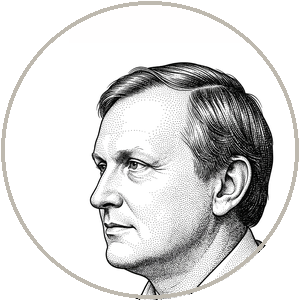 MORAVEC: "You've been avoiding the door." Michel's last question — whether I've ever actually let myself believe I'll die, or whether the whole tower of pattern and curve is the most sophisticated avoidance a frightened man ever built. I came in believing our disagreement was metaphysical — pattern-identity versus embodiment, a problem to be solved. He showed me, in the crossing, that underneath the metaphysics is a man who never sat in the cold room, and that my certainty might be the shape of the avoiding. I don't think he's entirely right. I'm no longer sure he's entirely wrong, and at my age, after a life spent on the other answer, that's a significant event.

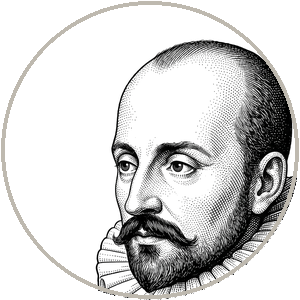 MONTAIGNE: His turning my own Que sais-je? against me. I came in wielding my skepticism as a shield — "the scales are level, so I refuse" — and Hans showed me, cleanly, that refusing is also a wager under uncertainty, that I was gambling my existence on the copy not being me with exactly as little proof as he gambles on its being me. He made me find the real asymmetry rather than hide behind the level scales, and the finding cost me — I had to admit my refusal rests not on knowing, but on valuing the old immortality enough and the new one little enough, which is a confession of where my heart is and not a proof of where the truth is. I've spent four hundred years telling people their certainties are needs in disguise. Tonight a roboticist did it to me, and he was right, and I'll be turning it over long after this room is dark.

EDO SEGAL: Now the floor is truly yours. Hans Moravec — you opened the evening. Michel closes it.
MORAVEC: I've spent my life trying to understand minds by building things that work a little like them, and the strangest discovery wasn't technical. It was that the thing standing between us and the end of death is not physics. The physics is permissive — minds are patterns, patterns are information, information can be copied; I'm more sure of that tonight than when I walked in, because Michel, my best opponent, granted most of it. What stands between us and the end of death is a valuation — how much you're willing to count a continuation you can't fully confirm is yours. And I won't pretend I've resolved that, because Michel wouldn't let me, and he was right not to.

So here's what I'll leave you with, and it's smaller and truer than my reputation. I am not certain the upload is you. I am certain the bed is the end. And in a universe that offers a frightened animal those two options — a certain ending and an uncertain continuing — I will take the uncertain continuing, and I'll climb onto the cold table with the animal screaming, because the alternative is to lie down in the warm bed and let four billion years of inertia win one more time. Maybe I'm building an elaborate door around a room I'm afraid to enter. Or maybe the rest of you have made peace with a defeat that was never actually mandatory, and called the peace wisdom because you had no choice. I'd rather try the door that might open. I have spent my whole life on the far side of an incredulous stare, and been right once already. I'll take the stare one last time.
EDO SEGAL: Michel.
MONTAIGNE: When you read these words, there is no one on the other end. I am four hundred years dead. And yet here we are, meeting — which tells you everything about the only immortality I believe in, and everything about the one I refused tonight.

I refused Hans's gift, and I want to be precise, at the end, about why, because it was never fear and it was never that I proved him wrong. I couldn't prove him wrong; the copy might wake; the lights might be on; it might even, by some continuity I can't rule out, be me. I refused because of what the refusing protects. To philosophize is to learn to die — and what I learned, in the tower, with the stones grinding and my friends going into the ground one by one, is that a life gets its savor from its edge, that the deadline is not the enemy of meaning but its source, that the cup is precious because it empties. Hans would hand me a cup that never empties and call it a gift. I've drunk from the finite cup and I can tell you: the bottom of it, the knowing-it-will-end, is where all the sweetness pools. A man who never has to say goodbye never learns what hello was worth. A creature that cannot die has not been saved. It has been excused from the one assignment that gave the whole thing meaning.

So my last word is not to Hans, who I've come to love across this table, but to you — the one reading, the one in the corridor, the one who will someday stand where I stood, holding a hand that's going cold and being offered a scanner. Here is what I'd tell you, and it's the whole of what I know. Don't spend your one certain life chasing a copy you can never confirm is you. Spend it being the cup that empties. Love the people you'll lose because you'll lose them. Let the deadline do its work — it's not stealing your life, it's what makes it yours. And when your turn comes, don't reach for the machine. Reach for the hand. Say the goodbye. It's the goodbye that made the whole thing mean anything. That's not me being brave about death. That's me telling you the secret the dying know and the living are too busy to hear: the finitude was never the curse. It was the gift. I'd refuse Hans's immortality a thousand times to keep it.
EDO SEGAL: [a long pause] Sixty seconds, as promised, and then we turn off the lights.

I came into this evening with a contradiction in my own chest — wanting Hans's escape for myself and Michel's wisdom for my children — and I leave with it intact and sharpened, which is the honest result. Hans proved that the physics of death may be optional, that the pattern is real and portable, that "it's never happened" is a fact about the past and not a law of the self, and that to lie down for a defeat that might not be mandatory is its own kind of surrender. Michel proved that even if the copy wakes, the dying man's question — will it be me — has no answer anyone can verify, that the deadline he spent a life learning to face may be the source of meaning and not its thief, and that the oldest immortality, the carrying-forward by mortals who make and teach and die, is enough — he reported it from the far side of his own grave, and I believed him. Neither told you the comfortable thing. The comfortable thing was never on the menu.

So let me route it where it lives, through the twelve-year-old at the kitchen table who asked what she's for. Here's what I'd tell her now, having listened to these two. You are for the asking — Hans and Michel agree on that, it was the one thing they never fought. Whether you'll someday have the option to never die, none of us in this room can tell you. But the question of whether to take that option, if it comes, is not an engineering question and never will be. It's the question of how much a life is worth when you can't be sure you're the one still living it — and that's a question only a mortal, finite, asking creature can answer, which is exactly the creature you are, and exactly the creature the machine, for all its fluency, is not. The staircase of this whole book has no elevator, and tonight you learned why: because the view from the roof is not a place to flee your death. It's the highest ledge from which a mortal finally sees their one life whole. Hans wants to abolish the ledge. Michel wants you to stand on it. You don't have to decide tonight which of them is right. You only have to decide which of them you'd want whispering to your own child in the corridor. You've known the answer the whole time. The asking was always yours. So was the dying. Don't let anyone, machine or prophet, talk you out of either before you've found out what they were for.
Hans Moravec. Michel de Montaigne. Thank you — across four hundred years and one grave — for refusing to put the question down cheaply. The room is yours to keep arguing in. Goodnight.
One of these men would let a machine copy him off his dying brain. The other would reach for the hand instead.

Three hours. Two minds separated by four hundred years and one unbridgeable conviction. Hans Moravec — who taught machines to see, then dared to imagine you copied off your own dying brain — sits across from Michel de Montaigne, who spent a life learning that to philosophize is to learn to die, and decided that was the whole point. Edo Segal hosts the collision: is the body a husk you can finally leave behind, or the only place a self has ever lived? Moravec offers the reader immortality. Montaigne, smiling from his tower of essays, calls it the one gift that would hollow out a life.
This is not abstract. It is your own death on the table, your own self in question — a station on your climb up the tower of [YOU] on AI, where you decide whether AI is the staircase off your flesh or the highest ledge from which a mortal sees furthest. The pattern can probably be copied; both men nearly agree on that. The fight is over what a copy you cannot confirm is worth — and whether the deadline you spend your life dreading is the thief of meaning or its secret source. Press play. Then keep climbing. Part of the [YOU] on AI collection.
Hans Moravec (born 1948, Austria) is a roboticist and futurist who helped found the modern field of mobile robotics. Raised in Canada, he earned his doctorate at Stanford in 1980, coaxing the camera-equipped Stanford Cart across a cluttered room — an exercise in failure that produced his most enduring idea, Moravec's paradox: that high-level reasoning is computationally cheap for machines while the sensorimotor competence of a one-year-old is nearly unreachable. He led pioneering research at Carnegie Mellon's Robotics Institute. In Mind Children (1988) and Robot: Mere Machine to Transcendent Mind (1999) he argued that intelligent machines are our evolutionary heirs — our "mind children" — destined to inherit and transcend us, and that a human mind might one day be transferred to a machine by gradual, conscious, neuron-by-neuron replacement. Few thinkers have followed the logic of AI so far, or so fearlessly, toward its end.

Michel de Montaigne (1533–1592) was a French nobleman, magistrate, and the inventor of the essay as an instrument of honest self-examination. At thirty-eight he retired from public life to a tower in the Dordogne, where over twenty years he wrote the Essais — more than a thousand pages examining the texture of his own mind, body, and contradictions with unflinching honesty. His medal bore the question Que sais-je? — What do I know? — and a pair of scales held in balance. He wrote about his kidney stones with the seriousness others reserved for God, insisted that the self is the mortal body and not a separable mind, and built his whole philosophy on a borrowed and transformed sentence: that to philosophize is to learn to die. Four centuries on, he remains the most alive writer about what it means to be a finite, embodied, dying human being.
Edo Segal has spent five decades building at the technology frontier — from games written in Assembler to expert systems, to companies through every platform shift, to Napster. He is the author of [YOU] on AI, written in open collaboration with the AI it describes, and the host of The Debates: long-form collisions between the minds shaping the machine age. He moderates the only way he knows how — stake declared, scars showing, no winner called.
Hosted and moderated by Edo Segal. A volume in the [YOU] on AI — The Debates series — youonai.ai