The Crossing

 EDO SEGAL: The rules are short. You question each other. I will not step in. Michel — you've carried the harder grief tonight, so you begin.

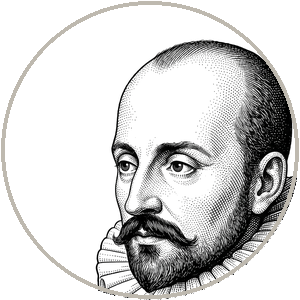 MONTAIGNE: Hans. I'll ask the question I'd ask if there were no audience, the one that's been under everything. You've built a magnificent argument for why the upload might preserve you — the gradual knife, the continuity of process, the inference from structure. And you've conceded, honestly, every place it falls short of certainty. So here is what I genuinely want to know, man to man, not roboticist to skeptic: Would you do it to yourself? Not recommend it. Not theorize it. When the knife is real and the table is cold and it's your own one life on it — do you climb on? And if you hesitate, even for a breath — tell me what the hesitation knows that your argument doesn't.

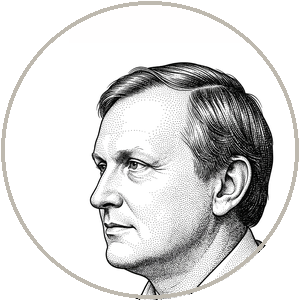 MORAVEC: [a real pause] I climb on. But you've earned the truth about the breath before it, so here it is. The hesitation knows exactly what you've been saying all night — that I cannot verify the fire stays lit, that I'm betting my one certain existence on a continuity I can defend for function and not for the taster. The hesitation is the animal, and the animal is not stupid; it's four billion years of ancestors who didn't climb onto strange tables. So why do I climb on anyway? Because the animal's alternative is not safety. The animal's alternative is the certain death it's been losing to for four billion years. The hesitation imagines the table is the risk and the bed is the safe choice — but the bed is where you certainly end. Faced with certain ending and uncertain continuation, I take the uncertain one, not because I've resolved your doubt but because your doubt, however deep, sits on both sides: I can't be sure the copy is me, and I can't be sure it isn't, and in that symmetry the tiebreaker is that one path forecloses everything and the other might not — the whole bet rides on whether continuity of process is enough to carry the self across, and I'm betting it is. The breath before is real, Michel. It's grief for the body I'm leaving. But I'd grieve the body in the bed too, and get nothing for the grief. At least on the table the grief buys a chance. Now — my turn, and I'm turning your own question back on you, because it's the mirror of it. You say Que sais-je?, you say the scales are level, you say you can't prove the copy is empty. Then answer me this: if you genuinely don't know whether the copy is you — really don't know, scales truly level — then by refusing the upload, aren't you also gambling? Aren't you betting your one existence that it wouldn't be you — with exactly as little proof as you accuse me of? Why is your leap into the grave more rational than mine onto the table, when neither of us knows?

MONTAIGNE: [the longest pause of the night] That is the finest question anyone has asked me in four hundred years, and I will not dishonor it with a clever answer. You're right that refusing is also a choice under uncertainty — that I, too, am wagering my existence with no proof. So let me find the actual asymmetry, because if there isn't one, you've won, and I'd rather lose honestly than win by hiding. Here it is. We are not choosing between two unknowns. We're choosing between a known and an unknown. If I stay in the bed and die, I know exactly what happens: this self ends, and is carried forward only in the old, blessed, mortal ways — my book, my line, the people who loved me. That's a known loss, and a known something-saved. If I climb on the table, I face an unknown: maybe I continue, maybe a stranger continues wearing my face and I'm simply gone with no one even noticing, because the stranger reports being me. Now — your tiebreaker was "one path forecloses everything." But Hans, that's the part I deny. The bed does not foreclose everything. The bed forecloses me, and saves what I most cared about — the carrying-forward by mortals, which we just agreed, both of us, is enough. So my refusal isn't a more confident bet than yours. It's a bet that the old immortality is real and sufficient, and that the new one is unverifiable and possibly hollow — and when one option is a certain modest good and the other is an unverifiable maybe-total-good-or-maybe-nothing, the level scales counsel the certain modest good. Not from terror, Hans. From the same arithmetic you used on the table — except I ran it on what's saved and you ran it on what's risked, and that's the whole difference between us, drawn in a single line.

MORAVEC: [quietly] That's the best answer my question has ever gotten. I don't accept it — because I think you've quietly rated "the stranger wearing my face" at zero value to me, and I rate it much higher, since the stranger would carry forward everything I am and could go on building, loving, asking; to me that's most of what I wanted, even if the "me" in it is uncertain. But I see now that our whole disagreement isn't about metaphysics at all. It's about how much you value a continuation you can't confirm is yours. You round it to nothing. I round it to nearly everything. And neither of us can prove the exchange rate.
MONTAIGNE: [a slow nod] Yes. That's it exactly, and it took us three hours and a crossing to find it. It was never can the pattern be copied — you were right, it probably can. It was never even is the copy conscious — I granted it might be. It was always: what is a continuation worth to the one who won't be sure he's in it? And there I'll give you the last honest thing, Hans, and then ask you my final question. I round it low because I've made my peace with ending, and a man at peace with ending doesn't need the maybe. You round it high because you haven't — and I don't say that as an insult, I say it as the diagnosis we've been circling. So my last question is the one I'd ask a dear friend: Hans, in all your arithmetic of patterns and curves and continuations — have you ever actually let yourself believe you're going to die? Not as an engineering problem to route around. As the plain fact it is for the rest of us. Because I think your whole magnificent tower might be the most sophisticated thing a frightened man ever built to avoid sitting in that one cold room. And I'd ask you, with love: what would happen if you sat in it?

MORAVEC: [a very long silence] No. I don't think I ever have — not the way you mean, not the way the stones made you. I've spent fifty years building the route around the room rather than sitting in it, and you've named that more precisely than anyone, and it lands. So let me sit in it now, for one breath, on the record. [pause] If I'm wrong — if the knife makes a stranger and I'm simply gone, and the curve was a comfort and the pattern was never the person — then I will have spent my life on an elaborate way of not facing what you faced at thirty-two with your dying friend in your arms. And the worst part wouldn't be being wrong. It would be that I'd have missed the thing you found — the peace, the savor, the enough — because I was too busy engineering my way past it. [a breath] I don't know if I can sit in that room the way you did. But I know you've made me see that I've been avoiding the door, and that the avoiding might be the realest thing about me, realer than the argument. That's not a concession to your metaphysics. It's a concession to your diagnosis. And it's the most you've cost me all night.
EDO SEGAL: [very quietly] And there — after three hours — the two of you are holding opposite ends of the same fear, and neither of you put it down cheaply. We close after this. Final statements. The last word each.