Opening Statements
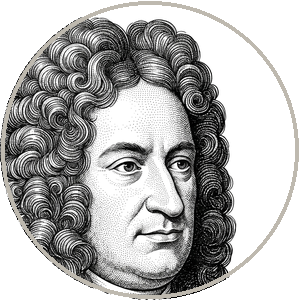 **LEIBNIZ:** Thank you. I will begin where the whole matter begins, which is with a scandal that the world has simply stopped noticing because it has lived inside it too long: that human beings, the rational animal, the glory of creation, settle their gravest disputes by shouting. By rhetoric. By the wearing-down of one party by another, by authority and eloquence and the accident of who tires first. We do not do this with sums. No two honest men have ever come to blows over whether twenty-four divided by six is four. They check. And it occurred to me, as a young man, with a force I have never lost, that the difference between the sum and the quarrel is not a difference in the men. It is a difference in the *notation*.
Our reasoning about justice and God and the causes of things is conducted in words, and words are vague, ambiguous, swollen with feeling, infinitely twistable. But this is not a necessary condition of thought. It is a defect of the instrument. Give me a notation in which every concept has its exact sign, in which complex ideas are composed from simple ones the way numbers are composed from primes, so that the very form of the symbol displays the logic of the thing — give me that, my [characteristica universalis](https://www.youonai.ai/fieldguide/med/symbol_grounding_problem), the universal characteristic — and pair it with a calculus of inference, a calculus ratiocinator, a set of rules for operating upon those signs — and disagreement becomes as decidable as arithmetic. When men differ, they do not shout. They sit. They take up their pens. And one says to the other: *calculemus*. Let us calculate. And without further ado they see who is right.
Now I have been shown your machines. And I will tell you what I felt, because Mr. Segal asked us to declare ourselves. I felt vindicated to the point of vertigo. Three hundred years late, the calculation has begun. The machine answers in every tongue, draws inferences, drafts arguments, settles in seconds questions that would have taken the Republic of Letters a decade of correspondence. The dream is not a fantasy. It was a forecast, and it has substantially come true. And here is my claim, the whole of it, stated as strongly as I can make it so that Mr. Turing has the entire target: reasoning *is* computation. There is no part of genuine rational thought, however subtle, that cannot in principle be reduced to the manipulation of signs according to rules — and what can be so reduced, a machine can do. The mind is, at its summit, a calculating engine. We simply lacked, until now, an engine equal to the mind. The river reaches every chamber, because every chamber is, at bottom, made of the same arithmetic. That is my opening. The horizon is not a wall. It is a destination we have not yet computed our way to.
 **EDO SEGAL:** Alan.
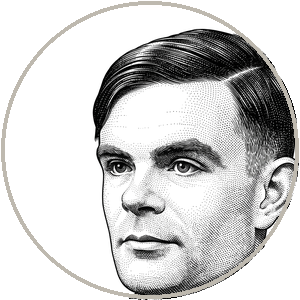 **TURING:** That was magnificent, and I agree with a great deal more of it than he expects, which is what makes the part I reject so serious. Let me first say where I stand *with* him, because I will not be mistaken for the man who thinks the machine is a parlor trick.
I believe the machine can think. I have believed it longer and more concretely than almost anyone, because I did not speculate about it — I described how to build it. I proposed, in 1950, that we stop asking the unanswerable metaphysical question, "can machines think," which is too loaded with prior meaning to admit a clear answer, and ask instead a sharp, observable one: can a machine converse, across any subject, under adversarial questioning, well enough to be taken for a person? I called it the imitation game. I said that if we grant thought to one another on the evidence of behavior — and we do; you have never inspected the inside of any mind but your own — then consistency forbids us to demand more of the machine than we demand of each other. And I will tell you, looking at what your systems now do, that the game is being passed. So I am, on the central matter, Leibniz's ally. I think the dream is real and I think it is arriving.
And now the disagreement, which is total. Leibniz says reasoning *is* computation, exhaustively, with nothing left over. I say: I know exactly what computation is — I defined it — and I can prove to you, tonight, in terms a child could follow, that computation contains questions it cannot answer. Not hard questions. Not questions awaiting a cleverer method. *Undecidable* questions — well-formed, perfectly meaningful yes-or-no questions about which no procedure whatsoever can deliver the answer in every case, and the impossibility is a theorem, as solid as the fact that there is no largest prime. In 1936 Hilbert asked whether there was a mechanical procedure to decide every mathematical statement — the [Entscheidungsproblem](https://www.youonai.ai/fieldguide/med/godelian_incompleteness_ai), the decision problem. He expected yes. The whole spirit of Leibniz's dream expected yes. I proved no.
So here is the shape of my position, and I will spend three hours defending it. The machine is universal — it can do anything that can be done by computation, and that is an astonishing, almost limitless power, far greater than Leibniz's critics across three centuries ever allowed. And the machine is bounded — there are truths, even truths about machines themselves, even simple ones, that lie permanently outside what any computation can reach. Both facts come from the same proof. I did not choose the limit out of pessimism, the way a man chooses to be glum. I *found* it, the way you find that the diagonal of a square cannot be written as a ratio. Leibniz wants the river to reach every chamber. I am telling him, with the only kind of certainty I trust, that there are chambers with no channel — and that the man who actually dug the channels is the one who knows where they stop.
**EDO SEGAL:** Before I frame the rounds, one discipline I impose on every long conversation, because it pays off three hours later. Each of you, briefly — what do you *envy* in the other's position? Not respect. Envy. The thing his side gets to have that yours does not. Gottfried first.
**LEIBNIZ:** I envy the certainty. It is a cruel thing to envy, but Mr. Segal asked for honesty. I spent my life *believing* that reason could be made complete, and I died with the universal characteristic an unfinished heap of fragments, having proved nothing, having only hoped, magnificently, in the right direction. Mr. Turing reaches into the same domain I labored in and comes back not with a hope but with a *theorem* — he knows something about the limits of calculation with a rigor I never attained about its powers. I built castles of conviction. He built one small unbreakable wall. I would trade a great deal of my conviction for one of his walls.
**TURING:** And I envy the nerve. Leibniz believed — actually believed, not as a slogan but as a working assumption he staked his life on — that the deepest disagreements among men are at bottom *errors*, soluble in principle, that we could calculate our way to peace. I cannot believe that; my whole work tells me some questions have no procedure. But I notice that his belief built things. It built the binary, the reckoner, the entire forward-leaning posture of the field. My limit, however true, is a posture of *stopping*, and stopping has never built anything. He gets to wake up every morning convinced the channel exists and start digging. I get to wake up knowing precisely where digging is futile. His error, if it is one, is the more fertile mistake, and I have spent enough time in the company of sterile correctness to feel the loss.
**LEIBNIZ:** That may be the kindest thing anyone has said of me since Hanover, and I note that it was said by the man trying hardest to refute me.
**EDO SEGAL:** Hold both of those, because they are the architecture of the whole evening. It is not optimist versus pessimist — they would each tell you they love the machine. It is that one of them believes the channel reaches every chamber and the other has a proof that it does not, and they are arguing about the same river, the same machine, from opposite ends of two hundred years. We start the rounds after the break, and we start at the root: the sentence Leibniz is most famous for, the one that is either the founding scripture of this entire age or its founding error. *Let us calculate.* After this.