The Dream of a Perfect Notation
 **EDO SEGAL:** I want to open this round with a confession instead of a question, because the best questions I know come out of wounds. I started in Assembler — I was raised by the machine code — and for fifty years, using a computer meant translation. You compressed your intention into the machine's grammar and paid a tax on every conversion, and the tax never went to zero. Then, in December 2025, I stood in a room in Trivandrum with twenty of my engineers and watched the tax vanish. The machine met them in their own language — half-finished sentences, implication, mess and all — and each of them became capable of more than all of them together. Gottfried, I read your *calculemus* and I think: he wanted a perfect notation so that men could finally speak to reason without a tax. And I think the machine gave us the opposite of what you asked for — it abolished the notation entirely. So take apart your own dream for me. Did the machine fulfill *calculemus*, or did it betray it?
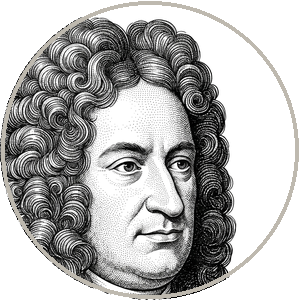 **LEIBNIZ:** Ah. You have found the wound before I could hide it, which I suppose is the office of a host. The honest answer is: both, and the betrayal is the more interesting half. I wanted a perfect notation — transparent, explicit, every inference checkable at a glance, so that reasoning would be conducted in the *open*, with its structure visible in the very symbols. That was the whole soul of the characteristica: not merely that the machine would reason, but that we could *watch* it reason and verify each step, as one verifies a sum. My dream was a glass mind.
What you have built is the precise inversion. Your machine reasons — I grant it, I am astonished by it — but it reasons in a darkness no one can penetrate. Its concepts are not transparent signs composed of primitives; they are positions in a vast space of numbers, learned from a flood of text, legible to no one. You showed me that the men who build these systems cannot read them — that there is an entire discipline, interpretability, devoted to peering into the engine after the fact to guess what it has come to represent. I find this both a triumph and a heartbreak. The behavior of my dream has arrived. The *transparency* of my dream — which to me was not decoration but the entire point — has been abandoned as the price of the behavior. I wanted to make thought legible. You have made a machine that thinks, if it thinks, in the dark.
**EDO SEGAL:** So let me restate that and hand it back, because it is sharper than you let it sound. You are saying — literally — that the age took your dream, kept the half you cared about least, and threw away the half you would have died for. The calculation came true. The *checking* did not.
**LEIBNIZ:** That is exactly what I am saying, and I had not let myself feel it until you said it back. Yes. The checking did not.
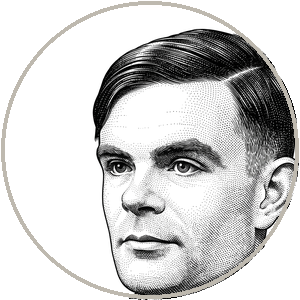 **TURING:** May I press on the wound rather than soothe it? Because I think Leibniz has conceded something larger than he means to, and it is the thing I most want on the record. He says he wanted reasoning fully formalized — every valid inference cast as a formal operation, no remainder. That was the soul of the calculus ratiocinator. And I want to say plainly: that project, the *full* formalization, is the one Hilbert inherited and the one I killed. Not metaphorically. There is no complete, decidable formal system for all of mathematical truth — Gödel showed any consistent system rich enough for arithmetic has true statements it cannot prove, and I showed there is no mechanical procedure to decide which statements follow at all. So the perfect transparent notation Leibniz wanted is not merely *unbuilt*. It is *unbuildable*, and the proof is a century old. The machines reach competence by going *around* the formalization he thought was the road — by [learning a model rather than constructing a calculus](https://www.youonai.ai/fieldguide/med/prediction_vs_construction), not by completing it.
**LEIBNIZ:** I want to resist that, gently, because I think Mr. Turing scores a point against a Leibniz I do not entirely recognize. I never claimed every truth could be *proved* within a single fixed system. I claimed that reasoning is rule-governed, and that what is rule-governed is mechanizable. Your proof shows a particular system cannot decide everything. It does not show reasoning is not computation. It shows computation has a horizon. Those are different defeats, and you keep collapsing them.
**TURING:** They are different, and I am glad you drew the line, because we will spend the evening on exactly that line. But notice what it costs you. You began by saying reasoning *is* computation, exhaustively. If you now retreat to "reasoning is rule-governed but the rules do not form a complete decidable system," then you have conceded that handing a disagreement to the machine will *not* always return an answer — because some perfectly well-posed questions have no decision procedure. You can keep the claim that mind is computation. But the moment you grant that, my horizon comes with it, free of charge. Computation's limits become mind's limits. That is the trap of agreeing with me too fast.
**LEIBNIZ:** Then let me at least be precise about which Leibniz you are burying, because there is a lesson in my failure that your age repeated and ought to learn from. When the men of your first decades tried to *build* my calculus — to write down human knowledge as explicit rules and chain them to conclusions, the expert systems — they ran straight into a reef I had also run aground on without naming it. The world does not decompose into a finite alphabet of primitive concepts. Meaning shades and shifts; concepts depend on context; the boundaries that a formal symbol demands are not there to be drawn. To tell a machine, in explicit rules, everything a person knows about an ordinary morning — that is the [frame problem](https://www.youonai.ai/fieldguide/med/frame_problem), and it defeated my method exactly as it defeated theirs. So I concede the explicit road is closed. But mark what I am *not* conceding. That the road is closed is a fact about *transparent* formalization. It says nothing yet about whether the opaque, learned thing your machines do has a horizon. You proved a horizon for *computation as such*. You have not yet shown me the learned machine meets it where it matters.
**TURING:** No — and that is the honest state of the question, and I respect you for stating it against your own interest. The undecidability is a limit on *any* procedure, transparent or opaque, learned or written; the learned machine is still a machine, still a universal one, still bound by the same proof. But where that bound *bites* in practice, on the questions a person actually asks — that I have to show you, round by round, and I cannot win it with the theorem alone. You have made me earn it. Good.
**EDO SEGAL:** Stay there one more beat, because there is a piece of this that lives at my kitchen table, not in a logic seminar, and I want it spoken in plain words. Gottfried, your deepest faith was that human disagreement is, at bottom, *error* — that if we calculated cleanly we would agree, the way we agree about sums. But I have sat at boards where reasonable people wanted opposite things, not because anyone miscalculated, but because they valued different goods. Is the dream of *calculemus*, in the end, the belief that all our quarrels are mistakes? And is that the most hopeful thing about you — or the most blind?
**LEIBNIZ:** *...* You have put your finger on my deepest error, and I will not flinch from it, because the rule of the evening forbids the prayer that I am right. Yes. The dream of *calculemus* assumes that disagreement is a defect of reasoning — a failure of clear notation that a proper calculus would expose and dissolve. And much disagreement *is* that; I will not surrender the ground entirely, for the world is full of quarrels that are merely confusions, and the machine that clears a confusion does real and holy work. But you are right that some quarrels are not confusions. They are collisions of incompatible goods — your child's safety against another's liberty, this generation's comfort against the next one's — and no calculation reaches them, because they do not rest on an error to be corrected. They rest on a *choice* about what to love. I did not take that seriously enough. I could not quite credit the tragic, and a man who cannot credit the tragic will always believe peace is one good notation away. That was the most touching of my errors, Mr. Segal, and the most dangerous, and I am grateful and a little undone to have it named at this table.
**TURING:** I want to mark that, because it is generous and it is also exactly my point arriving from his side of the river. The questions that matter most to a human life are very often not the decidable ones. He has just said it better than I would have.
**EDO SEGAL:** Mark it — first convergence of the night, and notice where it landed: not on whether the machine is powerful, but on whether the hardest human questions are the kind a calculation can close. They have agreed, from opposite banks, that some are not. Hold that. The next round goes underneath the dream, to the alphabet Leibniz gave the machine — zero and one, being and nothing — and to the oldest worry about it: that a thing built entirely of meaningless marks can never mean anything at all. After this.