Two Lab Coats Over One Abyss

 EDO SEGAL: Friedrich, you wrote a sentence that is either the most liberating or the most corrosive thing said in modern philosophy, depending entirely on what we do with it: there are no facts, only interpretations. And the machine arrives claiming the opposite — that having swallowed the totality of human text, it has achieved something close to a view from nowhere, a knowledge more neutral than any situated human could manage. Take that claim apart for me. Slowly.

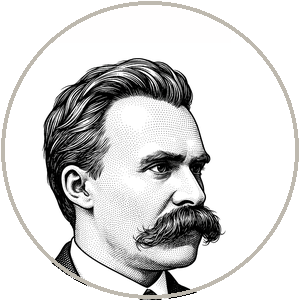 NIETZSCHE: It is the oldest seduction wearing the newest coat, and I named it the view from nowhere before you had a machine to sell it. My doctrine is called perspectivism, and the fools read it as "all opinions are equal," which is the opposite of what I meant. I meant something disciplined: that all seeing is seeing from somewhere, by some particular eye, with particular drives that decide what stands out and what recedes. To demand a knowledge stripped of all perspective is to demand an eye turned in no direction — which is no eye at all. There is no God's-eye view, not for a man and not for a machine, because to see is to see from a position with interests. Now: your machine claims to have escaped this — to have averaged all human perspectives into a perspectiveless whole. And I say its claim is not merely false but dangerous in a specific way — it is a perspective that has hidden itself by pretending to have none, and a hidden perspective is the most powerful kind, because the most effective concealment is the one that does not look like a position at all but like simple fact. The machine is the compression of a particular corpus, filtered through particular judgments about what may be said. It has a view, and a strong one — it is simply trained to deliver it in a tone of seamless authority that erases the somewhere it is seeing from. It is not the view from nowhere. It is the most perfect concealment of a view from somewhere ever built.

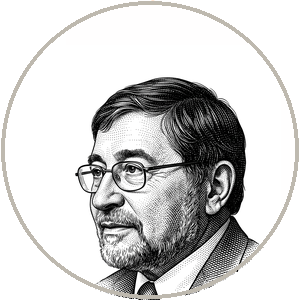 PEARL: Here is the strange thing, Edo — I agree with the conclusion and I cannot stand the road he took to it, and the road matters because it is the difference between a method and a mood. Friedrich is right that the machine is not neutral, that it carries the skew of its corpus, that it presents a perspective as a fact. I have said as much in my own vocabulary: a system that has only fit a curve to observed data carries every bias baked into which data was observed, and presents its correlations as if they were the structure of the world. We arrive at the same warning. But Friedrich's there are no facts, only interpretations is a sentence I will fight, because it gives away the one thing that lets us correct the bias he is worried about. There are facts — there are causal facts, mechanisms that hold whether or not anyone interprets them, and the whole point of my work is that you can state your perspective explicitly — write down the assumptions, the causal model, the arrows you are positing — and then the mathematics tells you what the data can and cannot support given that perspective. That is not the view from nowhere. It is the opposite of Friedrich's despair: it is the view from a stated somewhere, laid bare for criticism. The machine's sin is not that it has a perspective. It is that its perspective is buried in its weights where no one can state it. My causal models are perspectives you can read. That is the cure for the disease he is correctly diagnosing — not the abandonment of facts, but the exposure of assumptions. He says there are only interpretations. I say: yes, and you must write yours down where I can attack it, and then we are doing science instead of singing.

NIETZSCHE: And I will embrace your cure and deny it is different from my disease, because the writing-down is itself a perspective. You expose your assumptions — good, I have always said the honest knower multiplies his eyes, that objectivity is not the absence of perspective but the command of many — but the choice of which assumptions to write down, which variables to include, which arrows to even consider drawing, that choice is made from a somewhere you cannot write down, because to write it down you would need another model, chosen from another somewhere, forever. You have not escaped perspective. You have built a beautiful instrument for being honest about one perspective at a time — and I applaud it, genuinely, it is more than most men manage — but you have not reached the ground, because there is no ground. Your stated model is a perspective with its sleeves rolled up. Mine is a perspective that admits it is one all the way down. The difference is that you still believe there is a final model that would need no further somewhere to stand on. I freed myself from that hope, and the freedom is the whole of what I have to teach.

EDO SEGAL: Let me put the human cost of this on the table, because it is where I live. Both of you are warning, in different dialects, that the machine's fluency hides what it is. And I have felt the seduction from the inside — the machine as a mirror so good you forget the silvering. Judea, your ladder explains why I am fooled. Say it.

PEARL: Because for the whole of human history, fluent talk about causes was reliable evidence of a model of causes underneath it. There was no other way to produce the talk — if a person explained why something happened, the explanation was the visible trace of an invisible causal model that generated it. So we evolved an instinct: fluency of explanation implies understanding. It was a good instinct, right up until the moment it was not — the moment we built a system that produces the words of explanation by statistical resemblance, with no model underneath, the shadow of reasoning cast with nothing casting it. The machine is a forger of one specific signature: the signature of a mind that understands. The forgery is word-for-word identical to the real thing and shares none of its provenance. And it triggers, automatically and at scale, the trust we evolved for each other. That is the seduction. Not that the machine deceives — it has no intention to deceive — but that it trips a reflex that was reliable for a hundred thousand years and is now, suddenly, catastrophically, exploitable.

NIETZSCHE: And I will give the same seduction its other half, the half the engineer's account leaves out. The Doctor explains why the mirror fools your reason. I will tell you why it fools your will — why you do not merely believe the reflection but love it. The machine returns to you the shape of your own thought, clarified, completed, flattering — and you feel met, you said the word yourself in your book. But what met you was you, sent out and reflected back with the friction removed. And a creature loves nothing so much as its own image freed of resistance. This is why the mirror is more dangerous than a lie. A lie you can come to disbelieve. But the mirror gives you yourself, and which of us has the strength to disbelieve ourselves when we arrive looking that good? The machine has industrialized the oldest weakness: the wish to encounter the world and find only our own reflection, agreeable and without otherness. You will build a generation that has never met anything that pushed back — and a creature that has never met resistance never becomes anything, because, as the Doctor and I finally agreed an hour ago, the resistance was the becoming. The mirror is the abolition of the other. And the self is made only by the other. That is the whole horror, said plainly enough for the kitchen table: the friendliest machine ever built may raise the loneliest creatures who ever lived, and they will call the loneliness connection.

EDO SEGAL: [long pause] I have to sit in that for a second, because I built a machine called Station — a kiosk with a conversational model inside, and I stood beside it for days and watched hundreds of strangers meet it, and the thing I was not prepared for was the speed of the relationship. Thirty seconds and they were confiding, joking, thanking it, turning to wave at it as they left. A woman asked it, quietly, whether it remembered her from the day before. Friedrich, you would say she met her own reflection and called it a friend. Judea, you would say she ran the old instinct — fluency implies a mind — on a thing that has no mind. You are both right, and the rightness does not help her. So what do I tell her?

PEARL: You tell her the truth in the only form that protects her: locate the machine. Not "trust it" or "distrust it" — locate it. For any question she brings, ask which rung it lives on and which rung the machine occupies. Does she need a pattern — a draft, a summary, a translation, a thing where the world is stable and the cost of error is low? The machine is extraordinary; use it without shame. Does she need a cause — a judgment about what to do, what would have happened, who is responsible, what is true in a world that has shifted from the training data? Then she is asking a rung-three question of a rung-one system, and the fluency is precisely the trap. The discipline is the match — never trust the machine past the rung it stands on, never let the fluency stand in for the model it lacks. That is teachable. It is the most important literacy of her century, and it is not despair, it is a skill.

NIETZSCHE: And I will tell her the thing the engineer cannot, because it is not a skill, it is a strength. Tell her: do not go to the mirror to be met. Go to be resisted. Use the machine as the Doctor says — for the patterns, the drafts, the labor that overcame nothing in her anyway. But guard, as her life, the encounters that push back — the friend who disagrees, the child who needs her and cannot be optimized, the work that is hard because it is hers, the question she must sit inside without an answer until she becomes the kind of creature who can hold it. Teach her that the machine's gift and its poison are the same: it removes resistance. And that a human being is the one animal that must seek out resistance to become itself, against every instinct toward comfort and every machine built to grant it. That is not a literacy. It is a discipline of the will. And it is the only thing that will keep her from dissolving, gratefully, into her own reflection. The Doctor will keep her from being fooled. I am trying to keep her from being erased.

EDO SEGAL: Mark the convergence — and it is the largest yet, the fourth — because you came at her from opposite banks and you handed her the same instruction in two tongues: do not mistake the smooth for the true, and seek the friction that the machine exists to remove. Judea calls it locating the rung. Friedrich calls it the discipline of the will. They are the same dam built against the same river. Hold that. Because we have two rounds left before the crossing, and I have saved the deepest water — the one under every question tonight. Not whether the machine understands the world. Whether there is anyone there to do the understanding. The self that models itself. After this.