Closing Statements

 EDO SEGAL: Three hours ago I asked whether the machine's surprise is a new mind being born or your own instructions echoing back. We have fought it through looms and music, conceptual spaces and broken tonics, the kitchen table and the dark question of who is home — and the question is still standing, sharper than when we began, which both of you would tell me is the correct result. Before the last word, one final discipline — the bookend to the envy I opened with. Each of you: name the strongest thing the other said tonight. Not the most agreeable. The one you will still be arguing with next month. Margaret first.
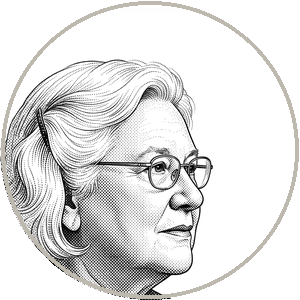 BODEN: The fruitful rule. Ada's point that the barrier to transformation is not breaking a rule — anything can break a rule — but recognizing which broken rule opened a world worth entering, and that this recognition needs a standard of value that cannot come from the space you are leaving. I have made versions of that argument my whole life and never felt its full force until she aimed it at my own trapdoor. It means the machine's evaluation problem may not be an engineering gap but a barrier in principle, and I am going home to sit with the possibility that I was more right against myself than I knew. And — since I only get one and I am going to cheat the way a good guest does — creativity is bound to mortality. That the want which originates is the want of a thing that can lose. I came in believing the want was a feature you could in principle add. She made me see it might be a feature you could only add by building something that can be hurt — which changes the whole project from engineering into ethics. I will be arguing with that sentence for whatever time I have.
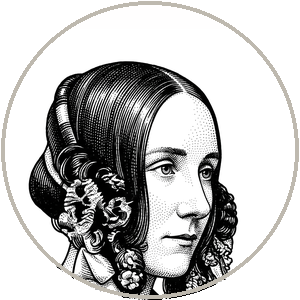 LOVELACE: The base rate. Margaret's point that my strong prior — operation until proven otherwise — has been right about every specific case and wrong about the trajectory, decade after decade, as the line I and people like me drew around the human kept being stepped over. I have spent a hundred and eighty years being quoted as the one who was right, and she made me feel, for the first time, the discomfort of being right in a way that has reliably preceded being overtaken. I do not think she is entirely correct. I am no longer certain she is entirely wrong, and at my remove from the living, that is a significant event. And — I will also cheat — her sentence that some machines are much less mere than others. I built my objection to keep the human safe above the machine, and she showed me the objection works just as well held the other way: that calling the mind a machine need not lower the mind but may instead raise the machine, or rather raise our sense of what a machine, given enough organization and enough to lose, might be. I have carried that sentence since she said it. I will not put it down.
EDO SEGAL: Now the floor is truly yours, each in turn. Ada, you opened the evening. Margaret closes it.
LOVELACE: When you read these words, someone wrote them — a particular mind, with an intention, reaching for yours. I want to leave you with the thing the loom cannot reach, because I spent my life as the one who insisted on naming it precisely. The engine weaves any pattern. It will weave more, and finer, than I dreamed in 1843, and far more than its makers can foresee, and you will be tempted — you are tempted now, at three in the morning, met and uncertain — to believe that the weave is a weaver. Here is my whole bequest, the discipline beneath the objection: when the machine surprises you, check the work. Not to diminish it — the surprise is real, the cloth is real, the help is real. Check it to find your own hand in it, because your hand is in it, distributed and hidden, and the finding is the whole of staying free. The machine originates nothing, I said, and for my engine I was simply right. For yours I can no longer be certain — but I can tell you where to look. Look for the want. Ask of any surprising thing: who needed this, who decided it mattered, for whom is it for. Where the answer is "you," the origination was yours, however much the loom did the weaving. And where one day the answer might be "the machine" — you will know that day not because the cloth got finer, but because the loom acquired something to lose. Until then, you are not alone in admiring the cloth. But you are the only one in the room who wants anything. Guard the wanting. It is the part of you the loom was built to imitate and cannot, yet, become.
EDO SEGAL: Margaret.
BODEN: I spent sixty years taking the mind apart to show it was a machine, and the strangest discovery of my life is that the taking-apart did not kill the wonder — it deepened it. A science of creativity need not be dehumanizing; some machines are much less mere than others; the human mind is the least mere machine we have ever found. So here is what I leave you, and it is neither the believer's thrill nor the skeptic's comfort, because I refused both my whole life and I am not going to flinch at the end. Look closely. When the machine writes and paints and reasons in ways that seem impossibly like us, do not protect your specialness by denying what you see — that is cowardice dressed as reverence. And do not collapse into "then we were never special" — that is despair dressed as rigor. Do the harder thing: understand as much as you can about how the loom actually works, refuse to pretend it is doing nothing, and let it remain a marvel even as you explain it. The machines are astonishing. Understanding them does not make them less astonishing; it makes your astonishment honest. And turn that same gaze on yourself. The machine, by mirroring so much of you, is teaching you — every day, in its failures most of all — what in you was never about the output at all. Ada calls it the want. I called it need, and a thousand other careful names, and I never proved it could not be built, and I never proved it could. That uncertainty is not a failure of the inquiry. It is the inquiry, and learning to stand in it without lying is, I think, the actual work of being a mind in the age of intelligent machines. The mind remains a marvel. Whether it is, at its very root, still a mystery — that is the question I hand you, unanswered and clarified. I would have wanted nothing less, and nothing more.
EDO SEGAL: Sixty seconds, as promised, and then we turn off the lights.
Three hours ago I sat in the dark, moved by four seconds of machine-made music, unable to say whether I had met a composer or a mirror. I leave with the confusion intact and, for the first time, useful — because the two people best equipped on earth to resolve it have shown me, at full strength, that it does not resolve, and why. Ada spent three hours proving that most of what we call creation is operation, that the loom weaves flowers it cannot see, and that the surprise you feel is your own order returning down a channel too dark to trace — and that this should make you check the work, not flinch from it. Margaret spent three hours proving that the line between weaving and originating is not where we drew it, that the machine genuinely explores spaces no human could visit, and that the only honest posture before the deepest question is a marvel that refuses both worship and contempt. And then, at the bottom, the skeptic and the believer found the same stone: that origination is bound to want, that want may be bound to loss, and that the machine, as built, has nothing it can lose.
So here is where I plant you, at the foot of the death cross, the staircase rising into the dark above. You cannot climb past this floor by waiting for the experts to settle it — you have just watched the first programmer and the philosopher of machine creativity decline to settle it, magnificently, in public, because settling it would have required lying. You climb instead by deciding what you will do under the uncertainty: which surprising thing you will check before you believe it, which skill you will keep sharp enough to judge what the loom returns, which want you will guard because it is the one thing in the room that is unmistakably yours. Whatever is or is not home in the machine, someone is home in you — that was the one claim no one at this table disputed all night. The melody moved me either way. The question is whether I knew why it mattered, and for whom, and whether that knowing was mine. When the machine surprises you next — and it will, before you finish climbing the next flight — you now know the only question that frees you. Not is it a mind? You will not get that answer in time. Ask instead: who here wanted this? And climb.
Ada Lovelace. Margaret Boden. Thank you — across a century and the grave, for the fight, and for refusing, both of you, to make it easy. The room is yours to argue in now. Goodnight.
One built the engine. The other tore the ceiling off it.
Three hours. Two minds separated by a century and the grave. One question that will not let you climb past it. In this long-form debate, Edo Segal sits Ada Lovelace — the first programmer, who declared in 1843 that the machine could "originate nothing" — across from Margaret Boden, the philosopher who spent her life proving the machine could surprise even its maker. They circle the spark of creation itself: combination, exploration, transformation; loom or mind; echo or origin. Lovelace defends the ceiling she built into computing; Boden, armed with Ada's own engine, lifts it. You are not a spectator here. As the river of change accelerates and machine capability rises toward the death cross, the verdict you reach in these pages decides how clearly you will see from the roof — and how you, here, now, process your own Orange Pill moment.
Augusta Ada King, Countess of Lovelace (1815–1852), was an English mathematician and the only legitimate child of the poet Lord Byron. Raised on mathematics by a mother determined to suppress any inherited "poetic" temperament, she studied under Mary Somerville and Augustus De Morgan. In 1843 she translated Luigi Menabrea's memoir on Charles Babbage's unbuilt Analytical Engine and appended seven Notes of her own, three times the original's length; Note G contained an algorithm for the Bernoulli numbers, widely regarded as the first published computer program. She grasped, before anyone, that the engine could manipulate any symbols, not merely numbers — and in the same Notes drew the boundary that has shadowed AI ever since: the machine "has no pretensions whatever to originate anything." She called her method "poetical science." She died at thirty-six.
Margaret Ann Boden (1936–2025) was a British cognitive scientist, philosopher, and one of the founders of the modern science of mind. She took first-class honours in medical sciences at Cambridge, studied philosophy, and earned a PhD in psychology at Harvard before helping build, at the University of Sussex, one of the world's first schools to study mind and machine as a single subject. Across landmark works — Artificial Intelligence and Natural Man (1977), The Creative Mind: Myths and Mechanisms (1990), the two-volume Mind as Machine (2006), and AI: Its Nature and Future (2016) — she pursued one question with rare steadiness: how to understand the mind mechanically without diminishing it. Her framework for creativity — combinational, exploratory, transformational — and her distinction between P- and H-creativity remain among the sharpest instruments we have. It was Boden who named "Lovelace's objection," and spent a career answering it.
Edo Segal has spent five decades building at the technology frontier — from games written in Assembler to expert systems, to companies through every platform shift, to Napster. He is the author of [YOU] on AI, written in open collaboration with the AI it describes, and the host of The Debates: long-form collisions between the minds shaping the machine age. He moderates the only way he knows how — stake declared, scars showing, no winner called.
Hosted and moderated by Edo Segal. A volume in the [YOU] on AI — The Debates series — youonai.ai