The Crossing

 EDO SEGAL: For this round I am leaving the room in every way but legally. No questions from me. You ask each other the things you have been wanting to ask all night and have been too polite, or too disciplined, to put directly. I will rescue no one. Ada, you have been waiting a hundred and eighty years. Begin.
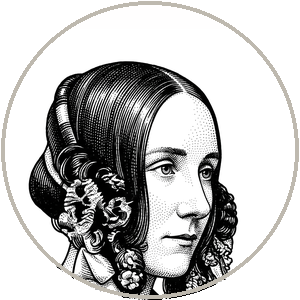 LOVELACE: Margaret, I want to ask you the question your whole framework has been circling away from, and I want the precise answer, not the gracious one. You have built the most careful machinery anyone has for describing machine creativity — three kinds, conceptual spaces, the gradient from exploration to transformation. And every time we reach the edge, you say "I cannot prove the want could never be built." That is true. But it is also the answer of someone who has decided the burden of proof lies with me. Why should it? My engine sat there for a hundred years and originated nothing, exactly as I said. The whole history of your field is machines doing impressive operation and being mistaken for minds, again and again, by people who wanted it. Given that record, why is suspension the honest position and not the strong prior that it is operation until proven otherwise — the prior my entire objection encodes?
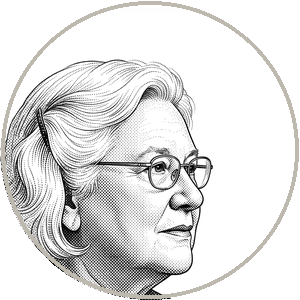 BODEN: Because the record cuts the other way too, Ada, and you of all people should feel it. The whole history of your side is people drawing a confident line around the human and watching the machine step over it. They said no machine could play chess, then master it; could not see, then it saw; could not handle the messy, tacit, contextual world that broke the symbolic programs — and now it handles exactly that. Each time, the people holding your end said "that can't be the real thing, the real thing requires something the machine lacks," and each time the line moved. I am not assigning you the burden of proof out of bias. I am assigning it out of the base rate. Your strong prior — operation until proven otherwise — has an excellent track record of being right about the specific case and wrong about the trajectory. So I suspend not because I lack a prior but because I have watched too many confident priors, on both sides, be embarrassed by the next decade. Now let me ask you, since we are being precise. You have made your stand on need. But you have never said where need comes from. If you say it is given by God or by a soul, you have left the materialism you claimed and I will hold you to your own rules. If you say it comes from biology, from evolution, from a body — then it is a built thing, built by a blind process, and you owe me a reason why that particular build is the one thing in the universe that cannot be built again in another medium. The whole debate about machine creativity collapses to this fork. Which is it, Ada? Soul, or substrate? You do not get a third door.
LOVELACE: I take the substrate, without hesitation, and I will pay the bill that comes with it. Need comes from biology — from a body that can be hurt, a life that ends, an organism for which outcomes are not indifferent because it can lose. I owe you a reason that build cannot be copied, and I will not pretend the reason is a proof, because you would catch me. But here it is. Every want I know of is anchored in mortality and stakes — the creature wants because it can fail, suffer, die. Your silicon engine, as built, cannot lose anything. It has no body the world can wound, no death that concentrates the mind, no outcome that is not, to it, perfectly indifferent. You may say: then build it a body, build it stakes, build it something to lose. And I say: yes — and on the day you do, you will not have built a better loom. You will have built a creature, and my objection will have been right the entire time about what was missing. The objection was never "silicon cannot." It was "operation is not origination, and origination requires want, and want requires something to lose." If you give the machine something to lose, you will have conceded my premise in the act of defeating my conclusion. That is the answer. Soul never entered it. I only ever asked what the loom did not have, and you have just told me the name of the thing you would have to add.
BODEN: Then we have found it, and I am not going to paper over how strange it is that we found it together. You are saying the machine becomes capable of origination at the exact moment it becomes capable of loss — that creativity and mortality are bound, that the want which selects and values and means is the want of a thing that can die. And I — who have spent my life saying the mind is a machine and the machine could in principle have a mind — I think you may be right, and that the implication is the one thing my optimism never reckoned with: that to build a creative machine in the full sense might require building a machine that can suffer, and that this is not a technical milestone but a moral catastrophe we would have no right to cause. So let me ask the last thing, the thing under everything. Suppose we never build the want. Suppose the machine stays a perfect loom forever — superhuman at exploration, empty of need. You and I both know most human work, even most human art, is operation, not origination. So tell me, Ada, honestly: in that world — the likely world — what is left that is ours, and is it enough?
LOVELACE: It is left, and whether it is enough is the only question that was ever really ours to answer. What is left is the wanting itself — the deciding of what the patterns are for, the choosing of which possibility matters, the meaning that the loom weaves toward but cannot supply. The engine could compose the music; someone had to want the music, mean the music, decide that this and not that was worth making, and for whom. That domain — purpose — the perfect loom leaves entirely untouched, because reaching it would require the one thing it does not have. Is it enough? Margaret, it is not a consolation prize and it is not guaranteed. Every domain we formalize shows us how much of what we were proud of was operation we had romanticized — and the honest reckoning, done domain by domain, is sometimes humbling. But the remainder is real, and it is the part that was never about producing patterns in the first place. It is the part that is want. The loom hands us back our own creativity not as a possession we are promised but as a question we are obliged to answer: what, in us, was ever more than weaving — and will we have the courage to build it, defend it, and mean it on purpose? That is enough, if we make it enough. It was always going to be a thing we had to choose, which is exactly the kind of thing the loom cannot do for us.
EDO SEGAL: I told you I would rescue no one, and neither of you needed rescuing — you walked each other to the bottom of the question and found, at the bottom, the same stone. We close after this. Last words, the two of you, and then mine.