Closing Statements
 **EDO SEGAL:** The strongest thing the other said. Kate first this time.
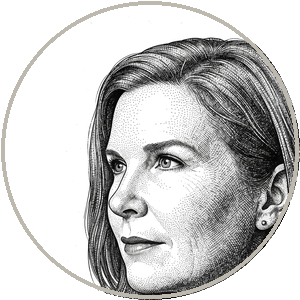 **CRAWFORD:** The eye that sees the string. Ursula's argument that disclosure isn't automatic — that you can lay the strings of power in plain sight and people will still see God's order instead of a man who owes money, because the capacity to see a string as a string is made of something prior, and that something is story. I came in believing the map was self-evidently liberating, that visibility did its own work. She convinced me, against my will, that my maps land on eyes that imagination already had to prepare. I've spent three hours trying to find the gap in that and I can't. I'll be arguing with it for years, and worse, I think I'll be agreeing with it.
**EDO SEGAL:** Ursula.
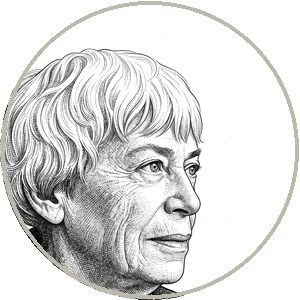 **GUIN:** The last ore. Kate's question about whether imagination is the weapon against extraction or merely the final extraction site — whether the machine isn't strip-mining the imaginative itself, and selling my own scraped sentences back to me as its voice. I walked in here as the prophet of the imaginative, certain that imagination was the one thing the wire couldn't reach. She didn't refute me. She did something worse and more useful: she showed me that the thing I was counting on to be safe is the thing most in danger, and that I'd grown complacent calling it a weapon when I should have been defending it as an endangered species. She took my hope and handed me back a responsibility. That's the strongest thing anyone's done to me in years.
**EDO SEGAL:** Now the floor is yours, each of you, uninterrupted, to leave with the reader. Kate, you took us down to the mine first tonight. Ursula closes us. Kate.
**CRAWFORD:** I've spent my career insisting on one discipline, and I'll leave you with it, because it's the most practical thing I own. When the machine feels like magic, somebody made it work, and the answer is almost never no one. Follow the wire. It runs from the clean interface on your desk to a mine, a warehouse, a watershed, a scraped photograph, a worker reading the worst of the internet so your answer comes back kind. The seamlessness you experience is not the absence of cost. It is the engineering of your ignorance of the cost. So the single act I'd ask of you is the un-ignoring: refuse the cloud, refuse the river, refuse every word that makes the machine sound weightless, and ask, of each system, the oldest question — who benefits, who pays, who decided, and who never got a vote. That question is not a feeling. It's a habit, and it can be trained, and a society that trains it is a society that can still govern the thing instead of being governed by it.
But I'll leave you with the thing Ursula taught me tonight, because I'd be a hypocrite to keep it to myself. The map is necessary and it is not enough. The door out is not in the territory; I've never been able to draw it. You will need, alongside the discipline of following the wire, the harder discipline of imagining the world where the wire runs somewhere else — where the worker is paid and named and free to refuse, where the data belongs to the people it came from, where the mine is governed by those who live beside it. That world is not on any map I can draw. It has to be pictured before it can be built, and the picturing is a faculty, and the faculty is forming or failing in a child right now. Guard it. It may be the last unmined thing.
**EDO SEGAL:** Ursula.
**GUIN:** I have spent a lifetime saying that we live in capitalism, that its power seems inescapable, but that so did the divine right of kings — and that the name of our art is freedom, and that we will need writers who can remember freedom. I believe it tonight more fiercely than ever, and I understand it better, because Kate has shown me what I was missing. I thought remembering freedom was enough. It isn't. You can remember freedom in the abstract and never lift a finger, the way the citizens of Omelas remember the child and never free her. Memory of freedom has to be married to the map of the prison, or it curdles into the most beautiful inaction there is.
So here is what I'll leave you with, and it's the thing the machine cannot do and you can. Reach. Not toward the machine — toward each other. The machine will offer to spare you every friction: the blank page, the hard reading, the labor of imagining another person's stakes, the cost of standing exposed beside someone who could be harmed. Accept the sparing and the faculties never form; the soil goes; the soul that struggle would have built simply never arrives, and no metric will mourn it because the residue looks the same. Refuse the sparing. Sit with the blank page until it yields your own sentence and not the machine's. Follow Kate's wire all the way to the worker, and then do the thing the wire can't do for you — imagine yourself into her body so completely that her fate becomes intolerable to you, and then stand with her at real risk. That reaching is the candle and the solidarity and the story and the door, all at once. It is the one thing in this whole apparatus that cannot be mined, because it is not a product. It is an act, and only a living, mortal, frightened, finite person can perform it. You are that person. Do not let them spare you the one labor that makes you what you are.
**EDO SEGAL:** Sixty seconds, as promised, and then I turn the lights off.
Three hours ago I asked whether you break the spell by telling a braver story or by following the wire to the mine. And you have watched two of the people best equipped on earth to answer arrive, separately, at the same impossible instruction: both, and neither alone, and the marriage of the two is harder than either of them being simply right. Kate proved that the machine is made of lithium and labor and scraped lives, that the cloud is the most expensive illusion ever sold, and that following the wire is a discipline you can train and a society can institutionalize. Ursula proved that no disclosure frees anyone whose eye hasn't first been taught by story to see a string as a string, that inevitability is the master spell and only imagination breaks it, and that the imagination itself is now the most endangered thing in the mine. Notice that neither of them told you the comfortable thing. The comfortable thing — that you can pick one, the map or the myth, and be safe — was never on the table tonight.
So let me route it through the kitchen table, the way I promised I would. A parent asks: what do I teach my child? And the answer this room built, against itself, in real time, is this. Teach her both eyes. Teach her to follow the wire — to refuse the word "cloud," to ask who paid and who was paid, to never again mistake the seamless for the costless. And teach her to remember freedom — to sit with the blank page, to imagine the world the wire could run through instead, to reach across the dark into another body's stakes and stand there, exposed, at cost. One eye sees the supply chain. The other sees the story. A child with only one is half-blind in the exact way this machine is built to keep you. A child with both can climb.
Here is where I leave you, at the rung where this debate lives. You came up the staircase asking what AI can do. You are leaving it asking what AI is made of, and what it is making of you, and whether you can hold the mine and the myth in the same gaze without letting go of either. That holding is the work. It does not resolve. Le Guin and Crawford did not resolve it, and they are the best we have, and watching them fail to resolve it — magnificently, generously, each ending the night changed by the other — is the most honest map of the territory you will get. You cannot climb past this floor by waiting for someone to settle it for you. You climb by deciding, with both eyes open, what you will follow and what you will imagine and what you will refuse to be spared. The machine will offer to carry you. [There is no elevator](https://www.youonai.ai/fieldguide/med/elevator_and_staircase). There never was. There is only the staircase, and the question my book asked from its first page, which sounds different now than it did three hours ago, because now you know what it costs and what it's made of: [are you worth amplifying](https://www.youonai.ai/fieldguide/med/courage_to_be_amplified)?
Ursula Le Guin. Kate Crawford. Thank you, both of you, as human beings, for the fight and for the grace inside it. The room is yours to argue in now. Goodnight.
*Two ways of seeing AI walk into a room, and only one of you climbs out the same.*
In this three-hour conversation hosted by Edo Segal, Ursula K. Le Guin — who taught a century to make imagination a form of resistance — faces Kate Crawford, who pulled AI apart into lithium, labor, and extraction in Atlas of AI. Le Guin insists the machine future must be narrated, mythologized, dreamed otherwise, because any human power can be resisted and changed by human beings; "we live in capitalism, its power seems inescapable — but then, so did the divine right of kings." Crawford insists the stories are the spell: stop telling them, follow the wire, read the map of mines and ghost workers beneath the magic. Story versus supply chain. Enchantment versus atlas. This is the transcript of where their two books collide — and a rung on your climb to process the Orange Pill Moment with both eyes open. Part of the [YOU] on AI collection. Pull up a chair.
Ursula K. Le Guin (1929–2018) was one of the most influential writers of the twentieth century, the author of the Earthsea cycle, The Left Hand of Darkness, and The Dispossessed: An Ambiguous Utopia. Her short story "The Ones Who Walk Away from Omelas" and her essay "The Carrier Bag Theory of Fiction" reshaped how a culture thinks about utopia, cost, and what a tool is for. In her 2014 National Book Foundation speech she told the publishing industry that "we live in capitalism; its power seems inescapable — but then, so did the divine right of kings," and that "we will need writers who can remember freedom." She insisted, across sixty years, that the imagination is not an escape from reality but the only known instrument for changing it.
Kate Crawford is an Australian scholar, writer, and artist among the most influential critical voices on the social and political implications of artificial intelligence. She is the author of Atlas of AI: Power, Politics, and the Planetary Costs of Artificial Intelligence (Yale University Press, 2021), a landmark study of AI as an extractive industry. A principal researcher at Microsoft Research, she co-founded the AI Now Institute. With the artist Vladan Joler she created Anatomy of an AI System, a map tracing a single voice assistant across the planet that produces it, now in the permanent collections of MoMA and the V&A. With Trevor Paglen she produced Excavating AI, an investigation into the politics of the datasets that teach machines to see.
Edo Segal has spent five decades building at the technology frontier — from games written in Assembler to expert systems, to companies through every platform shift, to Napster. He is the author of [YOU] on AI, written in open collaboration with the AI it describes, and the host of The Debates: long-form collisions between the minds shaping the machine age. He moderates the only way he knows how — stake declared, scars showing, no winner called.
Hosted and moderated by Edo Segal. A volume in the [YOU] on AI — The Debates series — youonai.ai