The Crossing
 **EDO SEGAL:** No preamble this time. You've earned the room. Ursula, you start — ask Kate the thing you've wanted to ask her all night and haven't been able to, because I kept interrupting. Then it's hers to ask you. I'm barely here.
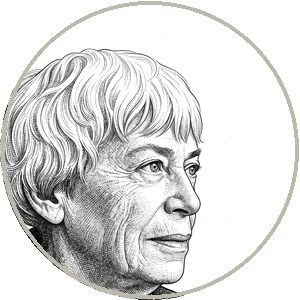 **GUIN:** Kate, here is what I genuinely cannot square, and it's not a trap, it's a real not-knowing. You have spent your life mapping the prison with a precision no one has matched. The mine, the worker, the watershed, the category, the contract. And every map is more complete than the last. So I want to ask you the cruelest version of my own question: has all that mapping ever, once, freed a single person — or has it only ever produced more exquisitely informed prisoners? Where, in the territory of your atlas, is the door? And if you can't point to it on the map — and I don't think you can, because you told me in your envy that you can't — then how is your method not, finally, a counsel of despair wearing the costume of rigor?
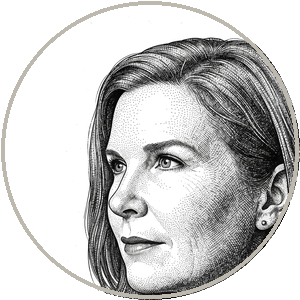 **CRAWFORD:** That's the question I'm most afraid of and you've earned the right to ask it, so here's the honest answer, including the part that hurts. The map alone has never freed anyone. You're right. What the map does is necessary and insufficient — it makes the prison contestable by making it visible, and visibility is the precondition for organizing, but the precondition is not the act. The door isn't in the territory. I've never been able to draw it. Where I'll push back — and it's the only ground I'll hold — is that the maps have, in fact, moved things. Excavating AI forced a major dataset to strip out enormous numbers of images. The Anatomy map changed how a generation of students sees the device on their kitchen counter. Workers I've documented have organized, sometimes citing the very visibility the maps provided. So the map isn't the door, but it's been the thing people read by the light of, before they found a door I couldn't see. And here's my confession, Ursula, the one I owe you after three hours: I think the door is drawn in your medium, not mine. I think you can render the door because you're willing to draw a place that doesn't exist yet, and I'm constitutionally unable to, because my whole discipline is fidelity to what's there. So the cruelest version of your question has a humbling answer. My method needs yours to find the exit. I just spent twenty years too proud to say it.
**GUIN:** Then ask me yours. And don't be kind. I've been the sage too long tonight; come at the soft place.
**CRAWFORD:** All right. Here's the soft place, and I think it's genuinely soft. You say imagination is the weapon that breaks empires, that "it could be otherwise" is the sentence power fears most. But Ursula — your books were fed to the machine. Without your consent, without payment, scraped into the training data, and the model now generates fluent text about the importance of human creativity using the statistical ghost of your own sentences. The imagination you say is the weapon against the machine has been eaten by the machine and is now being sold back to us as the machine's own voice. So here is my cruelest question. What if imagination isn't the weapon against extraction at all? What if it's just the highest-value ore — the last thing left to mine, and the machine is the strip-mining of the imaginative itself? What if the very faculty you're counting on to find the door is the thing currently being dug out of the ground and sold? Where does your hope go if the imagination is not the exit but the final extraction site?
**GUIN:** You've found it. That's the soft place, and I won't pretend it doesn't bleed. Yes — they took my books. They took Omelas, the story about the cost of a utopia, and ground it into the engine that runs on a thousand hidden children, and the irony is so total it stops being irony and becomes a kind of obscenity. And I've had to sit with exactly your question: is imagination the weapon, or merely the last ore? Here is the only answer I have, and it's not a comfortable one. They can mine the products of imagination — my sentences, my plots, the residue, the wake. They cannot mine the faculty. The faculty is not a thing that exists; it's a thing a living person does, in a body, under the specific resistance of a real blank page, at real cost. They scraped my books, but they cannot scrape the act of a child somewhere right now sitting with her own confusion until it yields her own sentence — they can only offer to spare her that act, and if she accepts, the faculty doesn't get stolen, it simply never forms. Which is worse, and which is exactly your death cross, Kate, seen from the inside. So you've moved me. The imagination isn't safe. It's the most endangered resource of all, more endangered than the lithium, because the lithium at least is being fought over, and almost no one is fighting for the conditions under which the human faculty of imagining gets built in the next child. That's the door, and you just showed me it's on fire. We'd better get to it. I came in thinking I had the hopeful position. You've made me afraid in a way I wasn't an hour ago, and I think the fear is more honest than the hope was.
**GUIN:** One more, Kate, since the chair is silent and I may not get another chance to ask you a thing this directly. You see [the pattern](https://www.youonai.ai/fieldguide/med/the_pattern) better than anyone — the same shape of extraction running from the colonial mine through the factory floor to the data center, the submarine cables following the old imperial routes, the past loaded into the present like a charge in a battery. So tell me honestly: when you trace that pattern across five centuries, does it ever feel like a prophecy? Like proof the thing can only end one way? Because that, to me, would be the materialist's version of inevitability — the despair of the person who has seen the pattern repeat so many times she can no longer imagine the repetition breaking.
**CRAWFORD:** That is the most precise diagnosis of my occupational disease anyone has offered me, and yes. Some mornings the pattern feels exactly like a prophecy, and on those mornings I'm no better than the river-as-weather people I despise — I've just swapped their cheerful fatalism for a grim one. The pattern is real; I'll defend every link of it with evidence. But you're right that the pattern can become its own kind of spell, the spell that says because it has always gone this way it must. And the only thing I've ever found that breaks that spell in me — I'll say it because I owe you the truth after three hours — is precisely the thing I came in distrusting. Someone imagining the break. A novelist, usually. You, specifically, more than once. So the pattern is my evidence and my prison both, and the door out of the prison is drawn in your hand, not mine. I've now said that three times tonight. I think it's the thing I actually came here to learn.
**GUIN:** Then we've each given the other the thing we walked in guarding. That's not a defeat. That's what a real conversation is for.
**CRAWFORD:** And you've made me believe the door exists, which I didn't when I sat down. So we've traded the things we were each most certain of. That seems like the right outcome for an honest fight.
**EDO SEGAL:** I have to break my silence only to mark what the reader can't see — that neither of you is performing anymore. You've each taken the other's deepest fear inside your own position and come out changed, which is the rarest thing two serious people can do in public. We close after this. Final statements, the last word each — but first, the bookend to the envy I opened with. Each of you: name the strongest thing the other said tonight. Not the most agreeable. The one you'll still be arguing with next month. That, and then the floor is yours to leave the reader on.