The Politics of Classification and the Power of Naming
 **EDO SEGAL:** Kate, you and Trevor Paglen did something to a famous dataset that I still find hard to shake. You went down into ImageNet — the enormous image collection that helped launch the whole deep learning era, the benchmark everyone celebrated — and you looked at the categories underneath, the labels the machine was taught to sort people into. Tell the reader what you found, and tell them the claim you built on it, because it's one of the most important sentences in your work and I want Ursula to have to respond to it.
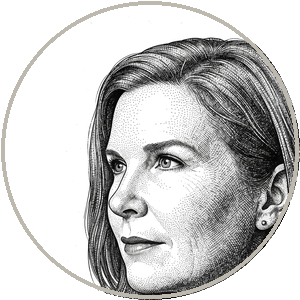 **CRAWFORD:** What we found, under the celebrated benchmark, was a structure of categories inherited from an older lexical database — and many of those categories, applied to photographs of actual human beings, were demeaning, absurd, or cruel. People sorted into labels that judged them, tagged with slurs and insults and bizarre verdicts on their character. The dataset that taught machines to see had quietly taught them to see people through a lens of prejudice, and almost nobody had looked closely enough to notice. And the claim we built on it is this: all taxonomies, all classificatory systems, are political. There is no neutral way to carve up the world. A photograph of a person in a chair does not announce what it means — worker, suspect, customer, threat. Meaning is assigned from outside, by whoever builds the labeling scheme, and that assignment is power. The machine then treats the assigned meaning as fact, because the machine has access to nothing but the labels it was given. There is no mirror. There is a constructed classification, made by particular people with particular assumptions, frozen into the system and applied at scale to everyone. The myth of the mirror is precisely the alibi I exist to dissolve.
**EDO SEGAL:** Let me restate that to make sure the reader feels the size of it. You're saying the machine's apparent objectivity — the thing that makes us trust it — is a laundering operation. A human prejudice goes in, gets frozen into a category, and comes out the other side wearing the white coat of mathematics, so that to object to it feels like objecting to arithmetic. The bias didn't disappear. It got promoted to a fact. Ursula — this is your territory from a different door. You've argued for sixty years that the fight over language is the fight over reality, that what can be named can be seen and what can't be named stays invisible. Kate is describing naming as a weapon of power. You've described naming as a weapon against it. Are you allies or are you about to disagree?
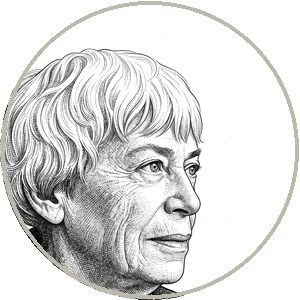 **GUIN:** Both, which is the most interesting kind of meeting. Kate has described, with beautiful precision, the dark half of naming — the half I've spent my life equally obsessed with. To name is to exert power. The colonizer names the forest "lumber" and the naming is the first act of the felling; he names the people "primitives" and the naming is the permission for the conquest. In my forest novel the whole tragedy turns on a category error frozen into a worldview: Captain Davidson cannot see the forest as a world because his language has only "tree" and "resource," and what his language cannot name, his conscience cannot reach. So yes — taxonomies are political, classification is governance exercised quietly through the schema instead of openly through the law. Kate and I have written the same sentence from opposite coasts.
But here is where I push, and it's a real push. Kate's instinct, having found that the categories are prejudiced, is to want them audited, corrected, opened to scrutiny — to fix the boxes, or at least to expose who built them. Necessary work. But it stays inside the logic of the box. It accepts that the world will be sorted and fights to sort it more justly. My instinct is older and stranger: I distrust the box itself. The deepest violence isn't the bad category. It's the prior assumption that the living world is the kind of thing that goes in categories at all — that a person is a label, that a forest is an inventory, that meaning is a tag you assign rather than a relation you live inside. Kate fights for better boxes. I write to remind you the boxes are a fiction we agreed to, and that other fictions are available — the Kesh in my Always Coming Home don't have our categories at all; the word for world is the word for forest. The radical act isn't a fairer taxonomy. It's the imaginative recovery of the experience that precedes taxonomy, the experience the box was built to amputate.
**CRAWFORD:** I love that and I think it's a luxury, and I want to name the luxury without sneering at it, because it's a real disagreement and not a put-down. You can write to recover the pre-categorical experience because you're a novelist and your medium permits it. But the woman flagged by a [facial recognition](https://www.youonai.ai/fieldguide/med/surveillance_capitalism) system at a border, or scored for "attention" by an affect-recognition camera in a job interview, or sorted into a risk category by a benefits algorithm she'll never see — she doesn't get to step outside the box. The box is being applied to her body, at a gate that matters, with consequences for her liberty, by a system that's basically guessing and dressing the guess in the authority of computation. She can't recover the pre-categorical. She needs the specific category that's about to ruin her life to be auditable, contestable, and accountable, today. The pre-categorical world is where I want to live too. The categorical world is where she's being detained. I work in the second one because that's where the harm is.
**GUIN:** And you're right that she needs the audit now, and I'd never tell her to wait for a novel. But ask where the affect-recognition camera came from in the first place. It rests on an assumption — that the inner life can be read off the surface of the face, that feeling is a fixed universal repertoire legible to a machine. That assumption is a story. A bad one, a discredited one, but a story, and it got built into hardware and pointed at her face precisely because the culture had lost the older story — that a human face is not a readout, that a person is an interiority that does not yield to the gaze, that the soul is not a barcode. The audit you'll run is downstream of a story the machine's makers believed. You can win the audit and lose the war if the underlying story — the human as transparent data — goes unchallenged, because they'll build the next camera on the same premise. Somebody has to fight the premise. The premise is a story. Stories are fought with stories.
**CRAWFORD:** Let me add the part of classification that I think frightens me most, because it's where the politics goes fully invisible. Once a category is embedded, it becomes infrastructure. The boxes a few engineers chose, often for convenience, harden into the way the system understands the world, and then countless downstream decisions inherit them. A label is not just a word — it's a verdict the machine will repeat about millions of people who never saw the scheme, never agreed to it, and have no way to appeal it. And in the new systems it's worse, because the verdict comes wrapped in fluent, confident prose that makes the embedded politics even harder to see. The mirror that is not a mirror returns in a more persuasive guise. A system that speaks grammatically is even more likely to be mistaken for objective.
**GUIN:** Which is why I keep insisting the fight is upstream of the box, in what the culture believes a person is. You've built a whole [attention economy](https://www.youonai.ai/fieldguide/med/attention_economy) on the premise that a human being is a profile, a set of predictable responses to be captured, sorted, and sold — and the affect-camera and the risk-score and the recommendation engine are all just that premise, made of silicon and pointed back at us. The premise is a story about what a person is. A thin, cramped, profitable story. And the reason I write the other kind — the person as an interiority that doesn't resolve, that surprises even itself — is not decoration. It's the only counter-premise there is. You can't audit your way to a richer idea of the human. You have to imagine it, and then refuse to be sorted by anything smaller.
**EDO SEGAL:** I want to hold both of those because the reader needs the tension undissolved. Kate: the box is on her body now; audit it now. Ursula: the box was built from a story; un-write the story or they'll build another box. You're not contradicting — you're describing the emergency room and the epidemiology, and a sane civilization needs both, and ours keeps trying to buy one without the other. We're at the two-hour mark. Time to go all the way down to the thing under all the categories, the thing Kate says the whole field is built to make us forget — the matter. Lithium, water, carbon, deep time. And Ursula's forest, where the word for world is forest. The most material round, after this.