We Live in Capitalism
 **EDO SEGAL:** Ursula, you put a rule against the word "inevitable" at the door, and I've been guarding it all night. Now I want to spend the word, carefully, with you both. Because the most powerful thing AI has going for it is not any capability — it's a feeling. The feeling that it's already over, that resisting is like resisting the tide, that the only sane move is to adapt fast and stop asking whether. In my book I called this the air of the [river](https://www.youonai.ai/fieldguide/med/river_of_intelligence) — intelligence finding its channel the way water finds the sea, indifferent to whether you approve. And I confess that when I wrote it, I meant it partly as comfort. Surrender to the current; learn to swim. Ursula, you gave the culture its most famous sentence about exactly this feeling, on a stage in 2014. Say it, and then dismantle my comfort.
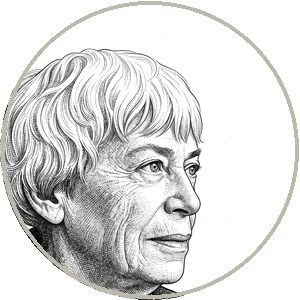 **GUIN:** I said: we live in capitalism. Its power seems inescapable. But then, so did the divine right of kings. And I said that the name of our art is freedom, and that we will need writers who can remember freedom — poets, visionaries, the realists of a larger reality.
Now let me dismantle your comfort, Edo, because you've asked for it honestly. The sentence does only one thing, but it's the one thing that matters: it converts a fact into a costume. "The divine right of kings" was, for a thousand years, not an opinion. It was the structure of reality. The king ruled by God's own arrangement; to question it was not disagreement but blasphemy and madness; the peasant who imagined a world without a king was imagining a square circle. And then — not slowly, in the end, but with a kind of vertigo — it became a costume. A thing somebody had put on, that could be taken off, that looked, in retrospect, absurd. Nothing about the king's body changed. What changed was that enough people stopped experiencing the arrangement as the weather and started experiencing it as a choice somebody was making and could be made to stop making. That conversion — from weather to costume — is the only event that has ever ended a regime that called itself eternal. And it is an event in the imagination before it is an event in the street.
So when you tell me the river is indifferent, that intelligence finds its channel like water finds the sea, I hear the divine right of kings in a new robe. You've taken a human arrangement — four companies, a particular financial structure, a particular set of choices about what to build and who pays — and you've dressed it as hydrology. As physics. As God's own arrangement. And the moment you do that, you've disarmed the only weapon that has ever worked. Because you cannot organize against the weather. You can only organize against a costume.
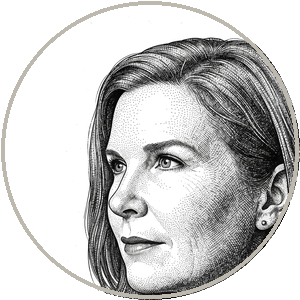 **CRAWFORD:** I want to stand right next to Ursula here and then take one step away, because this is the place where we're closest and the step matters most. We agree completely on the diagnosis: the air of inevitability is manufactured, it's the industry's most valuable product, and "this is just where the technology is going" is a sentence designed to make you stop looking for the people steering it. To map a system of power is already to deny that it's natural or inevitable. That's the whole reason I draw the maps. The map says: these are choices, made by people, and what people made, people can remake. So far, Ursula and I are the same person.
Here's the step away. Ursula locates the conversion — weather into costume — in the imagination. I locate it in the disclosure of the material. And I think the difference is not small, because it changes what you do on Monday. The divine right of kings didn't dissolve because people imagined a kingless world in the abstract. It dissolved as the actual mechanics of power became visible and contestable — as the king's dependence on the merchant's loan, the soldier's wage, the printed pamphlet's reach became things you could see, and therefore things you could withhold. The costume comes off when you can see the strings and the hands holding them. My atlas is a machine for showing the strings. Inevitability is the claim that there are no hands, only current. And you defeat that not primarily by imagining otherwise but by pointing, relentlessly, at the hands: this contract, this owner, this lobbyist, this choice. The imagination helps. But the imagination unanchored from the disclosure is exactly how you get a culture that dreams beautifully of other worlds and never names the man holding the string.
**GUIN:** But Kate — who taught the eye to want to see the strings? You speak as if disclosure were automatic, as if the hands become visible the moment you decide to look. They don't. For a thousand years the strings of the king's power were right there — the loan, the wage, the grain — and almost no one saw them as strings, because they lacked the prior thing, the thing that makes a person capable of seeing a string as a string instead of as the natural order. They lacked the story that says this is contingent. The disclosure and the imagination aren't a sequence where one is real and one is decorative. The imagination is what makes the disclosure legible as disclosure. Show a medieval peasant the king's account books and he sees the proof of God's order. Show him the same books after the story has shifted and he sees a man who owes money he can't pay. Same strings. Different eye. And the eye is made of story.
**CRAWFORD:** That — yes. All right. That's the strongest version of your claim and I don't have a clean answer to it, which is rare for me and I'm going to admit it instead of bluffing. The eye that sees the string as a string is not produced by the string. It's produced by something prior, and "story" is at least a candidate name for that something. I still want to insist that the story alone, without the relentless pointing at the actual hands, curdles into mood — but I can't claim the pointing works on an eye that hasn't first been taught to see strings as strings rather than as fate. We may genuinely need each other here, and I find that more annoying than I can say.
**EDO SEGAL:** Before I number it, one more exchange, because I think there's blood still in this. Kate, you said the costume comes off when you can see the strings — the loan, the wage, the pamphlet. Ursula says the eye that sees a string as a string is made of story. So let me ask the hardest practical version. A reader puts this book down tonight and wants to do one thing tomorrow about the air of inevitability. Each of you, one instruction. Kate.
**CRAWFORD:** Refuse the passive voice. Every time you read that AI "is transforming" an industry, or jobs "are being automated," or progress "is happening" — stop, and put the hidden subject back in the sentence. Who is transforming it. Who is automating. Who decided, who profits, who pays. The air of inevitability lives almost entirely in the grammar, in the sentences with no one steering. Drag the actor back into every sentence and the weather turns back into a decision. That's a habit, you can do it tomorrow, and it costs nothing.
**GUIN:** And mine: read one thing that imagines the world otherwise. Not analysis — analysis maps what is. A novel, a poem, a utopia, an ambiguous one, anything that makes a world that isn't this one feel real for an hour. Because Kate's instruction works on an eye already trained to want the actor back in the sentence, and that wanting has to come from somewhere, and it comes from having lived, even briefly, even in fiction, in a world arranged differently — so that this one stops feeling like the only one. Put the actor back in the sentence, yes. But first, remember the sentence could read another way at all.
**CRAWFORD:** Grammar and imagination. The string and the eye. I keep trying to choose one and you keep handing me both back.
**EDO SEGAL:** That annoyance is the sound of a real convergence, and I'm numbering it — four. Convergence four: inevitability is the master spell, you both exist to break it, and you've just conceded you can't break it alone. The story makes the eye capable of seeing strings; the map shows the eye where the strings actually are. Ursula supplies the contingency; Kate supplies the coordinates. I'll confess my own complicity here before we move on, because the toll is mine to pay: I wrote the river as comfort, and I now think the comfort was a small betrayal — I handed the reader a reason to stop looking for the hands. I'll carry that up the stairs. Next round goes to the deepest of Kate's strings: the categories themselves. Because before the machine can sort the world, somebody decides what the boxes are — and Ursula has spent a career on the politics of who gets to name. Classification, and naming, after this.