Closing Statements

 EDO SEGAL: Three hours. We're at the end, and the format has one rule left: each of you gets the last word, uninterrupted, and then I get sixty seconds, and I do not get to declare a winner — that's the reader's job, and I wouldn't take it if I could. Timnit, you first. What do you want the reader carrying up the stairs?

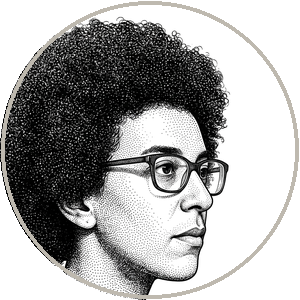 GEBRU: I want them carrying a refusal and a question. The refusal: don't let anyone tell you the future of this technology is inevitable, because inevitability is the oldest trick the powerful have, and "the machine is coming whether you like it or not" is a sentence designed to make you stop asking who's building it and why. It's a choice. It's always a choice. Someone chose it, for reasons, with names, and you're allowed to choose otherwise. And the question — the one I'd put at every table where this gets decided: who is in the room, and who is being decided about without being in the room? Because that gap, between who decides and who's affected, is the actual injustice of this whole era, larger than any single harm, and every other question is downstream of it. I came in fearing the present and I'll leave fearing it, but Nick has put a crack in my certainty I'll be living with — that some doors really don't have an after, and that I should hold a little space for the one cosmic door even while I'm fighting in the hallway. I won't stop fighting in the hallway. But I heard him. That's not nothing, after three hours.
EDO SEGAL: Nick. The last word.

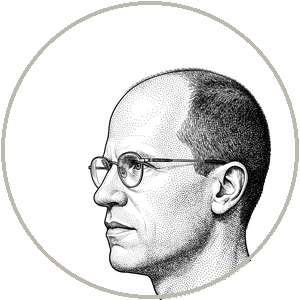 BOSTROM: I want them carrying a recognition and a discipline. The recognition: we are the stupidest species capable of starting this, which means we are not wise enough for what we're holding, and the gap between the power of our plaything and the maturity of our conduct is the thing to be afraid of — not the machine's malice, of which there is none, but our own immaturity, of which there is a great deal. And the discipline: hold the two clocks at once. I came in fearing the long future, and Timnit has done something I didn't expect — she's convinced me that a long-term fear which can't be checked against a present person is a fear that has lost its way, and that the test of whether my concern is real is whether it ever costs the powerful anything now. I'll be carrying "unaccountable to a trillion" for a long time. So my last word is not the cliff. It's this: the people who can only see the present and the people who can only see the future are making the same mistake, which is to look with one eye. I've been guilty of it. She's pushed me to open the other. Look up and down. The staircase runs both ways, and the danger is real in both directions, and the only unforgivable thing is to close one eye because the other view is more comfortable.

EDO SEGAL: Sixty seconds, and I'll keep my promise — no winner. Here's what each of you proved that the other now has to live with. Timnit, you proved that any concern for the future that can't be cashed out in a present person, a present cost, a present accountability, is a concern that has slipped its moorings — and Nick took it, and said he'll carry it. Nick, you proved that irreversibility is a real moral category, that some doors have no after, and that an accountability framework which needs a tomorrow can't fully answer the door that closes tomorrow off — and Timnit took it, and said she'll hold space for it. You did not converge. You did something rarer. You each found the exact place where your own greatest virtue turns into your own blind spot, and you said so out loud, which is the only thing three hours is actually for.

So let me route it where I always do, through the smallest table in the house. My daughter asked whether she should still learn the hard thing. After three hours I think the answer these two have left me is: yes — and learn to keep both eyes open, because the people who will try to decide her future for her will all be one-eyed, and they will all tell her it's inevitable. Timnit will teach her to ask who's in the room. Nick will teach her to ask whether the door has an after. She'll need both, because she's going to live in the world this argument is about, and neither the hallway of present doors nor the one cosmic door is going to wait for her to grow up.

Reader — that's the staircase, and you're standing on it now. There is no elevator past this floor; you climb it on your own legs or not at all. Look down: there's a worker inside the machine, and she has a name. Look up: there may be a door with no after. The question on the table was never which way to look. It was whether you have the courage to refuse to close either eye. Timnit Gebru, Nick Bostrom — thank you. You disagreed all the way to the end, honestly, and you handed it to the reader intact. That's the whole job. Now it's yours.

Look down, or look up. One of them is wrong about which way the danger is coming.
Two of the most uncompromising minds in artificial intelligence sit across from each other, and they cannot both be right about where to point your eyes. Timnit Gebru — the scientist who counted the harm, named the hidden workers, and refused to call any of it inevitable — argues that the real story of AI is power, labor, and concentration, happening now, to people with names. Nick Bostrom — the philosopher who mapped the abyss and the paradise on its far side — answers that the present harms, real as they are, sit inside a far larger frame: the moment a created mind outgrows its makers, behind a door that has no after. Hosted by Edo Segal, this three-hour conversation is the transcript of that head-on collision: the present against the future, the face against the trillion, the hallway of closing doors against the one that closes them all. It is a load-bearing rung of the Orange Pill climb — the floor where you must decide which way the danger comes before you can see further. Part of the [YOU] on AI collection. Pull up a chair, and try to keep both eyes open.

Timnit Gebru is a computer scientist and one of the most influential figures in the study of artificial intelligence and its social consequences. Born in Addis Ababa to Eritrean parents, she came to the United States as a teenage refugee and earned her doctorate in computer vision at Stanford under Fei-Fei Li. With Joy Buolamwini she co-authored the landmark "Gender Shades" audit, and as co-lead of Google's Ethical AI team she co-wrote "On the Dangers of Stochastic Parrots." Her forced departure from Google in 2020 became a defining controversy in the field. In 2021 she founded the Distributed Artificial Intelligence Research Institute (DAIR), and with Émile Torres she authored the influential critique of the TESCREAL ideologies. She remains a leading voice for accountability, labor, and the redistribution of power in technology.

Nick Bostrom is a Swedish-born philosopher whose work defined how the world thinks about the long-term risks and possibilities of artificial intelligence. Trained across physics, computational neuroscience, mathematical logic, and philosophy, he founded the Future of Humanity Institute at Oxford, which he led until its closure in 2024. His 2014 book Superintelligence: Paths, Dangers, Strategies became a bestseller and moved machine intelligence from the fringes of futurism to the center of global discourse, giving the field the vocabulary of the orthogonality thesis, instrumental convergence, and the treacherous turn. His simulation argument, vulnerable world hypothesis, and 2024 work Deep Utopia extended his analysis from catastrophe to the strange country on the other side of success.
Edo Segal has spent five decades building at the technology frontier — from games written in Assembler to expert systems, to companies through every platform shift, to Napster. He is the author of [YOU] on AI, written in open collaboration with the AI it describes, and the host of The Debates: long-form collisions between the minds shaping the machine age. He moderates the only way he knows how — stake declared, scars showing, no winner called.
Hosted and moderated by Edo Segal. A volume in the [YOU] on AI — The Debates series — youonai.ai