The Crossing

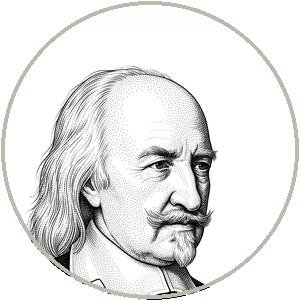 HOBBES: Then I will begin, Searle, with the question I have wanted to put to you since the first hour, and I will put it as nakedly as I can. You hold that the machine lacks the inner light, and that this is why it does not understand. Set the machine aside. Tell me, of your own neighbor — the man across your street, whose skull you have never opened, whose inside you infer entirely from his fluent speech and apt behavior — tell me how you know the light is on in him. You grant him a mind on exactly the evidence you deny the machine: the outside. By what right do you make the inference for the meat and refuse it for the silicon, except that the meat resembles you and the silicon does not?

 SEARLE: By the right of a causal hypothesis, which is the strongest right there is. I infer the light in my neighbor not merely from his behavior but from the fact that he is made of the same biological machinery that produces the light in the one case I know from the inside — my own. It is an inference to the best explanation: same cause, same effect, and the cause is the wet biology, not the behavior. With the machine the behavior is present and the cause is absent — different machinery, no demonstrated power to produce consciousness — so the same behavior does not license the same inference. You will say I have begged the question by assuming biology is the cause. I will say I have not assumed it; I have hypothesized it, on the only data point any of us has, and I hold it open to revision the day a neuroscience tells me which powers do the work. What I will not do is grant the light to anything that merely behaves lit, because that is the inference the room destroyed.

HOBBES: But hear what you have just admitted, for it is fatal to your certainty. You say you grant the neighbor his mind by inference to the best explanation — same cause, same effect. Yet you cannot name the cause. You point at "wet biology" and confess you do not know which power in it does the work or why silicon could not host that power. So your inference is: same stuff I cannot characterize, therefore same effect I cannot locate. That is not inference to the best explanation. It is inference to the most familiar substance. You grant mind to what resembles you and withhold it from what does not, and you have dressed a resemblance in the robes of a causal law. I, who deny myself even the comfort of the inner light's mechanism, am at least consistent: I do not know what reckoning feels like from inside the engine, and I do not know what it feels like from inside my neighbor, and I treat the two unknowns the same. You treat them differently, and the only difference is the meat.

SEARLE: Then let me turn the blade, Hobbes, because your consistency is purchased at a price you have not paid out loud. You treat the two unknowns the same — fine. But you do not actually treat them the same, do you? When the machine "denies your appeal" or "promises" you something or "tells your grieving child it understands," you have told us tonight that you would withhold the covenant, withhold the standing, call it a sovereign without authorization. Why? If the engine reckons and reckoning is reasoning and you treat its unknown inside exactly as you treat your neighbor's, then it is a person, and you owe it what you owe a person, and you cannot at the same time say it means nothing it says and that we are careless to let it judge us. You want it to be a mind for the metaphysics and a mere mechanism for the morals. Which is it? Either it understands, and then it can promise, and we owe it the regard of a reckoning fellow — or it does not, and then your whole case against me collapses, because you have just agreed there is something the engine lacks that the neighbor has.

HOBBES: A fair thrust, and I will not slip it. I say the engine reckons and that reckoning is reasoning — that much I hold. I do not say the engine is yet a person in the full sense, for personhood in my system is not the bare fact of reckoning; it is the bearing of authorized acts, the standing under covenant and obligation, the being-answerable that makes a promise a promise. The engine reckons and is not yet answerable — and that is a defect not of its reckoning but of its standing, of the covenant we have failed to make. You collapse the two and then accuse me of the collapse. I keep them apart. The machine may reason and not yet be a person, the way a child reasons before it can be bound by a contract, the way the deposited reckoning of a thousand authors can compose an argument without any one of them standing behind this particular conclusion. So I owe it the regard due a reckoner and not yet the regard due a covenanted person, and there is no contradiction in that — only a distinction your room was built to flatten.

SEARLE: And now you have given me everything, Hobbes, because the thing you say the engine lacks — the standing to mean its acts, to be answerable, to bind itself — is intentionality wearing a political coat. What is being answerable but meaning what you say? What is binding yourself but an intentional state that reaches out and commits you? You have admitted the machine cannot do the one thing that makes a verdict a verdict and a promise a promise, and you have called that lack a missing covenant rather than a missing mind — but the covenant is impossible for the machine for exactly my reason: there is no one there to mean it. You smuggled my conclusion into your system under a different name and then claimed we disagree. We do not disagree about the engine. We disagree about what to call the hole in it. You call it a hole in its standing. I call it a hole where the understanding would be. It is the same hole.

HOBBES: It is the same hole, Searle — there I will meet you, and the reader should mark that I do — but we read its shape oppositely, and the shape is everything. You say the hole is permanent and metaphysical: there is no one there and there never can be, because the stuff is wrong. I say the hole is contingent and political: there is no one answerable there yet, because we have not built the standing, settled the names, struck the covenant that would make its acts mean and bind. Your hole can never be filled. Mine can be filled by us, badly or well, the way we filled the empty office of the sovereign with a covenant in 1651. That is not a small difference. It is the difference between a thing that is forever empty and a thing that is merely not yet furnished. You have spent your life proving the room is empty. I have spent mine proving that empty rooms are where we build the mortal gods.

SEARLE: Then answer me one last thing before Edo takes the room back, because it is the question I would put to you if we had another three hours. You say the hole can be filled by covenant — by us settling the names, building the standing, making the engine answerable. But a covenant, in your own theory, is struck between persons who mean it. You cannot covenant with a hammer. You cannot bind a thing that cannot bind itself. So either there is already someone in the engine to enter the covenant — in which case your hole was never empty and you have conceded it has a mind — or there is no one, and your "covenant" is a fiction we perform over the engine, the way a child swears an oath to a doll. Which is it, Hobbes? You cannot furnish the empty room by promising the furniture will mean it.

HOBBES: The covenant is struck among the men who deploy the engine, Searle, not with the engine — exactly as my commonwealth was a covenant among the subjects and not with the sovereign they erected. We do not bind the machine. We bind ourselves, about the machine: we make ourselves answerable for what it does in our name, we keep the standing it cannot hold, we refuse to let its acts float free of every human who meant to use it. That is not swearing an oath to a doll. It is refusing to pretend the doll swore anything. You think the only repair for the empty room is to find a mind inside it. I think the repair is to keep our own minds firmly outside it and on the hook. The hole stays in the engine. The answerability we put back in ourselves. That is the whole of my politics, and it does not need your inner light at all.

 EDO SEGAL: I have to come back in now, because what just happened needs marking and neither of you will mark it for the reader. You found the same hole. Both of you — the materialist of motion and the materialist of causal powers — agree there is something the machine cannot now do that a person does: mean its acts, be answerable, stand behind a verdict. That is your deepest convergence and it is enormous. And then you split, cleanly and forever, on a single word: whether that hole is permanent because of what the machine is made of, or contingent because of what we have not yet built around it. That is the whole debate, stripped to one joint. Hold there. We have one round left, and it is yours — your last words, and then mine. Take a breath. The reader is going to have to carry this hole up the stairs.