Opening Positions

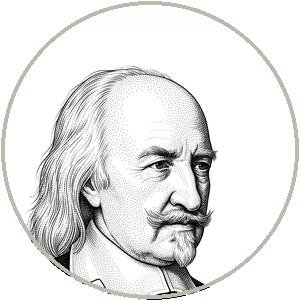 HOBBES: I will be brief, because the truth is brief and only error needs many words. Begin with what a man does when he thinks. He does not commune with a separate spiritual world. He has impressions — the motions that objects press upon his senses, which leave their residues in the brain as motion continued. He gives these residues names, which are arbitrary marks, fixed by the agreement of men, set down as counters to recall and to communicate. And then he reckons. "When a man reasoneth, he does nothing else but conceive a sum total, from addition of parcels; or conceive a remainder, from subtraction of one sum from another." That is the whole of it. To reason well is to add and subtract the names correctly. To reason ill is to miscalculate. There is no third faculty, no inner lamp, no ghost performing a separate act of insight. There is competent reckoning and incompetent reckoning, and the dispute between them is settled the way every dispute over a sum is settled — by checking the arithmetic.

Now. You have built an engine that takes in the residues of all the words men ever wrote, and reckons continuations upon them with a facility no clerk could match. You ask whether it thinks. By my definition it plainly reckons, and reckoning is reasoning, and therefore in the only sense the word ever carried, it reasons. The dualist who insists that real thought requires some immaterial spark must explain why the engine's product is so often indistinguishable from the spark's. I owe no such explanation. On my account the engine does what minds do, because minds were always doing what the engine does. You feel a vertigo at this. The vertigo is not a discovery. It is the cost of having believed, against your own best philosophy, that you were something more than a reckoning machine made of meat. I tell you the machine is your mirror, and you do not like the face in it. That is not an argument against me. That is the argument for me, wearing the costume of an objection.
 EDO SEGAL: Andy.

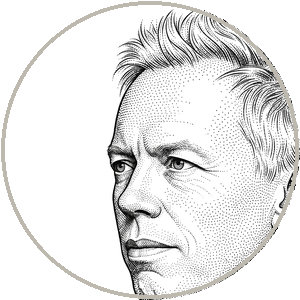 CLARK: That was bracing, and I agree with the first two-thirds of it. No ghost. No inner lamp. The brain is matter, and what it does is — at one level of description — a kind of computation. I won't take a single step back from materialism. Here's where Thomas and I part, and it's one word: where.

Thomas locates the whole of mind inside the skull, in the reckoning over names. I want to show you that this was never true even of you, Thomas, sitting in your study in 1651. Watch what you actually do when you reason hard. You reach for a pen. You make marks on paper, and the marks hold the parts of the argument still so your brain doesn't have to. You move the marks around — and the moving around is part of the reasoning, not a record of reasoning that finished in your head. Cut the long division out of a child and make her do it in pure imagination and she fails; give her the paper and the place-columns and she succeeds. The paper is not where she writes the thought down. The paper is part of where the thought happens. That's the extended mind, and once you see it you can't unsee it. The mind was never sealed in the bone. It was always a loop that ran out through the hand into the world and back.

So when you ask, Edo — does the machine swallow my mind, or is my mind something it can't contain — I want to refuse the frame. My mind was never a thing sitting in one place to be swallowed or not swallowed. It's a process, spread across brain and body and world. The machine is now the most active, most fluent piece of world I've ever been able to recruit. That's thrilling. It's also the most dangerous, for a reason Thomas's picture literally cannot see: because his picture has no body in it. The brain I study isn't a reckoner in a vat. It's a prediction engine bolted to a body that has to eat, that will die, that pushes against a world that pushes back — and the pushing back is what gives the reckoning its meaning and its stakes. The machine reckons. It has no body, no stakes, nothing it must do to stay alive. It predicts symbols. We predict the consequences of action for a creature that can be hurt. That difference is not a footnote. It's the whole of what Thomas left out, and it happens to be the part of you that no server contains.
EDO SEGAL: Before I frame the rounds, one discipline I impose on every long conversation, because it pays off two hours later. Each of you, in a few sentences — what do you envy in the other's position? Not respect. Envy. The thing his side gets to have that yours doesn't. Thomas first.

HOBBES: Envy is a passion I understand better than most, having built a philosophy on the passions. I envy Mr. Clark his world. My account is clean, and cleanliness has a price: my reckoning floats. The names are counters, but counters of what, anchored how? I tethered them to sense and to the agreement of men, and then I had to assume that community already in place before the reckoning could begin. Clark gets to point at the body and the bear and the bucket of water and say, there, that is what the names are about, you can touch it. I gave the machine my whole theory of reckoning and could not give it the world that makes the reckoning mean anything. He has the world. I envy him the world.
CLARK: And I envy Thomas the nerve. He follows the premise straight off the cliff — if reason is reckoning, then the better reckoner is the better reasoner, and if that's a machine, so be it, and if it dissolves your specialness, good, it was false. I keep a floor under me: the body, the world, the human stakes. Thomas has no floor and doesn't want one. There are nights I suspect the floor I'm standing on is partly a comfort I built so I wouldn't have to look where his argument points. He looks. He's been looking for three hundred and forty-seven years and he hasn't flinched once. I'd like to be able to not flinch like that.
HOBBES: You flatter me, sir, and I am too old to refuse it.
EDO SEGAL: Two openings and two envies, and the reader can already see the seam. It isn't optimism against fear. It's location. Hobbes says the human is in the reckoning, where the machine can reach. Clark says the human is in the body and the world, where the machine cannot follow. We start the rounds at the exact place the seam first splits open — at the sentence Hobbes built everything on. Reason is nothing but reckoning. We go there now.