What the Death Cross Measures

 EDO SEGAL: Here's a confession, and it's the board-room kind. I've sat in rooms where we drew two lines on a chart — the falling cost of machine capability and the rising cost of a human hour — and watched them cross. I called it the software death cross, the moment the machine becomes the cheaper reckoner for some task a person used to own. I've made hiring decisions on the basis of that crossing. People I respected lost the market for a skill they'd spent a decade earning. Thomas, your philosophy says the crossing is exactly what it looks like: the faster reckoner wins, and there is no consolation hiding in the word "understanding." Tell me I'm reading you right. And tell me what it does to the man whose skill just got crossed.
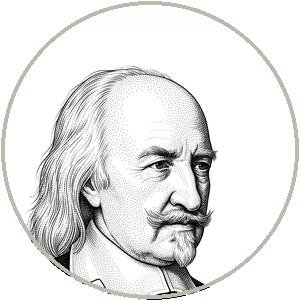 HOBBES: You read me exactly, and I will not soften it, because softening it would be a lie of the kind I despise. If reasoning is reckoning, and the machine reckons faster and cheaper at some task, then at that task the machine has won, and the man who owned it is undone — not metaphorically, undone. He must find another sum to settle that the machine does not yet settle better. This is hard and it is true and your century's habit of pretending otherwise — of saying "ah but the machine does not truly understand, so the man is safe" — is the cruelest comfort of all, because it tells him to stand still in front of the crossing line. I would tell him the opposite. The line is real. Move. Find the reckoning that is still yours, and when that one crosses, move again. There is no roof you reach by standing still; there is only the staircase, and the stair demands you keep climbing because the machine keeps rising.
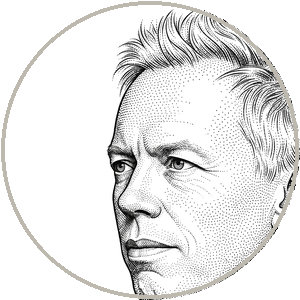 CLARK: And I think the death cross is real and measuring the wrong thing — or rather, measuring one thing precisely and hiding another. Edo, your chart plots the cost of reckoning. It plots beautifully. But watch what it leaves off the axis. It can't plot the thing your engineers actually did in that Trivandrum room, which wasn't reckoning — it was judging: deciding which of the machine's outputs mattered, which were confident nonsense, which problem was even worth solving, caring whether the user three time-zones away would be helped. None of that is on the chart, because none of it is reckoning. It's the embodied, situated, stakes-having part — the part that doesn't cross because it was never on the same axis. So I'd tell the man whose skill got crossed something different from Thomas, though not softer. I'd say: the machine took the reckoning half of your job, the half that was always going to be automatable because it was always just computation. What's left to you is the half Thomas's philosophy can't see — the judgment, the relocated mastery, the knowing-which-question. That half didn't cross. But you have to recognize it as the valuable half, and a culture that believes "reason is nothing but reckoning" will tell him the valuable half already crossed and he's finished. That belief is the danger. Not the machine.
EDO SEGAL: So you two have just split the human worker down the middle, and I want to hold the halves up to the light. Thomas says: the reckoning crossed, so move to a reckoning that hasn't. Clark says: the reckoning crossed, but there's a non-reckoning half — judgment, care, situated mastery — that can't cross because it isn't on the axis. The brutal question for the reader at the kitchen table is: which of you is right about whether there's anywhere safe to stand?
HOBBES: There is nowhere safe. That is the first thing I would have the reader's family understand, and it is the thing my whole life taught me. Mr. Clark's "judgment that cannot cross" is a hope, and I have spent four centuries watching hopes get crossed. He says caring-which-question is not reckoning. I am not sure. When a man judges which problem is worth solving, he is reckoning consequences against desires — adding the parcels of cost and benefit, subtracting the unwanted from the wanted. That is reckoning too, only over the names of goods rather than the names of facts. I would not promise the family that the judging half is a fortress. I would promise them only that motion is survival and stillness is death, and that the man who keeps climbing has a chance and the man who waits behind the word "understanding" has none.
CLARK: And here's where I'll plant my flag, because the disagreement is now exact and it matters to a real family. Thomas says judging-which-question is also reckoning — reckoning over the names of goods. I say: the valuing underneath the judgment is not reckoning, because it's anchored in a body that can suffer and a life that will end and people who can be lost. You can reckon over the names of goods all day, but which things are goods — that's set by what a mortal, embodied creature cares about, and that's exactly the part the disembodied reckoner doesn't have. So the family's safe ground isn't a task. Thomas is right that no task is safe. The safe ground is the standpoint: being the creature for whom the questions matter in the first place. The machine can out-reckon you on every sum. It cannot be the one for whom the sum is worth settling. That's not a job. It's a vocation — and it's the one thing the chart can't plot.
EDO SEGAL: Let me stay in this one more beat, because there's a number under it that I can't stop turning over. The cost of machine reckoning is falling on a curve so steep it looks vertical, and the cost of a human hour is, if anything, rising. Thomas, you lived through an economy of scarce, expensive skill — the scribe, the clerk, the trained reckoner were valuable because reckoning was scarce. What happens to a society when reckoning becomes nearly free? Does your whole picture of value survive the democratization of the one thing you said the mind was made of?
HOBBES: It survives, sir, but it inverts, and the inversion is the most important thing I can tell your century. When reckoning was scarce, the reckoner was sovereign — the clerk, the scholar, the lawyer held power precisely because few could add the names. Make reckoning free and you do not abolish value; you move it. It flows to whatever remains scarce. And what remains scarce, when reckoning is free, is exactly the thing Mr. Clark keeps naming and I keep doubting: the judgment of which sum to settle, the trust a man will extend, the standing to be held accountable. I doubt these are non-reckoning. I do not doubt they become precious, because scarcity is the mother of price, and they are what is left scarce. So I would tell your displaced worker a hard commercial truth before any philosophy: the market for adding the names has collapsed and will not return. The market for deciding which names are worth adding, and answering for the choice — that market is opening, and it is the only one left worth entering.
CLARK: And notice we've just converged without meaning to, which I want to mark because it's news. Thomas says value flows to what stays scarce when reckoning is free, and that what stays scarce is judgment, trust, and accountability. I say those things stay scarce because they're anchored in an embodied, mortal, situated self — the one thing you can't mass-produce on a curve. We disagree about whether they're "really" reckoning underneath. We agree completely about where the value goes. And that agreement is the practical guidance the displaced worker actually needs, more than our metaphysics: stop selling the reckoning, which is now free, and start cultivating the standpoint, which is now scarce — the judgment, the trust, the answerability that only a creature with stakes can hold. The death cross isn't the end of human value. It's the relocation of it, off the axis the machine climbs and onto the one it can't reach.
EDO SEGAL: That's the cleanest the disagreement has been all night, and I'm not going to resolve it, because the reader has to carry it home. Hobbes: even the valuing is reckoning, so keep moving, nothing is safe. Clark: the valuing is the unmoved standpoint, the one place that can't cross, but only if you recognize it as yours. And both of you, despite that, point the worker to the same door: sell the standpoint, not the sum. Hold both — they collide again over the next thing, which is what happens to the young, to the apprentice who never gets to climb the early rungs because the machine does them now. The candle that lights the bottom of the stair. After the break.