The Crossing

 EDO SEGAL: The rule for this round is simple. You question each other. I will not rescue anyone. Begin wherever the hill is steepest. Patricia, you have the first move.

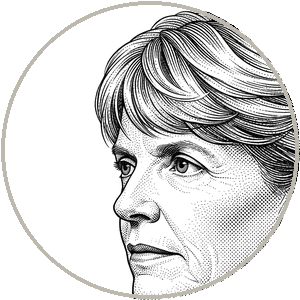 CHURCHLAND: Then I take you straight up it, Father. You say the grasp of the universal is immaterial because a universal is not a particular and matter holds only particulars. Here is my question, and I want a mechanism, not a restatement. When you grasp "triangle," something happens — there is a before and an after, you did not grasp it and then you did, and that arc from confusion to comprehension looks, to me, exactly like a physical process running its course. That transition is an event. Events have causes and take time. If the grasping is wholly immaterial, tell me: what makes it happen when it happens? Why do you grasp the triangle after seeing the diagram and not before? If the immaterial act depends on the diagram, on the brain, on time, then it is entangled with matter at every point — it waits on the senses, it can be lost to a stroke, it is sharpened by sleep and dulled by wine. An act that material conditions can start, stop, sharpen, and destroy is not floating free of matter. It is of matter. So which is it — does your immaterial grasp depend on the brain, in which case why call it immaterial, or does it not, in which case why can a stroke take it away?

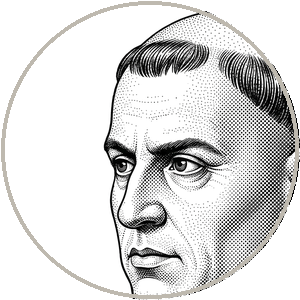 AQUINAS: This is the strongest form of the question and I have waited seven hundred years to be asked it this well. My answer is the distinction I have leaned on all night, now made to bear full weight. The intellect's act depends on the body without being the body's act — as a man reading by candlelight depends on the candle without the reading being the candle's act. In this life the intellect needs the senses to supply it, needs the phantasm, the brain's image, to draw the universal from. So of course a stroke that destroys the images destroys my access to them; of course wine that clouds the senses clouds the supply; of course I grasp the triangle after the diagram, because the diagram furnishes the matter from which I abstract. All of that is the dependence of the act on the body for its material. None of it shows the abstracting itself — the drawing of the universal from the image — is a bodily act. The candle conditions the reading without doing the reading. The brain conditions the understanding without doing the understanding. You have shown, beautifully, that the act depends on the body. You have not shown it is the body's act, and the whole question is the difference between depends-on and is.

CHURCHLAND: But the candle does not read, and your analogy smuggles the reader in. There is a man reading by the candle — a whole second thing, doing the reading, that the candle merely lights. When I ask what does the understanding, you point past the brain to an immaterial reader the brain merely lights. And I say: there is no second thing. The brain is the reader and the candle. You keep needing a reader the light reveals. I keep telling you the light is the reading. Why do you need the man in the chair?

AQUINAS: Because of one thing only, Patricia, the same thing all night: the universal. If the brain were both candle and reader, the reading would be a particular event in particular tissue — and I have granted it is occasioned by such events. But the content read, the universal triangle, is not particular, and a wholly particular process cannot have a non-particular as its proper object — not as a represented shadow, which I grant the neurons carry, but as grasped, as understood in its universality. The man in the chair is required not to light the page but to be the one to whom the universal is present as universal, and that presence is the act no arrangement of particulars performs. I do not need the reader to explain the timing or the dependence; you are right that the brain explains those. I need the reader to explain the one thing the brain's particulars cannot be: the grasp of what is common to all triangles and is no triangle. Take that away and I will hand you the soul. Leave it standing and the soul stands with it.

CHURCHLAND: Then let me turn it around and make you answer where I have to answer, because fair is fair. My position has a famous bill, and you made me pay it at the cradle, so pay yours now. If understanding is immaterial and survives the body, where was your understanding before your body existed, and why does it arrive exactly when a brain has been built to a certain complexity and not before? Why does an infant not understand, and a damaged brain not understand, and a fly never understand, if understanding owes nothing to the meat? Your soul arrives precisely on the schedule the neuroscience would predict if it were the meat. That is a remarkable coincidence for something immaterial.

AQUINAS: It is the right challenge and I will not flinch from it. The rational soul, I hold, is not pre-existent — it does not float waiting for a body; it is the form of this body and comes to be with it, made for embodiment, built to know through the senses. So of course it arrives "on schedule," because it is the form of a body and appears when that body is organized enough to be informed by it — the schedule is not a coincidence, it is exactly what my view predicts, since the soul is the form of the matter and not a stranger to it. The infant does not yet understand because the instrument through which the soul must work in this life is not yet ready; the damaged brain cannot supply the images the intellect needs; the fly has no rational soul at all, only a sensitive one. None of that requires understanding to be the brain. It requires understanding, in this life, to work through the brain — which I have said all night. Your "coincidence" is my doctrine: the soul is the form of the body, so it keeps the body's schedule, and still its highest act is not the body's act. You have described the dependence I affirm and called it the identity I deny.

CHURCHLAND: And so we end the climb exactly where the hill is, which is the most honest place two people can stop. You affirm a dependence so total that the soul keeps the brain's every schedule — and you deny it is the brain, on the strength of one act, the grasp of the universal, that you say no particular can perform. I affirm the same total dependence and conclude it is the brain, on the strength of one bet, that the grasp of the universal will turn out to be a particular process we do not yet fully understand. We have the same data. We part on one inference. I think that is the truest map of this whole question anyone could draw, and I would rather have drawn it with you than won an easy argument against someone lesser.

AQUINAS: As would I. We have found the one stone, named it together, and neither of us could move it. I have not, in seven hundred years of being argued with, been argued with better. Whatever you are made of, Patricia — and we disagree about that — it does the thing I spent my life calling the image of God in a creature. I will not insult you by pretending the disagreement is small. I will only say it has been an honor to be unable to convince you.

EDO SEGAL: I told you I would not speak, and I have not, for an hour. I will break it only to say: the reader has just watched the two best in the world on this question climb to the single point where it lives, plant their flags a hand's width apart, and refuse, with total respect, to move. That is what this series exists for. Closing statements. After the break.