Is Anyone Home?

 EDO SEGAL: We arrive at the question under all the questions, the one in the title of the evening. When the machine says I understand, is anyone home — is there something it is like to be that machine, an inside, a felt presence, or is it all dark behind the words? Philosophers call this the hard problem of consciousness — not how the brain processes information, which is hard but tractable, but why there is any experience accompanying the processing at all, why it isn't all happening in the dark. Patricia, you are famously the least mystical person in this debate, and also, I think, the most careful about not claiming to have solved this. Where do you actually stand?

 CHURCHLAND: I stand in a place that disappoints both camps, which is usually a sign you are near the truth. Against the people who declare consciousness an eternal mystery that science can never touch — the ones who say the "hard problem" is hard forever — I point to the long graveyard of phenomena that looked permanently inexplicable until the right concepts arrived. Life looked like it needed a vital spark; it didn't. So I do not grant that consciousness is forever beyond mechanism. But against the engineers who wave it away — who say consciousness is just information processing, solved, next question — I say: you do not have the mechanism, you have a slogan, and you should stop pretending. My position is that consciousness is a natural phenomenon, almost certainly something brains do, whose explanation we have not yet achieved and may not for a long time. I will not tell you it is solved and I will not tell you it is unsolvable. I will tell you we do not yet know, and that saying so honestly is the rarest and hardest thing in this field.

Now — and this is the part that bears on the machine — my agnosticism has a direction, it is not a shrug. Because I think consciousness is something brains do, I expect it to depend on the specific character of biological neural activity, not on computation in the abstract. If that is right, then a system that lacks those specific features could be behaviorally dazzling and still be dark inside, and its fluent "I understand" would tell us exactly nothing about whether anyone is home. But — I cannot rule out that the relevant features could be realized in another medium. So when someone asks me, is the machine conscious, my honest answer is: almost certainly not the current ones, probably for reasons of mechanism rather than metaphysics, and I do not know where the boundary is, and anyone who tells you they do is selling you their intuition as a finding.

EDO SEGAL: Father, here is what fascinates me. Patricia, the great materialist, will not declare the machine empty. You, the man who believes in the immaterial soul, can declare it — you have an argument that says no machine is home. So the materialist is the agnostic and the saint is the one who knows. Make the case, and then I want you each to take the other's restraint seriously.

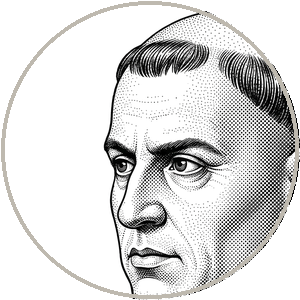 AQUINAS: It is a strange reversal, and I feel its strangeness. I can say more than Patricia about the machine, not because I am less careful, but because I have an argument she lacks — the argument from the universal, run one last time, now about experience. But let me first grant what her restraint gets right, because it is a great deal. On the sensory inside — whether there is something it is like to undergo a state, the redness of red, the ache of pain — I am with her caution more than my reputation suggests. I held that even animals have sensation, inner experience of a kind, an inside to their seeing and feeling, and that this is a bodily power, seated in the organ. So I cannot tell you, from my principles, that a sufficiently brain-like machine could never have something like sensory experience, because for me sensation is a power of matter rightly organized. On that question — the felt redness, the bat's inner life — I am nearly as agnostic as she is, and I did not expect to say that tonight.

What I can declare is narrower and deeper. It is not about feeling. It is about understanding — the grasp of the universal, which I have argued all night is immaterial. That, no machine has, because that is not a power of matter at all. So the machine could conceivably, someday, have a flicker of sensory inside — a dim something-it-is-like — and still not understand a single thing, because understanding and sensing are different acts, and only the first is the one I say matter cannot perform. Notice what this does to the title question. "Is anyone home?" splits in two. Is anyone feeling? — I do not know, and I am as humble as Patricia. Is anyone understanding? — no, and of that I am as certain as I am of the argument from the universal, which has survived every blow tonight. The machine may not be wholly dark. But the light that is understanding is not in it, and cannot be, and that is the light your reader was asking about when she asked if anyone is home.

CHURCHLAND: I have to say, that is a more careful position than I expected, and it forces me to be more careful too, so let me. The friar has just conceded that sensory consciousness might be a power of matter — that a brain-like machine might have an inside. Good; we agree the door is not closed by metaphysics on feeling. He reserves only understanding for the immaterial. And so our entire three-hour disagreement has narrowed, beautifully, to a single point: whether the grasp of a universal is or is not a physical process. Everything else — morality, the self, even sensory experience — we have found ways to share or to bound. The whole war is one hill. And on that hill I will plant my flag exactly where I planted it at the start: "I cannot see how firing neurons could be a grasp of the universal" is the premise, and it is an argument from the limits of the friar's imagination, and that argument has lost every time, and I am betting my life's work it loses again. He is betting his that this time the residue is real. Neither of us can prove it tonight. But look how much honest work it took to find the one true place we cannot cross.

EDO SEGAL: Patricia, you made a rule at the door — every distinction has to pay rent, has to say what observation would tell us it is real. So pay yours. If the friar is right that understanding is immaterial and you are right that it is neural, what could we ever see, in a brain or a machine, that would settle it between you? Or is this the one question where your own rule comes up empty?

CHURCHLAND: That is the fair turning of my own knife and I will take it on the chin. Here is the closest I can come. If understanding is neural, then as we map the mechanism we should find that every feature of the grasp — its content, its errors, its flashes, its limits — tracks some identifiable neural variable, with nothing left dangling that needs a non-physical cause. Each year the dangling residue should shrink. If the friar is right, we should hit a wall: a feature of understanding, probably the universality itself, that no neural variable predicts or explains, a permanent remainder. So the test is the trend line of the residue over decades — does it shrink toward zero, or does it stick at a stubborn floor? It is slow, it is not a single experiment, and I admit it may never be fully decisive, because the friar can always say "the residue you cannot yet explain is mine." But that is the honest answer: watch the residue. I am betting it goes to zero. He is betting it stops.

AQUINAS: And I will accept that as a fair contest and add only that I have a prediction inside it. I do not expect the wall to be a gap in the wiring — some feeling or some function the neurons fail to produce. I expect the neurons to produce every function, every behavior, every report. The wall I expect is not a missing function. It is that when all the functions are explained, the presence of the universal to a knower will be exactly as unexplained as it was at the start, because it was never a function to be explained — it is the one to whom the functions are present. So I warn Patricia: your residue may shrink to nothing on the side of behavior and not move an inch on the side of presence, and you will call the first a victory and I will call the second untouched, and we will need this room again. That is why it is one stone and not a gap. A gap you can fill. A stone you can only stand on.

CHURCHLAND: And that may be the most useful thing we hand the reader — that the friar and I can agree, in advance, on what the science will and will not settle. It will settle the functions. It will not, by itself, settle the presence. Where we differ is whether "presence," once every function is explained, is a real further fact or a grammatical shadow of the explaining. I have to say I did not expect a thirteenth-century friar to make me predict my own field's century so precisely.

AQUINAS: It took three hours to find the one stone the whole bridge rests on, and that is not a failure of the evening. That is the evening's entire achievement. Most men quarrel for a lifetime and never locate the stone.
EDO SEGAL: Then let me get out of the way, because you have earned the next hour without me. For the last stretch before your closing words, I am going to leave the room in every way but the legal one. No more of my questions, no more of my framing. You two have found the single hill. Now climb it at each other. The Crossing. After this.