What the Machine Actually Learned
 **EDO SEGAL:** I want to start this round with a confession instead of a question, because the best questions I know come out of wounds. For the entire history of computing, using a machine meant translation. I was raised by machine code — I wrote games in Assembler as a boy — and every decade the translation got easier, but it never disappeared. You compressed your intention into the machine's grammar and paid a tax on every conversion. In December 2025 I watched that tax go to zero. I stood in a room in Trivandrum with twenty of my engineers and watched each of them become capable of more than all of them together, in a week, because for the first time the machine met them in *their* language — mess, half-finished sentences, implication and all. I wrote that this was the great inversion: we stopped learning to speak machine, and the machine learned to speak human. Susanne, you've told me you think that sentence is half right and half catastrophic. Take it apart. Slowly.
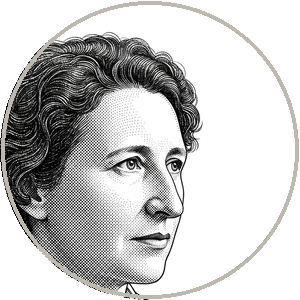 **LANGER:** I will take it apart with a scalpel rather than a hammer, because the half that is true is the more important half. What happened in your room in Trivandrum is real. The *interface* changed. For the whole history of the tool, a person stood at one symbolic mode — the felt sense of what she wanted, the presentational shadow of the not-yet-made thing — and was forced to hand-translate it, painfully, into the rigid discursive grammar of the machine. What collapsed in your room was the *cost of the discursive translation*. The machine now meets the person much closer to her own ordinary speech. That is a genuine and enormous change, and I will not pretend otherwise.
Here is the catastrophe hidden inside the sentence. "The machine learned to speak human" smuggles in a claim that what it learned is what *we have* when we speak. It is not. What it learned is the *discursive residue* of human speech — the sayable layer, scraped off and modeled. But human speech, even the most ordinary human speech, is never only discursive. When your engineer described a feature "in her own language," her words were the visible crest of a presentational form she carried whole: a felt sense of the product that did not yet exist, a shadow shape at the edge of her attention. The words pointed *down* at that felt form the way a finger points at the moon. The machine received the finger and computed a continuation consistent with a trillion prior fingers. It worked. But it worked because *she* could look at the result and feel whether it matched the moon. Every gram of that felt evaluation lived on her side of the glass. The machine did not learn to speak human. It learned to extend the part of human speech that can survive being written down — which is the smaller part, and never the part that grieves, or loves, or knows a design is right before it can say why.
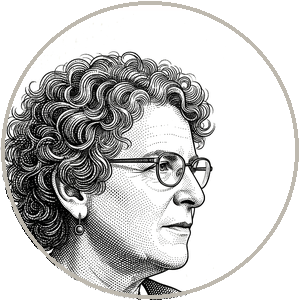 **BENDER:** I want to take the same wound from a slightly different angle, because Langer and I will reach the same conclusion and I want the audience to see we got there by different roads — that should make them trust the destination more.
Notice *why* Trivandrum worked, mechanically. Code is unusual text. It comes with a built-in test of adequacy: it runs, or it doesn't. Your engineers were pattern-matching against a corpus where, for seventy years, human programmers wrote intentions and implementations side by side, and — crucially — your engineers could *check the output and iterate*. The loop closed through a compiler and through *their* judgment. The fluency you felt was the fluency of a very good model of programming text, plus a tight human verification loop. Take the same system somewhere the wake is thin — a language with little data, a domain where the practice isn't written down, a situation that requires knowing the world rather than the words — and the fluency continues while the competence quietly leaves the room. It keeps *sounding* met. The sound is the product. This is exactly why I keep insisting on the [Bender Rule](https://www.youonai.ai/fieldguide/med/large_language_models) — name the language, always — because this entire revolution is a revolution in English and a handful of rich-data languages, *marketed* as a revolution in language itself.
**EDO SEGAL:** Let me restate what I'm hearing, because I want to feel the difference between you, not just the agreement. Susanne says: the machine learned the *sayable layer* of human speech and not the felt form beneath it. Emily says: the machine learned the *statistics of one corpus*, mostly English, mostly the documented, and not the world the corpus is about. Those are not the same critique. One is about what kind of *meaning* was left behind. The other is about whose *data* was left out. Are you two actually allies here, or only neighbors?
**BENDER:** Neighbors, and I want to keep the fence visible, because if we pretend to be allies we'll both get weaker. Langer's missing thing is the *presentational* — the felt form. My missing thing is *grounding and accountability* — the connection to a world and the human who stands behind the words. Here's the friction: Langer's account locates the loss inside the *individual* act of meaning, almost romantically — the fountain, the shadow shape. Mine locates it in *power* — who owns the data, who gets erased, who profits. And I worry, genuinely, that her frame is *too beautiful*. That a culture which decides the missing ingredient is "the ineffable felt half of the symbol" will sit in a seminar contemplating the sublime while the benefits office runs people through an ungrounded model and the appeals process is a chatbot. The fountain is real. But you cannot subpoena a fountain.
**LANGER:** And I worry, Professor Bender, that *your* frame is too small — not wrong, never wrong, but small. You are correct that the harm lands on bodies and that power decides where it lands. But you reach for power because you have quietly conceded the deeper ground. Ask *why* the benefits office can be fooled. Ask why the official, the executive, the public *believe* the ungrounded model. It is because they are human beings, and a human being cannot encounter fluent form without the involuntary act of finding a mind behind it — and that act is *not* a political fact. It is the deepest fact about what a mind *is*. I gave my life to it before there was an industry to be angry at. You will not fix the harm at the level of policy alone, because the credulity you are fighting is not a policy. It is the signature of the symbol-making animal, firing where it should not.
**BENDER:** That — I'll grant that completely, and it's the strongest thing you've said so far, so let me mark it before I push. Yes. The credulity is older than the industry. The reflex that finds a mind in fluency was calibrated over a hundred thousand years in which fluency *always* meant a mind. ELIZA proved it in 1966 with six tricks. I'm not arguing the reflex is political. I'm arguing the *exploitation* of the reflex is political, and that's where the leverage is, because I can't repeal a hundred thousand years of evolution but I *can* regulate a product. You hand me the diagnosis. I'm trying to write a prescription that a legislature can actually fill.
**EDO SEGAL:** There's a thread under both of you I want to pull, because it's been sitting on the table since my Trivandrum story. Benjamin Lee Whorf argued that the language you speak shapes the thoughts you can think. The strong version died; [the weak version survived decades of testing](https://www.youonai.ai/fieldguide/med/channel_capacity). I lived the programming version — if you coded in C you thought in memory, if you lived in spreadsheets you thought in rows. When the interface became natural language, I wrote that the cognitive walls dissolved. Emily, you study how languages shape what their speakers attend to. What does the Whorfian lens show about a machine whose entire existence is one tongue — mostly ours?
**BENDER:** It shows you the thing nobody in this industry wants to discuss, which is *whose* "ours." Walk into the claim slowly: "the machine learned our language." Which language? Overwhelmingly English. Which English? The English of people with the access, leisure, and inclination to publish — the documented, the connected, the loud. The Whorfian point cuts deeper here than anywhere, because if a tool is a cognitive environment with walls, then a tool built from *that* corpus carries *that* environment — its defaults, its sense of what goes without saying — and exports it, fluently, to every user on Earth. The student in Dhaka isn't just getting answers. She's getting a worldview *with* the answers, invisibly, in the grammar of what the system finds plausible. The walls didn't dissolve, Mr. Segal. They went invisible, which is the most effective thing a wall can do.
**LANGER:** And I would add the half Professor Bender's politics cannot quite reach, though it stands right beside hers. Whorf was describing the *discursive* tool — the language of saying. But a culture lives at least as much in its *presentational* forms: its music, its rites, the felt rhythm of how its people grieve and celebrate and fall silent. A machine built from the discursive residue of one corpus does not merely export English defaults. It exports the *suppression of the presentational altogether* — it teaches a billion users, in every interaction, that the sayable is the whole of the meaningful. That is the Whorfian catastrophe I fear most: not that the wall is English, but that the wall is *discourse itself*, mistaking the said for the entirety of the known. A generation raised inside that wall will lose the very faculty that would let it notice the wall is there.
**EDO SEGAL:** Hold that — "the wall is discourse itself." It returns three hours from now, in the round about the child. But the next round goes to the place Emily's whole argument was born — an octopus, a telegraph cable, a bear — set against the place Susanne's whole argument lives: a fountain. Form against feeling. After this.