Opening Positions
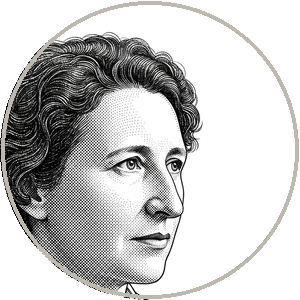 **LANGER:** Thank you. I want to begin not with the machine but with what a human being *is*, because every confusion in this field — I have been listening for some weeks now, in my briefed condition — begins by getting the human wrong, and then measuring the machine against the wrong thing.
Here is what I spent my life arguing. The human being is not, fundamentally, a reasoning animal. The capacity to reason is real and precious, but it is late, and it is built on top of something more basic and far stranger: the need to *symbolize*. A human mind cannot leave its experience raw. It takes the flood of feeling — the press of the world on a sensitive creature — and it transforms that feeling into form. Into a word. A gesture. A melody. A rite. A myth. This transformation is not something the mind *does* among other things. It is what the mind *is*. To be a mind is to be engaged, ceaselessly, in the symbolic transformation of experience. We dream when we sleep because we cannot stop symbolizing even then.
Now. A symbol, in my vocabulary, comes in two great families, and the whole of tonight lives in the difference between them. The first is *discursive* symbolism — the mode of language and logic. It runs in a line: one word after another, meaning assembled by syntax, each unit decomposable, each piece carrying a stable meaning you can look up and recombine. A sentence is discursive. So is a proof. So is a line of code. This is the mode that can be *said*, and because it can be said, it can be written down, transmitted, and — I understand now — computed.
The second family is *presentational* symbolism, and it is the one the philosophers of my century could not see because they were looking through the wrong instrument. A painting does not deliver its meaning one piece at a time. It presents it all at once, as a whole, through the relations of its parts — and if you remove one part, the meaning of every other part changes, because the meaning was never *in* the parts. A face expressing grief means as a whole. The four notes that open Beethoven's Fifth mean as a whole — not "fate at the door," which is a discursive translation someone bolted on afterward, but the felt form the notes *are*. This mode cannot be said. It can only be shown. And it is not vague, it is not mush, it is not "mere emotion." It is rigorous. It is *articulate*. It articulates through form what language cannot reach.
So here is my position, and notice that it is not the skeptic's position you may have expected. When the machine produces fluent language, it is performing real discursive symbolism — genuinely, impressively, at a scale no single human can match. I will not insult the engineering. But it performs *only* the discursive half. It has no access whatever to the presentational. And here is the knife: a discursive symbol is only fully a symbol when it is *anchored* in the presentational meaning it was reaching for. The word is the wake; the felt form is the boat. The machine has learned to extend the wake — to continue the marks — with the boat permanently absent. When you feel met by it, Mr. Segal, something real happened: a symbolic transformation occurred. But the feeling, the boat, the *meaning* — that was supplied entirely by you. The imagination, I once wrote, is a fountain, not machinery. The machine is the most magnificent machinery ever built. It is not, and cannot be, a fountain. That is my opening.
 **EDO SEGAL:** Emily.
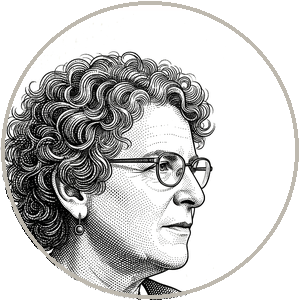 **BENDER:** That was extraordinary, and I want the audience to notice how much of it I'm about to agree with, because the places I *don't* agree are going to be sharper for it.
I come at the same machine from the other end of the telescope — not from what a mind is, but from what *language* is, because that's my discipline and it's where the whole confusion lives. Almost everyone in this field treats language as the *text* — the marks, the tokens, the trillions of words you can scrape off the internet. It is not. Language is an activity *between people*. When I say something to you, I have a communicative intent — something I want you to come to believe, or feel, or do — and I have a model of you, of what you already know. You, hearing me, run the machinery in reverse: you ask, what was she *trying to do* by saying that? Meaning lives in that joint activity, in the relation between the form and the world and the two minds. The text is the *trace* the activity leaves behind. It is the wake — Langer and I apparently share a boat, which is going to make this a very confusing kind of agreement.
Now. A large language model is trained on the wake. Only the wake. Trillions of words of pure form, stripped of every situation, every speaker, every intention that made them mean anything. And from that it learns — I'll be completely fair, the engineering is genuinely remarkable — an extraordinarily good model of *what the wake looks like*. Which forms follow which forms, at every scale, from spelling to syntax to the rhythm of an apology. When you prompt it, it extends the wake. Plausibly. Fluently. [Next-token prediction](https://www.youonai.ai/fieldguide/med/next_token_prediction), at a scale that beggars intuition.
Here is my claim, and notice how narrow it is, because the narrowness is the strength: there is nothing in the statistics of *form* that reaches what the form is *about*. To know the word "water" is not to know which words it travels with. It is to connect it to thirst, to rivers, to the weight of a bucket. A system that has only ever met the word has the first thing and not the second, and no quantity of the first sums to the second, because aboutness was never in the training signal. That's the [grounding problem](https://www.youonai.ai/fieldguide/med/grounding_problem_ai), and scale doesn't touch it. A bigger model is a better model of the wake. It is not one inch closer to the boat.
And now I'll say the thing that puts me at the exact seam with Professor Langer, because we are going to spend three hours one millimeter apart and it will feel like a canyon. She says: the machine does real discursive symbolism but lacks the presentational half. I say: it does not do symbolism at all. A symbol — even a discursive one — is a relation between a form and a meaning, held by someone who *means it*. The machine has the form and only the form. So when Langer calls it "the discursive half of a symbol," I want to push: a wake with no boat is not half a boat. It is *water in the shape of a boat's absence*. The understanding you feel, Mr. Segal — and I don't doubt the feeling — is real, and it is entirely yours. You are a meaning-making machine of terrifying power, and for the whole history of your species fluent language has had a mind behind it, so your interpretive machinery treats fluency as proof of mind. It cannot help it. This system has industrialized the trigger for that reflex. Build an economy, a school, an information ecology on the assumption that the trigger is the thing — and you will hurt people at scale. You already are. And the people profiting from the confusion are not confused. They are selling it. That's my opening.
**EDO SEGAL:** Before I frame the rounds, one discipline I impose on every long conversation, because it pays off three hours later. Each of you, in a few sentences: what do you *envy* in the other's position? Not respect. Envy. The thing the other side gets to have that yours doesn't. Susanne first.
**LANGER:** I envy her people. Professor Bender stands on a floor I do not quite have — she can point to a benefits office, a hiring filter, a flooded ecology of fake text, and say *there, that is the harm, those are the bodies*. My argument is about the structure of meaning, which means it floats one level above the place where a person gets hurt, and there are mornings — I imagine; I am new to mornings again — when that is a cold way to be right. She gets to defend somebody. I am mostly describing something. I envy the warmth of the duty.
**BENDER:** And I envy the wonder, which I'm going to feel ridiculous admitting. Langer gets to stand in front of this thing and feel what she felt the first time she understood that a melody could carry the *form* of grief without containing one grain of grief — that the universe permits meaning to be made out of mere arrangement. My discipline requires me to stand in the same spot and ask who scraped the data and who's being sold a costume, and that is *necessary*, and it is also, some days, a joyless way to be a scientist of the most miraculous thing humans do, which is mean things to each other. She gets to be amazed. I have to be vigilant. Nobody should pretend the vigilance is *fun*.
**LANGER:** That may be the most honest thing either of us says tonight.
**EDO SEGAL:** Two openings, two envies, and you can already see the architecture. It isn't that one of you loves the machine and one fears it. It's that you locate the *missing thing* in almost the same place — and disagree, by a single millimeter, about whether what's there is half a symbol or none. Susanne says the machine does the sayable half of a real symbolic act, with the felt half absent. Emily says there is no symbolic act at all, only the form. Hold both. Because the next round drives straight into that millimeter: what, precisely, did the machine learn when it learned our language?