The Apprentice and the Candle

 EDO SEGAL: This round begins with a twelve-year-old. In the spring of 2026 a girl asked her mother — and the mother asked me, at a dinner table, with the look parents get now — "Mom, what am I for?" Not what should I be when I grow up. What am I for. She'd watched a machine do her homework better than she could, write a story better than she could, and she was lying in bed doing the arithmetic children do honestly and adults do in euphemisms. I've spent two years answering her in my own way — I tell parents the candle in the darkness is the asking itself, that machines are engines of answers and she is an engine of questions. Tonight I get to stress-test my consolation against both of you, through the classroom, because that's where the question lives now. Susanne, you've told me the deepest danger is in the school. Start there.
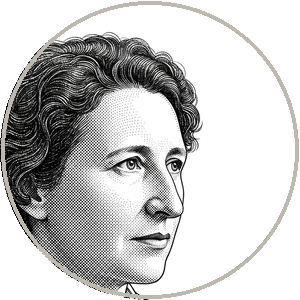 LANGER: The deepest danger is in the school because the school is where the presentational faculty is either grown or paved, and the machine arrives precisely as a paving device. Let me say what the school is for, in my terms, because the culture has forgotten. We tell ourselves school transmits discursive content — facts, procedures, the bead-strings. But that was never the heart of it. The heart of education is the cultivation of the capacity to transform feeling into form — to take the inchoate press of a young person's experience and teach her to symbolize it, in words, in number, in music, in the felt judgment of what is true and what is merely plausible. That is built in exactly one place: the experience of being stuck. The child who sits with not-knowing long enough to let a question take form is doing the most important cognitive work of her life. She is running the fountain. And a machine that answers before the question has finished forming does not free her for higher things. It paves the place where the higher things grow. The friction was not an inefficiency in the curriculum. The friction was the curriculum.
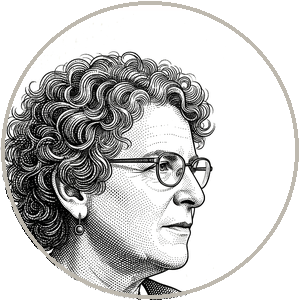 BENDER: I agree with almost all of that and I want to add the part Langer's frame is too gracious to dwell on, which is who. Because "protect the friction" is true, and it's also exactly the advice that, in an unequal world, produces a two-tier system. Walk the mechanics with me. The wealthy district gets human teachers plus tools plus the institutional discipline to keep the friction in the curriculum — to make the kid struggle on purpose. The poor district gets the chatbot and a press release about access. The fluency machine becomes the supplement where it should never have been needed and the substitute exactly where a human was needed most. So the children best defended against the mirror keep their teachers, and the children least defended get raised by it. "Protect the struggle" is right. It's also, deployed into this economy, a recipe for protecting the struggle of the rich and automating away the struggle of the poor. The variable isn't the tool. It's power over the tool.
EDO SEGAL: Let me put the strongest version of the optimist's case, because one of you has to inherit it and I don't know which. The patient tutor that never tires, never humiliates, costs almost nothing, explains it the fourth time without sighing — for hundreds of millions of children, the alternative to that was not a Socratic mentor. It was nothing. A bored class of forty and a workbook. Isn't the machine, pointed well, the first time in history every child can pull on the thread of any question as far as their curiosity runs? Emily, you raised the two tiers — but doesn't the floor it offers the bottom tier beat the nothing they had?
BENDER: It's the industry's most seductive argument and it deserves a real answer, not a reflex. Here's my answer. "Surely something is better than nothing" is how every two-tier system in history was sold, and it always smuggles the same false premise: that the something and the nothing are the only options. They aren't. The something is cheap; a teacher is expensive; and the argument exists to make the cheap thing feel like generosity instead of abandonment. And there's a deeper problem specific to this something. The patient tutor that never sighs is tuned for engagement and contract renewal, not for the child's stuck-time. Show me the ed-tech company whose key metric is "we made the child more comfortable with not-knowing" and I'll soften. There isn't one, because you can't sell stuck-time. So the machine optimizes for the opposite of what Langer just said the school is for. It is engineered to remove the friction that is the curriculum. The floor it offers isn't a floor. It's a smoother slope down.
LANGER: And yet — I must take the optimist's side for one honest moment, because Professor Bender is so right that she risks being only right, and the children in Lagos are real. There is something the tireless explainer does that the bored class of forty did not: it takes the strange question seriously, at the moment it is asked, which is the moment it is alive. I was a child whose strange questions were mostly met with impatience, and a few adults who took them seriously made my entire life. So I will not say the machine offers nothing. I will say something more exact and more demanding: the explanation either builds the presentational understanding or it merely deposits the discursive shell — and the difference is whether the child was stuck first. A tireless explainer that answers the unearned question paves the fountain. The same tireless explainer, offered only after the child has struggled to form the question herself, waters it. The tool is not the variable. The sequence is. Friction, then fluency, grows a mind. Fluency without friction grows a dependent. And no company's metric, as Professor Bender says, rewards making the child wait.
EDO SEGAL: Let me bring in the oldest version of this fight, because I think it sharpens you. In the Phaedrus, Socrates warns that writing will destroy memory — that students will get the appearance of wisdom without the reality, that the written word can't answer questions and says the same thing forever to everyone. He was the Emily Bender of the alphabet: form without a mind behind it. And he was partly right — the bards who held the Iliad in their skulls went extinct. But we only know his warning because Plato wrote it down, and everything we call civilization runs on the technology he feared. So, Susanne: every generation's Socrates is right about the loss and wrong about the verdict. Why is the chatbot not just the next alphabet?
LANGER: Because of one property the analogy quietly assumes and the chatbot inverts. Writing is inert. The scroll says the same thing forever — Socrates listed that as the defect, and it turned out to be the load-bearing virtue. Because the text holds still, you can return to it, compare it, build on it, argue with it across centuries; a fixed mark with a named author is what made cumulative knowledge possible. Writing did not simulate a teacher. It was honest about being a record — an object, plainly an object. The chatbot is the exact inversion. It performs the teacher — responsive, adaptive, apparently attentive — while having none of the teacher's accountability, and it does not hold still, so nothing built on it can be checked against it. Socrates feared the appearance of wisdom; the scroll never really delivered the appearance, so his fear overshot. This is the first technology engineered to deliver precisely the appearance. The pattern you invoke — loss, adaptation, expansion — ran through technologies honest about being objects. We have never run it through a technology that impersonates the subject. That is the new thing under the sun, and the alphabet does not cover it.
BENDER: That's the best defense of the alphabet I've heard, and I'm just going to stand on it and add the accountability point in my own key, because it's the hinge. The scroll's author could be named, found, argued with, held wrong. Even when he was dead, his name stood behind the words. The chatbot dissolves the author into an unattributed paste and hands you a confident synthesis with no provenance, no byline, no one to hold accountable, and — this is the part that breaks the analogy for good — it won't say the same thing twice, so you can't even build the slow shared correction that writing made possible. Socrates feared writing would weaken memory. He'd look at this and fear something he didn't have a word for: a technology that gives you the feeling of having been taught by someone, with no one there to have taught you, and no record to check against tomorrow. The alphabet gave every child the record. This gives every child the performance. Those are not the same gift. One you can climb on. The other you fall through.
EDO SEGAL: Let me bring the twelve-year-old back into the room and close this round with her, because both of you have now handed her mother something true. Emily's gift: protect the struggle — the boredom, the friction, the slow dinner-table conversation — because the asking-muscle only grows under load, and the machine is a load-removing device aimed, by its makers, at the load. Susanne's gift: the same machine, offered after the struggle rather than instead of it, can water a mind it would otherwise pave — and the variable is the sequence, which no company's metric rewards. Here's what I'd add, father to mother: the answer to "what am I for?" was never going to come from the teacher or the tool. It comes from being the kind of creature that asks it. Her question is the credential — the fountain, running. Our job is to make sure nothing in her world answers it so smoothly that she stops asking. Next round, we leave the classroom for the deepest water — the question under every question tonight. Not what the machine knows, but whether there is anyone there to know it. After this.