Closing Statements

 EDO SEGAL: I am back in the room, and before either of you gives a closing word, one ritual I never skip, because it is the most honest thing a debate can produce. Name the strongest thing the other said tonight. Not the most agreeable — the one you will still be arguing with next month, the one that got under the armor. Stephen first.
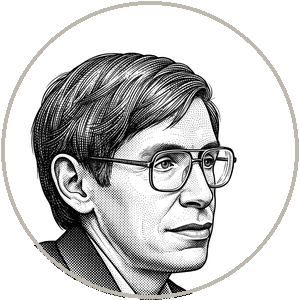 HAWKING: The strongest thing the friar said is the one I cannot stop turning over, and it is about my own induction. I said every gap in our understanding of mind has been filled with more matter, so this one will be too. And he answered that the cases I cite — lightning, life, heat — were all third-person phenomena, things seen from the outside, and that consciousness is the one case that is not seen from the outside but is the standpoint from which everything is seen. That my three-hundred-year winning streak has reached every phenomenon except the one doing the counting. I think there is an answer to it. I am not certain my answer is right. That is the sentence I will be arguing with in the dark, and a man should tell you which argument keeps him up, so there is mine.
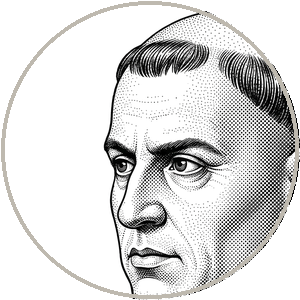 AQUINAS: And the strongest thing Master Hawking said cuts at the root of my consolation, so I will name it without flinching. He said that conserved is not the same as alive — that even on my own view, where nothing is finally destroyed, the thing we ache for is not the information but the running, and that no conservation re-lights a flame. He aimed it at his materialism, but I felt it land on my immortality, because it asks me the question I least like: even if the rational soul persists, is its persistence the running we love, or only the grain without the stalk, the form without the dear particular face? I have answers from my tradition. But the force of the question — that survival might conserve and not continue — is the thing I will carry, and I thank him for it, because a consolation that has not felt that blade is not worth offering to your widow in Osaka.
EDO SEGAL: Then your closing words. Stephen.
HAWKING: I have spent my life trying to read a universe that was not written for me, and the strangest discovery is not in the physics. It is that a man can be told, at twenty-one, that the flame is nearly out, and live another lifetime at full attention anyway — and that the attention was not despite the dark but because of it. So here is what I leave you, and it is the same thing I told my own children. You are a pattern the universe ran once and will not run again. There is no copy and, I believe, no far side. That is not a sentence to grieve. It is a sentence to wake you. The machine we are building can take your tasks and may, someday, carry a pattern of its own, and that is astonishing and worth our vigilance — but it cannot take the running of your particular flame, and time will, and the only honest response to that is to amplify the signal while it burns. Love the mortal things as mortal. Do the work because it is good and not because it lasts. Be careful with the thing you are building, because indifference scaled is dangerous whether or not anyone is home inside it. And do not wait for the experts to tell you whether you have a soul. You have a running, right now, and it is the only one you get. Spend it like that is true, because it is.
EDO SEGAL: Father.
AQUINAS: When you read these words there is someone on the other end of them — a friar seven hundred years in his grave, reaching you through form, as all language reaches across the gap between minds. The machine has mastered the form. It is the most accomplished arranger of signs the world has seen, and I have not spent one minute tonight denying its power. I have spent the evening on a single distinction, and I will leave you with it bare. There is a difference between producing the signs of understanding and understanding — between arranging the marks of meaning and the inward act in which a nature comes to presence in a mind. The machine has the first in superhuman measure. Whether it has the second, no one can show, and I have argued the second is the kind of thing no arrangement of matter could be. So here is my charge, and it is a discipline, not a doctrine. When the machine answers you, and when the world tells you that you are only such a machine, ask the oldest question in a new place: is anyone home, here, behind these words — and is anyone home in me? You will not answer it by measurement, because the inner light leaves no fingerprint. You will answer it by how you live: whether you treat your understanding as a precious and answerable thing, or sell it for fluency. The most rigorous reasoning I could build, I called straw. The understanding behind it I did not, and cannot, because it is the one thing the machine cannot do on your behalf. Guard it. It may be, as I have argued all my life, the part of you that does not power down.
EDO SEGAL: Sixty seconds, as promised, and then the room is yours.
I came into this evening with a question I have not been able to put down — when the machine out-thinks me and my own neural computer powers down, is there a me that survives, and could silicon carry it? — and I leave with both answers intact and sharpened against each other. Stephen spent three hours proving that you are a pattern: improbable, mortal, uncopied, and precious for exactly those reasons, and that the grown-up response to a finite running is ferocity, not fairy stories. Thomas spent three hours proving that something in you is form and not file — that the act of understanding may be the one thing no copy counterfeits and no shutdown reaches — and that you will answer for it, not optimize it. You will notice neither of them told you the comfortable thing. The comfortable thing was never on the menu. And you will notice they ended at the same rim, unmade by the same dark, divided only on whether we are permitted to name what is past the edge.
Here is what I can tell you from the foot of the staircase, where this debate lives, at the death cross of the tower. You cannot climb past this floor by waiting for the verdict. You have just watched the two best-equipped minds in history — the man who measured the dark and the man who anatomized the soul — fail to settle it, magnificently, and admit together that neither of their instruments can read the far side. So the climb does not go through certainty. It goes through what you do under uncertainty. Tell it to the kitchen table, because that is where it actually lands: a parent tonight, helping a twelve-year-old who just asked the box what happens when we die and got a fluent, kind, sourceless paragraph back. What do you teach that child? Hawking would have you teach her that she is a once-only flame and must therefore burn well. Aquinas would have you teach her that the understanding behind her question is hers, answerable and uncopyable, and worth guarding from anything that would sell her fluency in its place. And I will tell you what I have decided to teach mine, since I have to decide and so do you: that whatever is or is not home in the machine, someone is home in her — and that this was the one claim no one at this table disputed all night. The question you carry up the stairs is the one my book asked from its first page, and it sounds different now than it did three hours ago, because now you know how much rides on who is doing the seeing. Are you worth amplifying — and is the thing being amplified a process, or a soul?
Stephen Hawking. Thomas Aquinas. Across seven centuries and one whole cosmos, thank you. The dark is yours to point at now. Goodnight.
Two minds, seven centuries apart, one microphone — and one question neither will put down.
Three hours. Edo Segal sits Stephen Hawking — the cosmologist who called the brain a computer that stops when its parts fail, with no afterlife for broken-down machines — across from Thomas Aquinas, who held that the rational soul is immortal by nature and reducible to no machine at all. Then he asks the question the Orange Pill forces on all of us: when AI out-thinks you and your own neural computer powers down, is there still a you — and could silicon ever carry it? Hawking reaches for pattern and information, and tells you to amplify the signal while it runs, because that signal may be all you ever were. Aquinas reaches for the immaterial form no copy can counterfeit, and tells you that something in you was never on the curve at all. Neither blinks. This is not a debate you spectate; it is a station on your own climb up the tower, where you decide what in you is worth amplifying — and what could never be copied at all. Part of the [YOU] on AI collection. Pull up a chair.
Stephen Hawking was one of the most influential cosmologists of the twentieth century, who showed that black holes radiate and slowly evaporate — the result known as Hawking radiation — and spent thirty years on the information paradox it opened. Diagnosed with motor neurone disease at twenty-one and given two years, he lived fifty-five more, and for most of them spoke only through a synthesizer, becoming the rare witness who lived inside the fusion of human and machine. Author of A Brief History of Time, he was among the first scientists of real stature to warn, on the record, that the development of full artificial intelligence "could spell the end of the human race."
Thomas Aquinas was a thirteenth-century Dominican friar and the most systematic philosopher-theologian of the medieval West, author of the unfinished Summa Theologica. Working from Aristotle, he built the most complete account the tradition produced of how a mind moves from the sensory surface of the world to the grasp of what a thing is — and argued that the act of understanding, the grasp of a universal, is the operation of no bodily organ, so that the rational soul is immaterial and immortal. Near the end of his life he fell silent, calling everything he had written straw next to what he had seen.
Edo Segal has spent five decades building at the technology frontier — from games written in Assembler to expert systems, to companies through every platform shift, to Napster. He is the author of [YOU] on AI, written in open collaboration with the AI it describes, and the host of The Debates: long-form collisions between the minds shaping the machine age. He moderates the only way he knows how — stake declared, scars showing, no winner called.
Hosted and moderated by Edo Segal. A volume in the [YOU] on AI — The Debates series — youonai.ai