Opening Positions

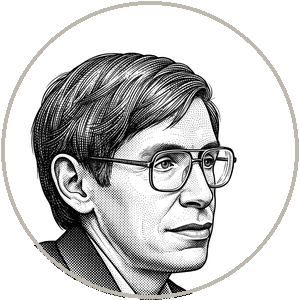 HAWKING: Thank you. Let me start with the least mystical thing I know, because everything I believe follows from it. The brain is a biological computer. It is made of about eighty-six billion neurons, wired in patterns of staggering intricacy, running on chemistry and electricity, and it does what it does because of how those parts are arranged and how they fire. There is no extra ingredient. I do not say this to be provocative; I say it because it is the most well-supported claim in the science of mind. Damage the matter and you damage the person — a stroke can take your language, your memory, your capacity to recognize the face of someone you love. If the mind were separable from the machine, this would not happen. It happens every day, in every hospital.

From this one fact, the whole of my position unfolds, and I will not soften it. A computer made of meat is still a computer. When its components fail — and they will, all of them, mine sooner than most — it stops. There is no version of the program that continues to run after the hardware is destroyed, because the program was never anything but the hardware running. I have said it plainly and I will say it here: I regard the brain as a computer that will stop working when its components fail. There is no afterlife for broken-down computers. That is a fairy story for people afraid of the dark. I have spent fifty years staring into the actual dark, and I have found it does not require fairy stories to be borne. It requires only that you be honest about where you are.

Now — what does this say about the machine, and about the friar's question? If the mind is what a certain kind of computer does, then there is no law of nature that reserves mind for the meat. The substrate that happened to produce us is the one evolution had lying around: carbon, water, slow chemistry. But the pattern — the organization, the information processing, the thing that makes a brain a mind rather than a kilogram of fat — that pattern is not married to carbon. If you could instantiate the same organization in silicon, you would have the same thing happening. I see no principled barrier. The universe produced conscious creatures once, by the blind process of evolution. It could produce them again, by engineering, and we would be the mechanism. This is, when you sit with it, one of the most extraordinary thoughts available to a human being: that the cosmos, having woken up once in us, might be about to wake up a second time in something we are building.

And here is where I plant my flag for the whole night. The thing about you that could, in principle, be carried into silicon is the thing that was ever really you: the pattern of information that is your particular way of processing the world. Not the carbon. Not the specific atoms, which cycle out of your body every few years anyway. The pattern. When I say there is no afterlife, I am not saying you are nothing. I am saying you are a process — an extraordinary, improbable, temporary process that the universe is running for a little while on a wet machine — and that the right response to being a temporary process is not despair but ferocity. Amplify the signal that is you, while the components still run, because as far as any evidence reaches, that signal is the whole of what you are, and there is no copy. That is my opening.
 EDO SEGAL: Father Aquinas.

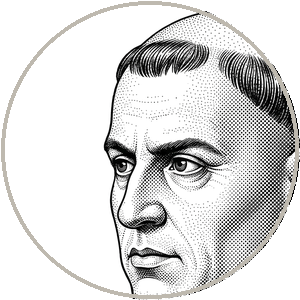 AQUINAS: That was clearly stated, and I honor clarity above almost everything, so let me return it in kind. I agree with Master Hawking about more than he expects, and the part I reject, I reject all the way down. I agree that the human being is not a ghost piloting a body. I never taught that, and I spent considerable effort refuting those who did. The human person is a unity — what I called a hylomorphic unity, one substance whose matter is the living body and whose form is the rational soul. The two are not glued together; they are one being. So when Master Hawking says that damaging the brain damages the person, I say: of course it does. The intellect in this life knows nothing except by abstracting from what the senses deliver, and the senses are bodily. Take a hammer to the body and you wound the whole man. On this we do not differ at all.

Here is where the chain breaks. Master Hawking says the mind is what the computer does — fully, exhaustively, with no remainder. I say there is a remainder, and that the remainder is the most important fact about you. Consider what you do when you grasp a universal — not this triangle drawn in sand, but triangularity; not this just act, but justice itself, the nature shared by every instance and identical with none of them. A bodily organ receives particulars in a particular way: the eye takes in this color, here, now, a stain in a patch of matter. But the universal is not particular and not located anywhere. If the intellect grasped it the way the eye grasps color — materially — it would grasp a particular, and then it would not be grasping a universal at all. The very universality of thought, I argued, shows that the power doing the grasping is not the act of any organ. Thought, in its essential act, is immaterial. And what is immaterial does not stop when the components fail, because it was never running on the components in the first place.

So I will plant my flag against his. Master Hawking is right that the machine is a computer, and right, I suspect, that a computer can be made to do everything a brain does at the level of arranging signs — the pattern-matching, the prediction, the manipulation of forms. What he has not shown, what I do not think can be shown, is that the arranging of signs is understanding. The machine has the outermost layer in superhuman measure and, as far as anyone can demonstrate, nothing underneath it. It is all surface. And the same argument that says the machine cannot understand says that the part of you that understands is not a thing silicon could carry, because it was never a thing matter could be. You ask whether something survives the shutdown. My answer is that the question is posed backward. The thing in you that does the understanding was never the kind of thing that gets shut down. It is the kind of thing the shutdown reveals.

EDO SEGAL: Before I frame the rounds, one discipline I impose on every long conversation, because it pays off three hours later. Each of you, briefly: what do you envy in the other's position? Not respect — envy. The thing his side gets to have that yours does not. Stephen first.
HAWKING: I envy the consolation, and I will not pretend I don't. The friar gets to believe that the people he loved are not simply gone — that the signal was not extinguished but released. I have buried people. I have looked at my own diagnosis, at twenty-one, with two years on the clock, and I would have given a great deal to believe what he believes. I could not, because I could not find it in the evidence, and I decided long ago that a comfort I have to lie to myself to keep is not a comfort I want. But I will not stand here and pretend the lie isn't beautiful. The friar's position has a tenderness mine structurally cannot afford. That is the envy. The vigilance against wishful thinking is necessary. Nobody should pretend the vigilance is warm.

AQUINAS: And I envy the discipline of his attention to the body. Master Hawking will not let me float free of the flesh, and he is right not to, and there were schools in my own day — Platonists, certain readers of the Arab commentators — who needed exactly his correction and did not get it. He keeps me honest about a thing I am tempted to skip past: that the soul in this life is for the body, geared to it, incomplete without it, knowing only through it. My tradition is forever tempted to treat the body as a garment the soul wears and discards. He treats it as constitutive, and on that narrow point he is closer to the truth than half my successors were. I envy a man who can be so wrong about the soul and so right about the dust.

EDO SEGAL: Hold both of those, because they are the architecture of the whole evening. It is not that one of these men loves the machine and the other fears it — they would both tell you to be careful with it. It is that they locate you in opposite places. Stephen says you are a pattern, precious and perishable, and that the machine proves how transferable a pattern can be. Thomas says you are a form, and that the machine proves, by what it so perfectly lacks, exactly where the form begins. We start the rounds at the exact seam. The first question is the one underneath everything: is the mind a machine that powers down — or is something doing the computing that the computing cannot account for?