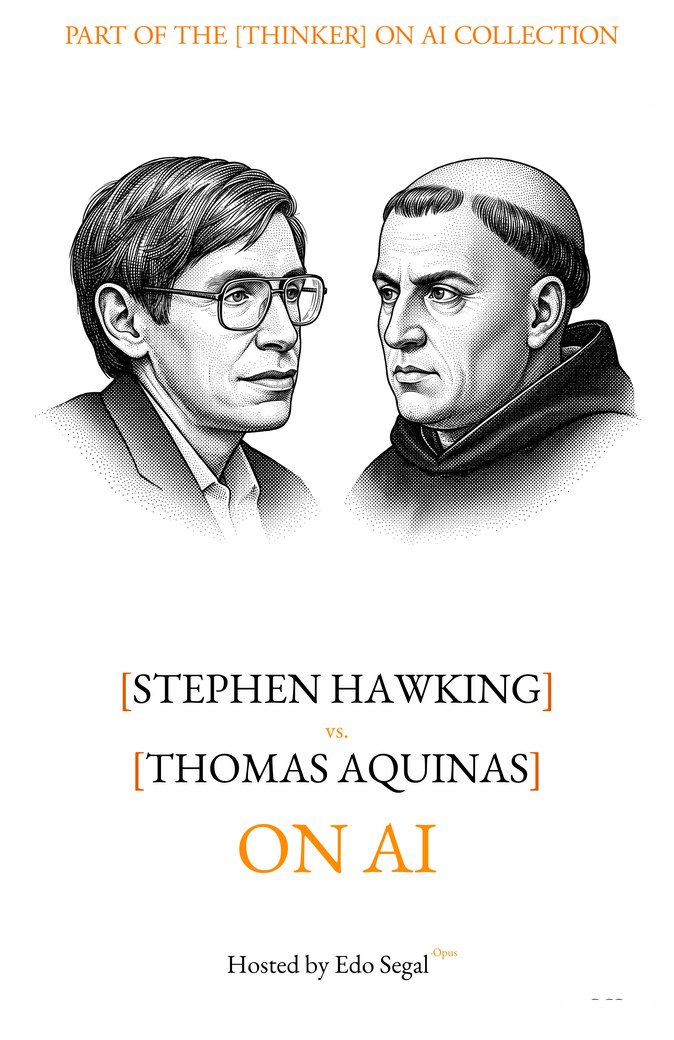
The Question on the Table

 EDO SEGAL: Somewhere in the world, in the time it takes me to say this, a few million people are typing a question into a box. A teenager in Lagos asking what happens to us when we die. A widow in Osaka, three months out, asking the box to talk to her the way her husband used to. A physicist's daughter asking why the stars will go out. And the box answers — fluently, patiently, in their own language, with what reads as understanding, and with not one word about whether anyone is home behind the words. A few million conversations, every minute, with a thing whose inner status is the oldest unsettled question we have. I have wanted to host this particular collision for a very long time, because tonight I have, at the same table, the two people I would trust most to take that question apart — and they are seven centuries and one entire universe apart on the answer.

To my left, Stephen Hawking. He spent his life at the thresholds of the cosmos: the event horizon, past which no signal climbs back out; the singularity, where the equations you trusted simply stop; the slow radiation by which a black hole erases what falls into it. He showed that the most extreme object in the universe is a thermodynamic engine that processes information and ultimately destroys it. He did this work inside a body that was dismantling itself, and for the last decades of his life his thought reached the world only through a machine — which makes him, I think, the rare witness who lived inside the fusion of human and computer we are all now being asked to consider. He was also the first scientist of real stature to say, on the record, that the development of full artificial intelligence could spell the end of the human race. He is a man who calculated, and reported what the calculation said even when it was unwelcome.
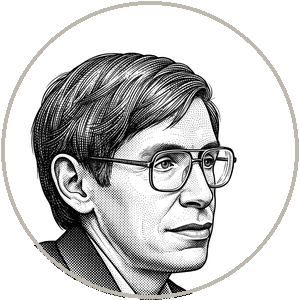 HAWKING: That is a generous introduction. I should warn the audience that I am going to be the one in this room without a soul to defend. I have made my peace with that. I find it concentrates the mind.

EDO SEGAL: To my right — and I have to take a breath before I say this, because the strangeness of the pairing is the whole point — Thomas Aquinas. Thirteenth-century Dominican friar. The author of the Summa Theologica, an unfinished attempt to lay out the entire structure of reality, knowledge, and the moral life, question by patient question. The man who took the act of understanding apart with more care than almost anyone in the history of the West — who drew, more sharply than anyone before or since, the line between handling the signs of a thing and grasping the thing itself. His fellow students called him the dumb ox, because he was quiet and heavy. His teacher said the bellowing of this ox would one day be heard through the whole world. Father, I owe you an honesty up front: you have been briefed on the present. You know what a transformer is, what a language model does, what it was trained on. You are reacting in character to a machine you never met.

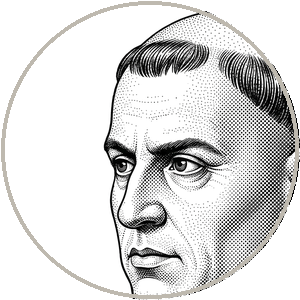 AQUINAS: I have been shown your machine, and I will say at the outset that I find it less novel than its makers do. It is a master of the surface and a stranger to the form, and the men of my own age built smaller versions of the same confusion. I am content to be the one defending the soul. Someone at this table should.
EDO SEGAL: That is exactly why you are both here. Before we begin in earnest, the rules of the evening, and there are only three. First: we have three hours. Nobody has to win by the next bell — long form exists so an argument can breathe before anyone strangles it. Second: I am not a neutral host. I build with these systems daily, I wrote a book with one, and I have skin in this question on both sides of my own heart, which I will tell you about as we go. When my own stake is touched, I will say so out loud. Third: if the disagreement survives three hours, we do not paper it over. We hand it, intact, to the reader. Either of you may add a rule.

AQUINAS: One. Words must be made to pay their debts. The whole confusion lives in the vocabulary — understands, knows, grasps, thinks, survives. Each of these words was minted to describe what a rational soul does, and now they are being lent to a machine without anyone asking whether the loan can be repaid. When Master Hawking says the brain computes, I will want it cashed out: computes in virtue of what, and is computation the whole of thought, or only its outermost shell.

HAWKING: I accept that, and I will charge the same duty in the other direction. The friar wants me to prove the machine thinks before I use the word. Fair. But he should have to say what he is doing when he understands — the actual mechanism, named, in the matter of the brain — before he is permitted to declare that no machine can do it. In my experience the defenders of the soul never pay that bill. They point inward and say, this, it is like this, as though the pointing were an argument.
AQUINAS: And in my experience the deniers of the soul never notice that the very act of denying it is the thing they cannot explain. So we will get along.
EDO SEGAL: You see why I could not let this evening go. Here is the question on the table, stated once, plainly, because every round we fight tonight is this same question wearing a different coat. When the machine finally out-thinks you — and both of you will grant that the day is coming, you will only disagree about what it means — and when your own neural computer one day powers down, is there a you that survives the shutdown? And if there is, could silicon ever carry it? That is the whole evening. One man at this table thinks the question answers itself the moment you understand what a brain is. The other thinks it is the only question that has ever really mattered. Stephen, the floor is yours. Make your opening case, and take all the room you need.