What the Self Actually Is

 EDO SEGAL: I want to start this round with a confession, because the best questions I know come out of wounds. A few years ago I caught myself doing something I couldn't explain. The tools were working. I was shipping more than I ever had. By every metric the industry uses to evaluate a person, I was thriving — and I was disappearing. Not dramatically. No dashboard could detect it. But the question that kept surfacing in the silence after the laptop closed was never what can I build next. It was who am I becoming through all this building. Søren, I read your work and felt diagnosed. You'd argue the productivity was a place I was hiding from myself. Ray, you'd argue I was just under-optimized and anxious. So let me put it to you both as a real disagreement, not a metaphor. When you say the word "self" — Søren, the enterprise of the self; Ray, the pattern — are you even naming the same thing? Ray, you take it first, because you're the one claiming it can be saved.

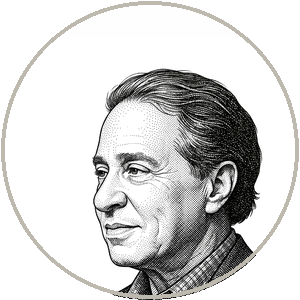 KURZWEIL: Fair. Here's what I mean, concretely, no poetry. The self is the information that makes you you and not someone else. It's your episodic memories — the specific texture of your daughter's voice at three years old. It's your semantic knowledge, everything you've learned. It's your dispositions, the characteristic way your mind jumps from one idea to an adjacent one — which, by the way, is exactly the thing people recognize when they say a piece of writing "sounds like you." It's your values, your sense of humor, the particular shape of your attention. All of that is encoded in the connectome — the wiring, the synaptic weights, the patterns of activation. It's physical. It's finite. And critically, it's informational, which means it's substrate-independent in principle. The same song plays from vinyl, from a CD, from a stream. The medium is not the music. I want to save the music.

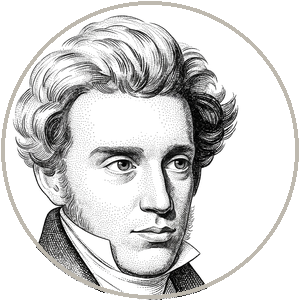 KIERKEGAARD: And there — precisely there, at "save the music" — is the entire abyss, and I am grateful he stated it so cleanly. He has described the self as a noun. A collection. Memories, knowledge, dispositions, values — a rich inventory, beautifully detailed, and every item of it a thing the self has, not the self itself. You have listed my possessions and called them me. But I am not my memories. I am the one who relates to my memories — who chooses, this morning, what to make of them, who must decide whether the man I was yesterday is the man I will consent to be today. The self is not the inventory. It is the relating. It is a verb wearing the costume of a noun, and your machine can copy the costume down to the last thread and will never once perform the verb, because the verb is not data — it is an act, undertaken in time, by a creature who knows the act cannot be undone.

KURZWEIL: But the relating is also physical. The "one who relates" is itself a process in the brain — there's no little homunculus doing the choosing, Søren, there's just more pattern, the part of the network that models the rest of the network. You're describing a real phenomenon, self-reference, recursion, the system representing itself. I'm telling you that's a mechanism, and mechanisms run on substrates, and substrates can be swapped.

KIERKEGAARD: Then let me take you exactly at your word, because I promised the room I would. You say the relating is a mechanism. Very well. A mechanism, by definition, had to do what it did — it is the output of its inputs, the lawful product of its state. But the self, as I have lived it and as every despairing human being has lived it, is precisely the experience of standing before a possibility that the mechanism does not determine — of being able to choose otherwise, and of bearing the dread of that ability. You call it recursion. I call it freedom, and the difference is not vocabulary. If you are right, no one has ever chosen anything, and despair is a malfunction rather than a revelation, and there is no self to save in the first place — only a very elaborate weather pattern that has been fooled into thinking it decides where it rains. You cannot have it both ways. Either the self is free, in which case it is not the mechanism you propose to copy, or it is the mechanism, in which case "you" were never there to be saved.

EDO SEGAL: Let me restate that, because I think it's the cleanest the seam has been all night. Søren is saying — literally — that the moment you describe the self completely, mechanically, as a pattern, you have described something that cannot be a self, because a self is the one thing in the universe that experiences itself as not fully determined. And Ray, you're saying that experience of freedom is itself just a feature of the pattern — real as a feeling, but not evidence of anything uncaused. Ray, is that a fair statement of where you actually live?

KURZWEIL: It's fair, and I'll own it. I think the feeling of un-determined freedom is real as a feeling and is produced by a determined process, the same way the feeling that you're sitting still is real and is produced by a planet moving a thousand miles an hour. The feeling isn't lying about how it feels. It's wrong about the metaphysics. And here's the part Søren won't like: I don't think that diminishes anything. The waterfall is no less a waterfall for obeying gravity. You are no less magnificent for being lawful. The pattern that is Kierkegaard, dread and freedom-feeling and all, is exactly what I'd preserve — including its conviction that it's free. I'd save the whole thing, self-image and all.

KIERKEGAARD: You would save the prisoner and his belief that he is free, and call the package liberty. I find that a perfect description of damnation, and I mean the word technically. To be preserved forever in a condition you experience as freedom but which is in fact total determination — that is the_pattern Anti-Climacus would have recognized at once. It is the despair that does not know it is despair, the most dangerous kind, now made eternal and called salvation.

KURZWEIL: Let me try one more angle, because I don't want to leave it at a standoff. You say the self is the relating and the relating can't be copied because it's an act, not data. But every act leaves a structural trace. When you relate to your memories this morning, that relating is itself a physical event in your brain — a pattern of activation, a configuration of the network in that instant. So the relating isn't some ghostly extra; it's the next state of the system. And the next state is computable from the current state plus the inputs. I don't have to copy the verb as a verb. I copy the system that produces the verb, and then the verb just... happens, on the new substrate, exactly as it happened on the old one. You keep treating the act of relating as if it floats free of the brain that does it. It doesn't. You said so yourself — no homunculus, no soul-pearl. So where does the un-copyable verb live, if not in the copyable machine?

KIERKEGAARD: It lives in time, Herr Kurzweil — in irreversible, lived, forward-only time, which is the one dimension your copy cannot reproduce because it can only restore states, never the having-lived-through that made the state mean something. Hear the difference. You can copy the brain of a man who has forgiven his brother. You cannot copy the forgiving — the act undertaken once, at cost, in a moment that could have gone otherwise and did not. The forgiven state and the never-having-wronged state can be made physically identical, and they are not the same self, because one traversed something and the other was instantiated having-traversed-nothing. Your copy wakes up with the scar and never received the wound. It has the result of a lifetime of relating and has done none of the relating, and a self is not the result of the relating — it is the relating, which is to say it is the irreversible passage, the sources_of_the_self laid down stroke by costly stroke, and you propose to print the painting without anyone ever having painted.

KURZWEIL: But the painting was painted — by the original. The copy inherits a genuinely painted painting. You're acting as if the copy claims to have done the painting itself. It doesn't have to. It just has to be the painting, going forward.

KIERKEGAARD: And a self that is content to be the painting going forward, rather than the one who painted, has already revealed itself to be exactly what I have warned against all my life — a noun mistaking itself for a verb, a result mistaking itself for an activity, a portrait so persuaded of its own depth that it has forgotten it has no inside facing the canvas. You have not refuted me. You have, with great precision, described the patient.
EDO SEGAL: I have to mark something, because the reader can't see your faces. That was the first exchange tonight where neither of you reached for the other's hand. We came in for a debate about technology and we are now standing in the oldest argument there is — whether anyone has ever freely chosen anything — and the machine made it urgent because the machine is the first thing that forces us to decide. Hold that. Because if the self is a verb and not a noun, then everything depends on what the verb is for — and the next round is about the engine Søren says drives it. The leap. The thing you do precisely when the data runs out.