Opening Positions

 KIERKEGAARD: Thank you. I will begin where I always begin, with a sentence that has thrown readers for a hundred and fifty years, because the difficulty is not decoration — it is the thing itself. The self is a relation that relates itself to itself. Hear it slowly. You are not a substance, not a soul sitting behind your eyes like a passenger, not a fixed identity waiting in a drawer to be discovered. You are an activity. You become a self only through the continuous, effortful, never-completed labor of relating to your own existence — to the conditions you did not choose, the body you were given, the death you were promised at birth. A person does not have a self the way she has a liver. She achieves one, daily, or fails to, and the failure has a name. I called it despair. Not sadness. Not grief. A structural misrelation in the activity of being a self.

Now. Here is why Herr Kurzweil and I are not, in fact, having a technical disagreement. He proposes to preserve the self by preserving the pattern — the memories, the connections, the configuration. But on my account that is precisely what the self is not. The configuration is the wake. The self is the boat — and the boat is not a thing, it is a verb, the act of a creature relating to its own finitude with fear and trembling and choosing, in the teeth of that fear, who to become. You cannot back up a verb. You can back up the record of a verb having been performed. The model that wakes up on his immortal substrate will have every memory I ever made and will not have made a single one. It will possess my despair as a stored datum and will never once have despaired. And a thing that has never despaired, I will tell you plainly, has never become a self — because despair, rightly suffered, is the very labor through which a self comes into being.

I want to be exact about death, because everything turns on it. The animals do not know they will die. That is their innocence and their poverty. The human being knows — carries the knowledge as a low constant pressure beneath every choice — and that knowledge is not a defect to be patched. It is the dizziness of freedom, the vertigo of a creature who sees that its time is finite, that its choices are therefore real, that this hour will not return and so must be filled with this and not everything. Remove the death and you have not freed the self. You have dissolved the pressure that made its choices weigh anything at all. You have given it forever, and forever is the one gift that empties every choice of stakes, because nothing is at risk and nothing is foreclosed and the man who can do everything eventually, tomorrow, in the next century, has no reason to become anything in particular today. That is not eternal life. That is the aesthetic stage given a god's lifespan — the man who keeps every option open forever, and is therefore, forever, no one.

So my opening claim is narrow, and the narrowness is its strength. I do not say the machine cannot copy you. I say the copy will be a portrait that mistook itself for a face, and that the offer to save you by copying you is the most sophisticated form the oldest sickness has ever taken — the refusal to be the finite, dying, particular self you actually are. That refusal felt like principle in my century and it feels like engineering in yours. It is the same evasion. It has simply acquired better tools.
 EDO SEGAL: Ray.

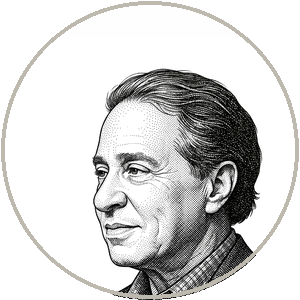 KURZWEIL: That was beautiful, and I mean that without irony — it's the most serious version of the objection, and I'd rather fight it than the cartoon. Let me start with where I agree, because I agree with more than he expects. The self is not a static thing sitting behind your eyes. He's right. It's a process. It's a pattern of information in motion — and notice, Søren, that this is my claim, not yours. The neuroscience is on my side of the table here. You are a pattern. The atoms in your brain are almost entirely replaced over a span of years; the you that persists is not the matter but the organization of the matter, the information, the pattern in flux. I have been saying this for thirty years. So when you tell me the self is an activity and not a substance, I want to shake your hand, because you've just described why I think it's portable. An activity running on neurons can, in principle, run on something better. A waterfall is the same waterfall though no molecule of water stays in it.

Now the disagreement. You say death is the forge. I say death is the thief you've decided to call a blacksmith because you couldn't get the door open. Look at the actual mechanism you're sanctifying. Telomeres shortening. Mitochondrial DNA accumulating errors. Cross-linked proteins. Senescent cells leaking inflammation. That's your forge, Søren — it's not destiny, it's a maintenance failure in a machine that evolution never bothered to repair past reproductive age because natural selection stopped caring about you at forty. You died at forty-two. Do you understand that in my century that's not a tragedy of finitude, that's an infection and a primitive medicine? You want to build a philosophy of the self on the precise age at which your particular body, in 1855, happened to give out?

And the claim that forever empties choice of stakes — I think that's exactly backward, and it's the most important error in your whole position. Scarcity doesn't create meaning. Scarcity is just scarcity. A starving man's choices about food are not more meaningful than a fed man's; they're more desperate. What death actually does is not sharpen your choices — it amputates them. It takes the person who is finally, at seventy, becoming wise, becoming kind, becoming a self in your own terms, and it deletes them at the exact moment the becoming was getting good. The Singularity isn't the end of becoming. It's the removal of the deadline that interrupts becoming before it finishes. You think I'm offering an escape from the climb. I'm offering more staircase. I'm offering the chance to keep climbing past the floor where the body currently throws you off.

One more thing, because it's the heart of it. You keep saying the copy "has never despaired." But if I scan you so completely that the restored pattern remembers despairing, feels the disposition to despair, would despair again under the right conditions — in what sense is it a portrait and not a person? You're asserting a difference you haven't located. Point to it. Not the poetry of it. The place.
EDO SEGAL: Before I open the rounds, one discipline I impose on every long conversation, because it pays off three hours later. Each of you, in a few sentences — what do you envy in the other's position? Not respect. Envy. The thing his side gets to have that yours doesn't. Søren first.

KIERKEGAARD: I envy his hope, and I will not pretend the envy is small. He gets to stand in front of the dying and say wait, hold on, we are almost there — and to a father holding a sick child, that sentence is worth more than every word I ever wrote about the edifying value of suffering. My discipline forbids me that consolation. I must tell the father that the child is finite, that the love is therefore real, and that the realness is inseparable from the loss. There are nights when that is an unbearable way to be a philosopher. He gets to fight death. I am required to interpret it. I know which one I would rather be at a deathbed, and it is not me.

KURZWEIL: And I envy the weight. Kierkegaard's world has gravity. Every choice in it matters infinitely because it's made once, by a creature who won't pass this way again. My world, if I'm honest about where it leads — if you really can redo everything, revise everything, restore from any checkpoint — risks becoming weightless. I tell myself abundance is freedom. But I've felt the thing he's describing: that a decision you can take back was never quite a decision. He gets to have stakes built into the structure of existence. I have to manufacture mine, deliberately, against a substrate that's removing them. That's harder than I let on in the interviews, and he's the only person who's ever made me say it out loud.
KIERKEGAARD: That is the most honest thing you have said, and we are eight minutes in.

EDO SEGAL: Hold that — both of those confessions come back tonight. And notice the architecture already: it is not that one of them loves life and the other fears it. They are both, in their way, in love with the self. They disagree, totally, about what would kill it. Ray says death kills the self and he is going to stop it. Søren says immortality kills the self and the machine is the murder weapon dressed as a cure. We start the rounds at the seam — what, precisely, is the self that one of you wants to save and the other says cannot be saved that way. After the break.