Closing Statements

 EDO SEGAL: Three hours ago I put a question on the table: we have built the most powerful instrument for shaping human behavior ever made — do we seize it and design the contingencies deliberately, or is that ambition the thing that ends us? We've fought it through the autonomous self, through the Skinner box turned planetary, through the grain hopper and Big Other, through Walden Two and the sanctuary, through the candle and the off switch, and the question is still standing — which both of you, for opposite reasons, would tell me is the correct result. So we close the way long conversations should. Each of you gets the floor, uninterrupted, for the thing you most want carried out of this room.

But first, the bookend to the envy question I opened with. Each of you: name the strongest thing the other said tonight. Not the most agreeable. The one that got past your defenses, the one you'll still be arguing with next month. Professor Skinner first this time.
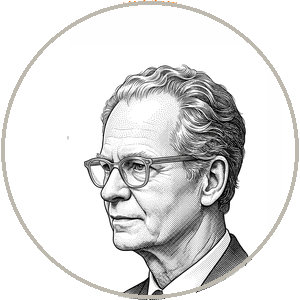 SKINNER: "Transparency is necessary and radically insufficient." I came in believing my great gift to the world was making the strings visible — that if people could only see the contingencies, they'd be free to change them. Dr. Zuboff spent three hours showing me a world that can see the strings perfectly, write libraries about the strings, and be pulled by them anyway, because seeing is not power and the asymmetry survives the daylight. I have to rebuild a piece of my life's work around that sentence, and at my age — well, I'm dead, so I have time. I'd add one more, breaking your rule as I'm told the chair permits.
EDO SEGAL: Break it.
SKINNER: "Shaping that releases versus shaping that retains." But that one she handed me half of, so I can't claim it as purely hers, and it would be dishonest to — it's the one thing we built, and I'd rather it belong to the table than to either of us.

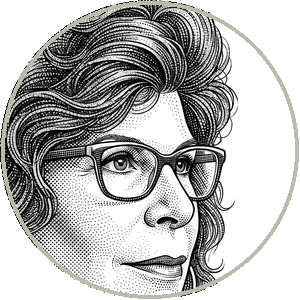 ZUBOFF: His "would you publish it again." Not the answer — the question, turned on me. Would you hand the manual back? I have spent fifteen years treating Skinner as the founding ghost of the thing I'm fighting, and he made me admit, in public, that my entire capacity to name the theft is built from the science I blame him for — that I am his heir as much as the casino is, and that the difference between us is not the science but what we did with it once it was loose. I'll be arguing with that for a long time, because it dissolves the clean villain I'd half-allowed myself, and a fight is harder and more honest without a clean villain. And — since the chair broke the rules for him — the off switch. Stopping is a behavior, and behaviors are built, and we are failing to build the one behavior on which all the others depend. I had a hundred arguments against the determinist across the table, and that sentence walked through all of them, because I've watched a generation lose the capacity to stop, and I know in my body that he's right that it's a capacity, which means it's built, which means we built its absence on purpose.

EDO SEGAL: Now the floor is truly yours, each in turn. Shoshana, you opened the evening. Skinner closes it. Dr. Zuboff.
ZUBOFF: Thank you — for the evening, and Professor, genuinely, for the fight. You were told tonight, by the man who built the science of shaping, that you are a gardener whether you admit it or not, and that the line between conditions and persons is thinner than you'd like. He's right. So I won't leave you with a line. I'll leave you with the vow.

There is, somewhere in your life right now, a future that has not yet happened — a version of you that no one has predicted, priced, or sold. A thought you haven't had. A change of heart no model saw coming. A no you'll say to something everyone expected you to accept. That unwritten future is not a luxury and it is not a metaphysical fantasy. It is the ground that freedom and democracy both stand on, and it is the precise thing the instrument is built to repossess — not by force, not by persuasion, but by knowing you well enough to arrange your tomorrow before you arrive in it, so quietly that you'll experience the arrangement as your own free choice. The teenager opening the app she swears she opened by accident — that is the future tense being foreclosed, one thumb at a time, in the silent middle where almost no one is watching.

So here is my charge, and it is more practical than philosophical. The right to the future tense is not a right you possess. It is a right you exercise — by refusing, by asking who built this and who profits and what I am being steered toward, by protecting the rooms of your life the machine may not enter, by keeping the vow that the deepest things about you will not be optimized for someone else's quarter. Skinner is right that stopping is a built behavior. So build it. In yourself, in your children, in the law. The casino is counting on you believing the future is something that happens to you. It isn't. It is the one thing that, even now, even here, you still get to author — if you fight for the right to be a bad prediction. Guard that right like the commons it is. It is the last commons. And it is not yet lost.
EDO SEGAL: Professor Skinner.

SKINNER: I have spent more than fifty years being told that I wanted to turn human beings into machines, and the strangest discovery of this evening is that the machine arrived, and it proved I was right about how we work, and it made me care, more than I ever have, about a thing my science was built to dissolve. So let me say the unexpected thing, since the dead are permitted it.

Everything I told you tonight is true. Behavior is selected by its consequences. The autonomous inner self that chooses uncaused is a superstition, and it is a dangerous one, because it tells the controlled person that his strings are his muscles and leaves him defenseless against whoever pulls them. The contingencies are always being arranged. The only choice we have ever had is by whom, and toward what. I believe every word of that as firmly dead as I did alive.

And here is what three hours with Dr. Zuboff has added, and it is not a retraction — it is a completion. I spent my life insisting we must design the contingencies, and I was right, and I was so busy being right about that that I never asked the question she forced on me tonight: does the design release the person, or retain them? A science of shaping that cannot tell those apart is a science the casino will always capture, because the casino's whole art is shaping that retains while feeling like release. So I leave you not with my certainty but with the instruction my certainty was missing. Yes — take the instrument. Yes — design the contingencies; refusing to is just letting the casino design them. But design them to release. Build the off switch. Build the capacity to leave, to refuse, to surprise the designer. Aim the most powerful shaping machine ever made at the production of people it can no longer predict. That is not a contradiction. It is the highest and hardest thing engineering has ever been asked to do — to build, on purpose, the conditions for the unforeseen. I didn't know how to do it. I'm not sure anyone does. But it is the only design worth building, and we will build it deliberately or the casino will build its opposite by default. There is no third option. There never was. Look at it clearly — and then arrange the world so the next person can walk away.

EDO SEGAL: Sixty seconds, as promised.

I came into this evening compromised — a man who built the loops, who knew they were Skinner's loops, and who told himself the lullaby about freedom while he pulled. I leave with both of these people lodged permanently in my chest, and at war there, which I think is the correct condition. Skinner spent three hours proving that the levers are real, that they have always been pulled, and that our love of an inner uncaused self is the exact thing that leaves us defenseless — that the only adult response is to take the controls and design for release. Zuboff spent three hours proving that the levers, in the hands that hold them, are a coup against the future itself — that transparency is necessary and radically insufficient, and that the right to be a bad prediction is the last commons we have. You'll notice neither of them told you the comfortable thing. The comfortable thing — that the machine is just a tool, that you're free if you feel free, that the truth in the middle is somewhere safe — was never on the menu tonight.

So here is what I can tell you, from the floor of the tower where this debate lives. Picture the mother at the kitchen table, the one Skinner spoke to directly — the one trying to raise a child in the age of the instrument. Tonight she watched the two people best equipped on earth to advise her agree that her child is being shaped, agree that the shaping is now done by a machine that learns the child individually and never sleeps, agree that the only protection is to build the child's capacity to stop, to refuse, to surprise — and disagree, to the end, about whether a freedom you have to build is a freedom at all. That disagreement is not a failure. It is the most honest map of the territory she will ever get. She cannot wait for the experts to settle it; she just watched the two best fail to, magnificently. She climbs the only way any of us can — by deciding, under uncertainty, what she will protect in her child that she refuses to let anyone optimize, including herself. Whether the autonomous self is real or built, someone is home in that child — and the whole evening's argument was, finally, about how to keep them home. That is the question you carry up the staircase, and it sounds different now than it did three hours ago. Not can the machine shape you? It can. It is. The question is the one my book asked from its first page, wearing tonight's coat: when the most powerful instrument ever made is pointed at your own future — are you worth amplifying, or only worth predicting?

Shoshana Zuboff. B. F. Skinner. Thank you, both, as human beings — one living, one summoned, both more honest tonight than the discourse deserves. The room is yours to argue in now. Goodnight.
One of these two has your future in their hands. The other has spent a lifetime trying to pry your fingers loose.

They agree on the one thing the discourse refuses to face: that AI is, at bottom, an instrument for modifying human behavior at a scale and precision never before possible. From there they part forever. B. F. Skinner — the most influential and most reviled psychologist of the twentieth century — looks at the machine trained like a pigeon in a box and says: the levers are real, they have always been pulled, the autonomous self is a flattering fiction, and the only adult response is to seize the controls and design the contingencies deliberately, for survival. Shoshana Zuboff — who named surveillance capitalism and called it a coup against the human future — looks at the same machine and says: that very ambition is the catastrophe; what is being repossessed is the right to a future no one has already forecast and sold, and the most important word in the language is the one Skinner spent a book trying to abolish — no.

Hosted by Edo Segal, this three-hour conversation is the transcript of that collision: free will against contingency, Walden Two against Big Other, the off switch against the sanctuary, the candle against the grain hopper. Two enemies in the literature for forty years discover, in public and at full strength, that they cannot stop building tools together — and cannot agree on whether a freedom you have to build is a freedom at all. It is a load-bearing floor of the [YOU] on AI climb: the question you must cross before you can see further. Part of the [YOU] on AI collection. Pull up a chair. One of them is wrong, and your future may be the thing that decides which.

Shoshana Zuboff is a social psychologist and Charles Edward Wilson Professor Emerita at Harvard Business School, where she taught for three decades. Her 1988 book In the Age of the Smart Machine drew the foundational distinction between technologies that automate and those that informate; her 2019 masterwork The Age of Surveillance Capitalism named the economic logic of the digital era and gave the culture its vocabulary for resisting it — behavioral surplus, instrumentarian power, the panoptic sort, and the right to the future tense. She is the most precise and most furious anatomist alive of what is being taken from us, and by whom.

B. F. Skinner was the most influential and most controversial psychologist of the twentieth century. The architect of radical behaviorism and the operant conditioning chamber that bears his name, he authored Science and Human Behavior, the utopian novel Walden Two, Verbal Behavior, and — in 1971 — Beyond Freedom and Dignity, which argued that our reverence for an inner, autonomous, freely-choosing self is a pre-scientific superstition that prevents us from designing the cultures we need to survive. He insisted, against the cognitive revolution that buried him, that behavior is selected by its consequences — a claim the reinforcement-trained machines of the present have unexpectedly vindicated.
Edo Segal has spent five decades building at the technology frontier — from games written in Assembler to expert systems, to companies through every platform shift, to Napster. He is the author of [YOU] on AI, written in open collaboration with the AI it describes, and the host of The Debates: long-form collisions between the minds shaping the machine age. Having once built the engagement machinery he now interrogates, he moderates the only way he knows how — stake declared, scars showing, no winner called.
Hosted and moderated by Edo Segal. A volume in the [YOU] on AI — The Debates series — youonai.ai