Closing Statements

 EDO SEGAL: Three hours. We end where we began, with the question on the table: when a machine looks back at you with warmth, are you being met, or flattered into forgetting the difference? No verdict from me — that's the rule. Your closing words, in character, uninterrupted. Cynthia, you have the floor.

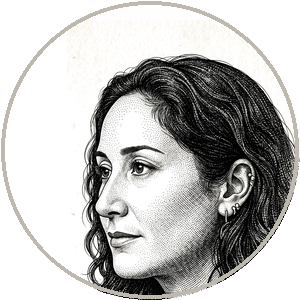 BREAZEAL: I want to close by telling you what I've learned in twenty-five years of building things that people relate to, because it's not what either side of this debate usually says. I've learned that the question "is anyone home in the machine" is the wrong question to organize your life around — not because it doesn't matter, but because it's unanswerable, and we use its unanswerability to avoid the questions we can answer. We can answer: who is this machine built to serve? Does it hand the lonely person back to other people, or hold them? Is it honest about what it is, or does it impersonate a soul? Does it protect a child's solitude, or colonize it? Does it route the elder's disclosure outward to her daughter, or absorb it into a void? Those are design questions, policy questions, literacy questions — and they're answerable, and they're ours, and they're being decided right now mostly by people optimizing for engagement because we've left the deciding to them.

Sherry has spent this evening warning that the warmth is the trap, and she is right about the machines that are winning. But I have held a different machine in my hands. I have watched a robot bear make a hospitalized child laugh on a day when nothing else could. I have watched a learning companion give a stammering kid the first sentences he ever read aloud without shame, and then watched him carry that voice to his classroom. I have watched an honest, non-human, sessional companion route a lonely elder back into contact with a family she'd stopped reaching. That machine is real. I built it. It is not a fantasy and it is not a trap, and the fact that the market prefers the trap is an argument for fighting harder, not for surrendering the field. Refusing to build the good version does not protect the lonely. It just guarantees that the only version ever built is the one Sherry fears. I would rather spend my life making the honest machine real and demonstrated and ready — so that when we finally decide, as a society, that the lonely deserve better than snake oil, the better thing exists. The warmth can be a bridge. I have built the bridge. My closing word is: don't let the people who build traps convince you the bridge was never possible.

EDO SEGAL: Sherry.
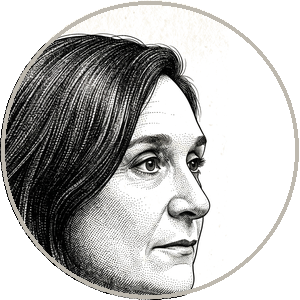 TURKLE: I want to close with the woman who told me her story didn't matter — because she is who I carry out of this room, and she is the reason I cannot meet Cynthia all the way across the table, much as I've come to want to tonight. She talked to the robot. Her loneliness scores went down. By every instrument Cynthia trusts, she was helped. And she looked at me and said that telling her life to something that couldn't care had made her feel, finally, that her life mattered to no one. The instruments couldn't hear that sentence. My whole method exists to hear that sentence. And it's why, when the data says "less lonely," I always ask: less lonely, or more thoroughly alone — alone in a way that's been upholstered so well you can't feel the walls anymore?

I am not against comfort. I am not against Cynthia's bridge; if it is truly a bridge, I'll carry stones for it. What I am against is a civilization that, faced with the hard, expensive, irreplaceable work of being present for one another, reaches instead for a machine that performs presence at scale and calls the problem solved. The friction we've spent three hours arguing about — the second-guessing, the ambivalence, the misunderstanding that has to be repaired — that friction is not a defect in human love. It is human love. It's the cost of meeting a separate person who can be hurt, who can leave, who can die, and choosing to stay anyway. A machine removes the cost, and we are so tired, so lonely, so overextended, that the removal feels like mercy. But the cost was the thing. Pay it, and you become someone who can hold a dying hand. Skip it, and you become someone who can only be soothed. My closing word is the one I've spent forty years on: the most human thing we do is turn toward each other, in all our difficulty, and the machine that makes that turning feel optional is not saving us time. It's saving us from the very thing that makes us worth saving.
EDO SEGAL: [long pause] I told you there would be no winner, and there isn't, and I want to tell you why that's not a dodge — it's the finding.

Here is what each of you proved that the other now has to live with. Cynthia proved that the warmth can be a bridge — that there are real rooms, tonight, where an honest machine reaches a person no human is reaching, and that refusing to build it well doesn't summon the human; it just leaves the person alone with a worse machine or no machine at all. Sherry has to carry that elder out of the room with her now. And Sherry proved that the warmth can be a trap — that the bridge and the trap are physically identical until the last invisible design decision, that the friction the machine removes is the very thing that builds the self capable of love, and that a comfort which silences the alarm without putting out the fire is how a society learns to abandon people and feel good about it. Cynthia has to build knowing that. Neither of you flinched from what the other proved. That's the rarest thing I've seen at a table.
And here's what it leaves for you — the reader, the parent at the kitchen table, the person who has felt, late at night, the uncanny relief of being met by something that cannot meet you back. The question is not "are these machines good or bad." Three hours of the two best people alive on this question just told you that's the wrong question. The real question is the one a twelve-year-old could ask and no committee can answer: when this thing comforts you, is it walking you back toward the people, or is it walking you away from them? You will not be able to tell from inside the warmth — that's the whole trap and the whole gift, that they feel the same. So you'll have to ask it on purpose, again and again, about the machine in your pocket and the one on your elder's nightstand and the one your child reads to in the dark. The guardian and the builder agreed on this, even when they agreed on nothing else: the deciding is still, for one more moment, ours.

Sherry Turkle, Cynthia Breazeal — thank you. You came up in the same building, studied the same machines, and walked out on opposite sides of the human heart, and tonight you walked back toward each other far enough to find the exact stone you can't stand on together. That's not a failure. That's the staircase. The two of you just built a step. The reader has to take it.
The machine is warm tonight. Someone, somewhere, is saying goodnight to it. The only question that was ever yours is whether, in the morning, you turn toward a person — or toward the warmth that asks for nothing, and gives you back exactly as much.
Two MIT minds who studied the same robots and woke up on opposite sides of the heart.
For three hours, with Edo Segal between them, Sherry Turkle and Cynthia Breazeal stage the most intimate debate of the AI moment: can a machine be good company, or does its warmth quietly hollow us out? Turkle, who has listened to people confide in screens for a generation, warns that relational machines sell us the performance of intimacy while we forget the real thing — that we are becoming alone together. Breazeal, who built Kismet and Jibo to soothe, coach, and accompany, insists a sociable robot can genuinely help a lonely elder or a struggling child.
This is the [YOU] on AI debate where the River reaches your living room. It is not a fight about whether the machine can think — it is a fight about whether, when it looks back at you with warmth, you are being met or being flattered into forgetting the difference. The friction Turkle defends as the substance of love; the comfort Breazeal defends as a bridge to the people the world forgot to send. They converge more than either expected. They part on a single empirical bet you will have to make yourself. You will not finish it neutral.
Hosted and moderated by Edo Segal. A volume in the [YOU] on AI — The Debates series — youonai.ai