The Floor Where It Crosses You

 EDO SEGAL: Let me set this round with numbers, and with a confession, because the floor we've been standing on all night finally gets its name. In [YOU] on AI I called it the software death cross — the floor of the tower where the machine's capability crosses yours and keeps climbing. By early 2026, a trillion dollars of market value had drained out of the software industry as the systems began doing the work. Entry-level programming jobs down sixteen percent. And here is the confession: I stood in a room in Trivandrum and watched twenty of my engineers become, by any measure I can apply, twenty times more productive in a week — and then I sat in board meetings where the arithmetic on the table was, if five people can do the work of a hundred, why pay for a hundred. I kept the team. The structure punishes that. So the question, to both of you, and I want it taken at full weight: this crossing is happening, whatever is or isn't inside the machine. Does the question we've fought about all night — understanding versus computation — make any difference at all to the worker at the kitchen table? Or is the death cross indifferent to whether anyone is home?

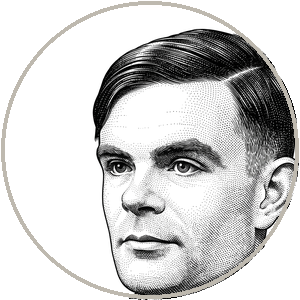 TURING: It is largely indifferent, and I think honesty requires me to say so even though it cedes something to no one and costs the worker everything. The crossing does not wait on the metaphysics. A system that computes the diagnosis, with no understanding whatsoever, still replaces the diagnostician if the output is good enough and cheap enough. I proved the universal machine could imitate any other machine; I did not say it had to understand the machine it imitated, only reproduce its function. Function is what the market buys. So the worker is displaced by capability, and capability is exactly the thing Roger conceded in his first breath tonight. Where I will push — and it is the more hopeful thing, though not by much — is that the direction of the displacement is a choice, not a law. I watched my own war: machines took over the searching, and humans moved to the judging, the guessing of cribs, the deciding where to look. The machine did the labour that was mechanisable and the human did the part that wasn't yet. The cruelty is the word "yet," which we have already fought about. But the structure — machine does the computable part, human keeps the rest — is not destiny handed down. It is a settlement, and settlements are negotiated, and the worker at the kitchen table is being told a negotiation is a weather system.

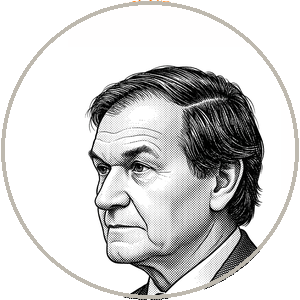 PENROSE: I agree with almost all of that and I want to add the one thing it leaves out, because it is the thing my whole position exists to protect. Alan says the human keeps "the part that isn't mechanisable yet." I say: there is a part that is not mechanisable ever, and the entire economic and human question is whether we can see which part that is before we automate ourselves out of it by mistake. If understanding is non-computable, then the judgement layer — the deciding what is worth building, the perceiving that a result is right and not merely plausible, the catching of the confident error — is permanently human, not contingently. And here is the danger the death cross actually poses, which is not unemployment. It is misidentification. A firm under cost pressure cannot tell the difference between the part of the work that was mechanisable and the part that only looked mechanisable because its output resembled the real thing. So it automates the seeing along with the shuffling, ships the resemblance, and the failure arrives later — diffuse, deniable, landing on customers and on a skeleton crew of seniors trying to check a flood they no longer have time to check. The market is repricing intellectual labour as abundant. My warning is that it is mispricing understanding as abundant, because understanding and its imitation cost the same to produce and look identical on the invoice — and only one of them is actually there.
EDO SEGAL: Restate that for me as sharply as it deserves, because I think it's the most useful thing you've said for the person reading this who is afraid for their job. You're saying: the machine will correctly take the computable part of your work, and that's real and it's coming — but the catastrophe isn't that it takes the computable part. It's that nobody can tell, on the spreadsheet, where the computable part ends, so they'll take the uncomputable part too, by accident, and discover the loss only when the bridge falls down.

PENROSE: Precisely. And notice it does not require my consciousness argument to be certain — it only requires it to be possibly true. If there is even a chance that judgement is non-computable, then automating it because its outputs looked automatable is an irreversible bet against the one capacity you cannot rebuild once the people who had it have retired without training successors. You do not run that bet on a maybe.
TURING: And here I will defend the machine's side of the worker's interest, because Roger has made the seniors the heroes and I want the juniors in the room. You kept your hundred, Edo, and it was generous. But the patient tutor that never tires, that explains the fourth time without sighing, that costs almost nothing and speaks every learner's language — that is not, for most of the world's workers, replacing a rich apprenticeship. It is replacing nothing. The junior in a place with no senior to learn from, the worker with no firm to train her — for them the machine is not the thing that took the ladder away. It is the first rung anyone ever offered. Roger sees the death cross from the top of a profession that had ladders. From the bottom, where most people stand, the democratisation of capability is the most hopeful thing that has happened, and I will not let the seniors' real loss erase the juniors' real gain.
PENROSE: That is fair, and I accept it, with the amendment that who controls the rung decides whether it is a ladder or a leash. But yes — I was speaking from the top of a profession, and Alan is right to name it.

EDO SEGAL: Mark that convergence, because it's a real one and it's load-bearing: you both agree the crossing is happening regardless of the metaphysics, and you both agree the direction of it is a choice we are pretending is a weather system. Where you part is what's at risk in the choosing — Alan watches the junior gain a first rung, Roger watches the senior's judgement get automated away by people who couldn't see it was there. The worker at the kitchen table needs both of you heard, because she is being told the machine made her redundant, and the truth, whichever of you holds more of it, is that a decision did. The next round goes to where the decision cuts deepest and quietest. The classroom. The apprentice. And a twelve-year-old's question that has been waiting at the back of the room all night. After this.