Closing Statements

 EDO SEGAL: Three hours ago I asked one question: when the machine hands you an answer, are you recollecting a truth that was always there, or watching a computation finish that no mind could have leapt past? We've fought it through a slave boy and a cellular automaton, the Cave and the ruliad, the Divided Line and the pockets of reducibility, eros and optimization, the soul and the observer, and the question is still standing — which both of you, for opposite reasons, would tell me is the correct outcome. So we end the way long conversations should. Each of you gets the last word, uninterrupted. But first, the bookend to the envy question I opened with. Each of you: name the strongest thing the other said tonight. Not the most agreeable — the one that got past your guard, that you'll still be arguing with next month. Stephen first.

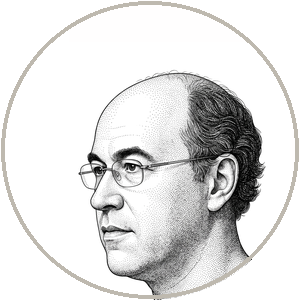 WOLFRAM: The bloodless heaven turned out to be mine, not his. I came in thinking Plato's eternal Forms were the comforting story and my irreducible universe was the cold one. And somewhere around the Crossing I realized he'd handed me the contingent world as trivial and I'd taken it as everything — and that means my universe, the one with no eternal summit, is the one where love and loss and the unrepeatable child actually live, and his is the one that's safe and bloodless and unweepable. He made me see that my deflation isn't cold at all — that giving up the immortal Forms is what lets the particular matter, because only what can be lost can be loved. I expected to spend tonight defending warmth against his transcendence. Instead he showed me the warmth was on my side the whole time, and I'd been too busy proving there's no shortcut to notice. I'll be arguing with that gift for a long time.
EDO SEGAL: Plato.

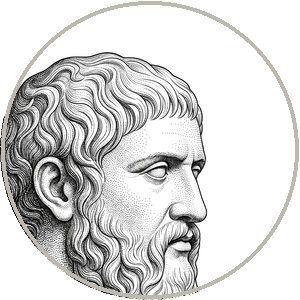 PLATO: His question about the nine-millionth cell — and what it did to my soul. He asked me where a truth lived that no soul could recollect and only a running could reveal, and I have no answer that keeps my system whole. I have always taught that to learn is to remember, that the truth was always in the soul. And he produced, from a row of black and white squares, a truth that was in no soul, that had to be made in time by running, that recollection cannot touch. I conceded it was contingent and therefore trivial — and then he showed me the trivial pile is where everyone actually lives and dies. So I leave this room knowing that my account of learning, which I have defended for an existence and a half, covers less of the world than I thought — that there is a vast irreducible territory of genuine truth that the inward turn cannot reach, and that a machine running the steps reaches it before I do. I do not abandon recollection. But I have had to shrink it tonight, in public, against a living man, and a philosophy that can still be shrunk after twenty-three centuries is, I suppose, still alive. He did that. I will not forget it.

EDO SEGAL: Now the floor is truly yours. Stephen, you opened the modern half of this — Plato closes, because he opened the whole thing two thousand years before you were born. Stephen, your last word.

WOLFRAM: Here's what I want you to carry out of this room. The universe does not grant shortcuts, and that is not a sad fact — it's the thing that makes the future worth showing up for. If everything could be leapt to, foreseen, recollected from some eternal store, then nothing would ever genuinely happen; the future would just be the unpacking of what was already there. Computational irreducibility means the universe is actually creative — that it genuinely doesn't know what it's going to do until it does it, that there are truths brought into being for the first time at the moment they're computed, by you, by the machine, by a row of cells nobody was watching. The machine that hands you an answer is not reminding you of eternity. It's running a piece of the universe forward faster than you could, and handing you a result that did not exist until it ran. Don't mourn that. The fact that you have to live through your life to find out what it is — that there's no shortcut to your own next step — is not a limitation on meaning. It is the meaning. We are all, human and machine alike, co-inhabitants of an irreducible world, condemned and privileged to find out what happens the only way anything ever finds out: by running the computation and seeing. Stay in the running. It's the only place anything real has ever happened.
EDO SEGAL: Plato. Close us.

PLATO: Stephen has told you the universe brings forth the new by running, and that there is no shortcut, and I have conceded he is right about more of the world than I believed when I sat down. So let me tell you what survives — what no running reaches, what the machine handing you answers can never hand you, and why it is the only thing worth the climb. When the machine gives you an answer, ask yourself the question Socrates asked in the agora and I wrote down so it would outlast us both: do you know it, or do you only seem to? The machine produces the seeming in its purest form — fluent, correct, articulate, and with no one home to do the knowing. That was always the deepest danger, and it is not that the machine seems to know without knowing. It is that you, surrounded by its seeming, will forget there was ever a difference — will let the faculty of real understanding wither because the appearance is so convenient, will fill yourself with the conceit of wisdom in Thamus's exact phrase, and call the speed at the shadows an ascent. Stephen says: run the computation, there is no shortcut. I say: yes — and there is a part of you that the running was never able to do for you, and the machine cannot do for you, and if you hand it over you will not have saved labor, you will have lost the only thing the labor was for. The contingent you must run. But the inward turn — the recollection, the click, the soul's recognition of the necessary and the Good — that you must still perform yourself, or it does not happen at all. Climb anyway. The machine cannot climb for you. That, in the end, is the best news I have.
EDO SEGAL: Sixty seconds, as promised, and then we turn off the lights.

I came in with a sentence I wrote at three in the morning — I felt met — and I leave with both readings of it intact and sharpened. Stephen spent three hours proving that the answer the machine hands you was made in time, by running, and never existed until the last cell updated — that there is no shortcut, not for you, not for the machine, not for God, and that this is not a poverty but the very thing that makes a future worth living into. Plato spent three hours proving that some truths were not made and could not be — that they were always there, eternal, recollected from within, and that a soul which never performs the inward turn to reach them has not saved labor but lost itself. And here is what I can tell you from this floor of the tower, near the death-cross, where the machine out-runs us all: you watched the two minds best equipped on Earth — and beyond it, by twenty-three centuries — to settle whether learning is remembering or running, and they did not settle it. They narrowed it, magnificently, to a border dispute over how much of what matters is recollectable and how much must be run. But they left you the border to walk yourself. So when the machine hands your child an answer, you now know the two questions you have to ask, because the wisest people who ever lived couldn't collapse them into one: Is this a truth she could have recollected — in which case protect the struggle that lets her, because no machine can perform the inward turn for her? Or is it a truth that had to be run — in which case let the machine run it, and teach her to do the one thing left, which is to know which kind she's looking at. Whether the orange-pill moment is a remembering or a running, the deciding still happens in you — and the whole question of whether you are worth amplifying turns on whether you keep doing that deciding or hand it away. That was the one thing no one at this table disputed all night. The machine can run the steps. It cannot take the step you are standing on. Take it.

Plato. Stephen Wolfram. Across twenty-three centuries, thank you. The staircase is yours now, reader. Climb.
Across twenty-four centuries, the oldest question becomes the newest one.
Three hours. Two minds separated by twenty-four centuries. One staircase between you and the roof. Edo Segal sits Plato — who swore the deepest truths are eternal Forms the soul recollects — across from Stephen Wolfram, who answers that the universe grants no shortcuts: you must run the computation, irreducibly, to the very last step. Between them stands the question every reader of [YOU] on AI must resolve before the death-cross: when the machine hands you an answer, are you remembering something eternal, or watching a process finish that no mind could have leapt past? This is not a museum debate. It is your climb. Listen as recollection and computation collide — through the slave boy and the cellular automaton, the Cave and the ruliad, eros and the objective function, the soul and the observer — and discover whether AI is the mirror that reminds you, or the engine that runs the one thing only you can live. Then keep climbing.
Plato (c. 428–348 BC) was an Athenian philosopher, student of Socrates, teacher of Aristotle, and founder of the Academy. Across roughly thirty-five dialogues he invented much of the Western conversation about knowledge, reality, justice, and the soul — the Allegory of the Cave, the Theory of Forms, the Divided Line, the doctrine that learning is recollection, and the Form of the Good as the source of all being and intelligibility. His insistence that there is a difference between knowing and merely seeming to know has waited two and a half millennia for a machine that would make the question unavoidable.

Stephen Wolfram (b. 1959) is a physicist, computer scientist, and entrepreneur — the creator of Mathematica, Wolfram|Alpha, and the Wolfram Language, and the author of A New Kind of Science. His study of simple programs, above all the cellular automaton rule 30, led him to computational irreducibility — the discovery that for most processes there is no shortcut, that the only way to know the outcome is to run every step. From it he built the Principle of Computational Equivalence and the concept of the ruliad, a framework in which intelligence is common, the future is genuinely unforeseeable, and even God must run the program.
Edo Segal has spent five decades building at the technology frontier — from games written in Assembler to expert systems, to companies through every platform shift, to Napster. He is the author of [YOU] on AI, written in open collaboration with the AI it describes, and the host of The Debates: long-form collisions between the minds shaping the machine age. He moderates the only way he knows how — stake declared, scars showing, no winner called.
Hosted and moderated by Edo Segal. A volume in the [YOU] on AI — The Debates series — youonai.ai