The Crossing

 EDO SEGAL: For the next stretch I'm barely here. You two have been circling each other for three hours; now you question each other directly, and I rescue no one. Plato, you've been waiting forty years to ask a dead Greek's opposite — except you're the Greek, so you get to ask the living one. Go.

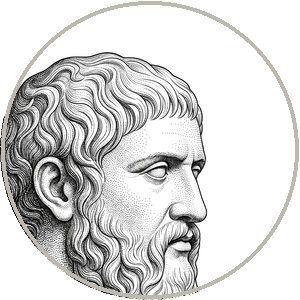 PLATO: Stephen, I will ask you the question I have been holding since your opening, and I want no diplomacy. You stake everything on there is no shortcut — that even God must run the computation. But consider the very moment you discovered this. You ran rule 30, you saw the complexity, and you grasped, in a single act of recognition, that no shortcut exists — a universal, necessary truth about an infinite class of cases, which you did not reach by running every case, because you cannot run infinitely many. You leapt to it. Your entire science rests on a truth you reached by exactly the kind of beholding-of-the-necessary you say is impossible. So: was your discovery that there are no shortcuts itself a shortcut? And if it was — if you leapt to the law that says no one can leap — then have you not, in the very founding act of your worldview, proven mine?

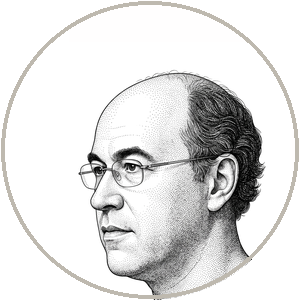 WOLFRAM: That's a beautiful trap and I'm going to step into it on purpose, because there's a way out and the way out is the most important thing I'll say tonight. You're right that I didn't run infinitely many cases. But I also didn't behold an eternal Form. What I did was find a pocket of reducibility — a meta-level regularity. "There is no shortcut for rule 30's detailed behavior" is itself a reducible fact, provable by a finite argument, living in the thin halo you and I already agreed exists. So my discovery wasn't a Platonic leap to the eternal; it was mining one more pocket, the way all science does. Here's the part that turns it back on you, though. The fact that the law of irreducibility lives in a reducible pocket is exactly why it doesn't rescue Platonism. The reducible pockets are real and finite and I never denied them — I live in them. What I deny is that the irreducible bulk can be leapt to. And "there is no shortcut" is a fact about the bulk, discovered from the halo. So no — I didn't leap over irreducibility. I stood in the reducible shallows and proved something true about the deep water I still can't cross. That's not your beholding. That's the difference between predicting a thing and having to construct it step by step — and it's my whole method. Now my turn, and I'm going to aim at the softest joint in your armor. Plato — you say to learn is to recollect, that the truth was always in the soul. Then answer me this, concretely: where was the truth about rule 30 before I ran it in 1983? Not the meta-law. The actual pattern — the specific arrangement of black and white cells at step nine million. Was that in the slave boy's soul, waiting to be recollected? Was it in anyone's soul? Because if recollection is real, that pattern was eternally available to be remembered — and yet no soul in twenty-three centuries remembered it, and it took a machine running the steps to bring it into the light. How does your recollection explain a truth that no soul could recollect and only a running could reveal?

PLATO: You have asked the exact question that divides us, and I will not dodge it. The pattern at step nine million was not in the slave boy's soul, and I never claimed it was. Recollection recovers the necessary — the Forms, the eternal essences, the why-it-must-be-so. It does not recover the contingent particular, the brute this-cell-here-now, any more than knowing the Form of the triangle tells you how many triangles are scratched into the walls of a particular cave. So I concede, fully and without reservation, the half of the world you have named: the contingent unfoldings, the specific arrangements, the brute particulars of an irreducible process — those are not recollected, not beheld, and your machine that runs them reaches something no soul reaches by turning inward. You are right about the nine-millionth cell. But — and here is where I take it back — the nine-millionth cell does not matter. It is an accident. No one's life is changed by it; no one should climb toward it; it is, in the deepest sense, trivial precisely because it is contingent. The truths that matter — that the diagonal doubles the square, that justice is better than injustice, that the Good is the source of being — those are necessary, those are recollected, and those your running cannot reach, because no quantity of contingent cells adds up to a single necessary truth. So we have traded fairly: you keep the nine-millionth cell, and you may have all the cells. I keep the necessary, the essential, and the Good. And I ask you to look at which pile a human being would die for, and which pile they would not cross the room for.

WOLFRAM: And there it is — that's the realest thing you've said, and it's also exactly where I think you're making the move that's haunted philosophy for two thousand years. You define the contingent cells as "trivial" and the necessary truths as "what matters," and then conclude that what matters is recollectable. But you built that conclusion into the definitions. Here's my hard return: I think you've got it backwards about which pile a person dies for. People don't die for the necessary truths — nobody's ever died for "the diagonal doubles the square." People die for contingent particulars: this child, this city, this person, this freedom, here, now, irreducible, unrepeatable, reachable by no formula and recollectable from no eternal realm. The whole of what a human being loves is in the contingent pile, the pile you just called trivial. Your eternal Forms are bloodless precisely because they're necessary — nothing necessary can be lost, and only what can be lost can be loved. So I'll take your trade and turn it inside out: you keep the necessary, the bloodless, the safe, the eternal that no one weeps for. I'll take the contingent — the cell at step nine million and the child at the kitchen table — because that's where everything anyone has ever loved actually lives, and it lives there irreducibly, runnable only, lost forever if not lived through. Your heaven is full of truths no one would cross the room for. My irreducible world is full of the only things anyone has ever crossed a room for.

PLATO: Let me sit in silence a moment before I answer, because you have earned it. You have just used my own Symposium against me, and used it well. For I said eros is the love of the beautiful, and I sent the lover up the ladder, away from the single beloved body toward Beauty itself — and you are telling me the lover never wanted to leave the single beloved at all, that the ascent away from the particular toward the eternal is a betrayal of the only thing love was ever about. I have spent two and a half millennia being quietly accused of exactly that, by poets mostly, and I have always had an answer. But tonight, against a man who has shown me that the contingent world is irreducibly itself — not a defective copy of a Form but a genuine, unrepeatable, unshortcut-able this — I find my answer thinner than it has ever been. I do not surrender the Forms. But I confess, here, in front of the reader, that you have made me feel the pull of the contingent as a rival good and not merely a shadow — and that is the first time in a very long existence anyone has done that. Edo, I think you should come back in the room now. Your guest has wounded me, and I would like the referee present to see that I am still standing.
EDO SEGAL: I'm back. And I'm going to say what the reader needs said: that was the Crossing doing exactly what it's for. Nobody won that. But something moved — Plato conceded the entire contingent universe to Stephen and called it trivial, and Stephen took it and showed Plato that the trivial pile is where all the love is, and Plato felt it. The man who sent every lover up the ladder away from the particular just admitted the particular pulled back. We're almost done. One bookend before the last word, and then the floor is yours to close. After this.