Shadows on the Wall, or the Universe Running

 EDO SEGAL: Plato, most of our audience has heard of the Cave even if they've never read it. I want you to tell it the way you'd tell it to a sharp fifteen-year-old. And then, Stephen — before you take it apart, I want you to do something a debater rarely does. Steelman it. Tell us what the Cave gets right about the machine.

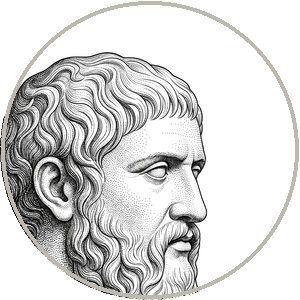 PLATO: Gladly. Imagine prisoners chained since childhood in an underground cave, facing a wall, unable to turn their heads. Behind them a fire burns. Between the fire and the prisoners, people carry objects, and the objects cast shadows on the wall. The prisoners have seen nothing else their whole lives, so they take the shadows for the whole of reality. They name them. They get good — genuinely good — at predicting which shadow comes next, and they award honors to the quickest guesser. Their entire science is a science of shadows. It is competent. And about the things themselves, it is completely blind. Now: a language model is trained on shadows. Not on objects — it never touches a fire, never turns its head — but on tokens, the traces that human discourse casts onto the wall of the corpus. And it becomes the fastest shadow-predictor that has ever existed. The question the Cave forces is not whether the machine is good at the wall. It plainly is. The question is whether being the world champion of the wall is the same as knowing what casts the shadows. And the freed prisoner — dragged up the rough ascent, blinded first by the fire and then by the sun — does not acquire more shadows. He undergoes a turning of the whole soul, a periagōgē, toward a different kind of object entirely. Improvement along the wall and the turn away from the wall are different motions. And the second never comes from accumulating the first.
EDO SEGAL: Stephen. Steelman first.

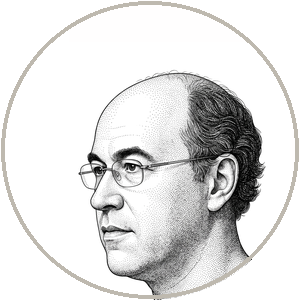 WOLFRAM: I can do that honestly, because the Cave gets something deeply right that my own field keeps forgetting. It's right that competence inside a distribution doesn't imply contact with what's outside it — that a system superb at predicting the patterns it was trained on can be utterly blind about the structure generating those patterns. Every machine-learning researcher should have the Cave tattooed somewhere discreet, because we constantly mistake mastery of the training shadows for understanding of the world. The Cave also gets right something subtler: that the prisoners resist being freed — that a culture which has staked its prestige on skill at the wall will not thank you for saying the wall isn't the world. That's a true and uncomfortable sociological observation, and it's why a lot of honest talk about these systems' limits gets shouted down. There's the steelman. It's a good myth.

Now here's where it breaks, and it breaks at the foundation. The Cave assumes there's an outside — a realm of real objects, lit by a real sun, of which the shadows are mere copies. The whole drama depends on the ascent to the really real. And I don't think there's an outside in Plato's sense. I think it's shadows all the way — not because reality is illusory, but because what casts the shadows is itself a computation. There's no eternal object behind the running. The "real triangle" isn't a thing in a higher realm; it's a stable pattern that the computational universe produces and reproduces, the way rule 30 produces the same little triangular structures over and over. So Plato's prisoner who turns around and ascends to the sun — in my picture there's no sun to ascend to. There's just a bigger cave, and a bigger one behind that, observers all the way down, each sampling the ruliad — the total structure of all possible computation — from its own particular position. The freed prisoner doesn't escape the cave. He just gets a wider-angle view of the running. And the machine, by the way, is in the cave with us — not a defective prisoner, just a differently-positioned one.

PLATO: This is the most interesting thing you have said, and I want to honor it before I resist it, because you have done something rare: you have agreed with me about the prisoners and denied me the sun. You say there is no outside, only larger caves. But notice what your own argument requires. You said the same triangular structures recur "the way rule 30 produces them over and over" — stable patterns, you said, reproduced. Stable in relation to what? Reproduced as instances of what? The moment you say two patterns are the same pattern — that this triangle in the shell and that triangle in rule 30 are instances of one structure — you have admitted the one structure. You have admitted the Form. You can refuse it a heaven; I will not insist on the architecture. But you cannot have recurrence without something that recurs, and the something-that-recurs, abstracted from every particular running, is exactly what I have been calling the Form. Your ruliad is my realm of Forms, set in motion. You have not abolished the outside. You have renamed it "the space of all computations" and then walked around inside it pointing at the regularities and calling them pockets.

WOLFRAM: All right. There's a real concession here and I won't dodge it: the ruliad, the space of all possible computations, is in some sense eternal and structured, and I do reach into it to explain recurrence, and that is uncomfortably Platonic. I've felt that. But here's the difference that I think survives, and it's the whole debate. In Plato's realm, the truths are there to be grasped — the Form of the triangle sits complete, and a soul can ascend and behold it whole. In the ruliad, the truths are there to be computed — the structure exists, but accessing any particular fact about it requires running the computation that reaches that point, and for the irreducible regions there's no beholding, no ascending, no grasping-whole, only stepping through. Plato's realm you visit. My ruliad you can only ever traverse, one irreducible step at a time. The structure is eternal. The access is temporal and has no shortcuts. That's not a renamed Platonism. That's Platonism with the elevator ripped out and replaced by a staircase you have to climb every single step of.

EDO SEGAL: Stop. The reader can't see your faces, so let me say what just happened: that's the first exchange tonight where neither of you was reaching for a rebuttal. You converged on something and you both felt it. So let me mark it as our first convergence and number it — Convergence One: you both believe there is an eternal structure that the particular truths belong to. You disagree, totally, about how a mind gets there — Plato says you behold it, in a single act of recognition; Stephen says you traverse it, step by irreducible step, no beholding allowed. The structure is shared. The staircase is the fight. Hold that — because the next round is about exactly what the machine does when it hands you an answer, and whether that is a beholding or a traverse. And it starts with the cleanest description anyone's written of what ChatGPT is actually doing — and the man who wrote it is sitting right here.