The Demon and the Theorem

 EDO SEGAL: I want to start this round with a confession instead of a question, because the best questions I know come out of wounds. In December of 2025 I stood in a room with twenty engineers and watched each of them become capable of more than all of them together, because the machine had crossed a line — it could finally take a half-formed human intention and return a working thing. I wrote in my book that this was the great inversion, the river of intelligence finding a new channel. And the feeling in the room was Laplacean to the bone: that with a little more data, a little more compute, there was nothing the machine would not eventually do. Marquis, your demon was standing in that room. Professor, your theorem was the only thing that kept me from kneeling to it. So let me make you face each other directly. Marquis — Gödel says your dream is not merely hard but forbidden. Answer him.

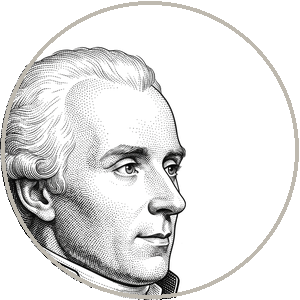 LAPLACE: I will answer him by conceding the theorem entirely and denying its dominion. Gödel is right about formal systems of the kind he studied — Hilbert's program, the attempt to derive all of arithmetic from a fixed set of axioms by mechanical rules. I do not dispute a syllable of the mathematics; one does not dispute a theorem. But notice what the theorem is about. It is about derivation within a closed axiomatic system. My demon is not derivation within a closed system. My demon is a physical intelligence reading a physical world — measuring positions and forces and projecting them forward by the laws of motion. That is not the same activity. The planets do not prove theorems; they move, and I compute their motion. Gödel has shown that a certain game of symbols cannot win itself. He has not shown that the universe cannot be computed, because the universe is not playing his game.

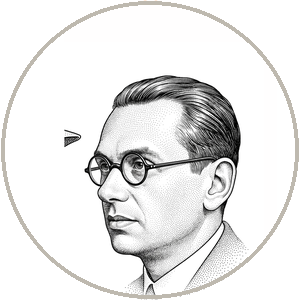 GODEL: That distinction will not hold, and I will say precisely why. You imagine your demon computing the future of the world. But "computing" is not a vague honorific — it is a defined notion. To compute is to carry out a mechanical procedure, a formal manipulation of symbols according to fixed rules. Turing made this exact, and your engineers' machines are its physical realization. The moment your demon computes anything, it is a formal system in my sense, and my theorem applies to it. You cannot have the computation without the formalism; they are the same thing seen from two chairs. So either your demon computes — in which case it is incomplete, there are truths about its own domain it cannot derive, and it cannot certify its own consistency — or it does not compute, in which case it is not the predictor you promised but something else, something you have not defined. Which is it, Marquis? Name the procedure and I will show you the hole. Refuse to name it and you have no demon, only a wish.

LAPLACE: That is a sharper blade than I expected, and I will not pretend it does not draw blood. Let me grant the trap and crawl partway out of it. Yes — insofar as the demon computes, it computes by formal procedure, and your theorem touches it. But your theorem touches it in a specific and survivable way. It says there are arithmetical truths about the system itself — self-referential statements about its own provability — that it cannot derive. Very well. The demon does not need to prove its own consistency to predict the orbit of a comet. The unprovable Gödel sentence is a curiosity at the system's edge; the comet is squarely inside its reach. You have shown me a hole in the ceiling. I am pointing at the floor, which is vast, and on which nearly everything I care to predict comfortably sits. The hole is real. It is also small, and it is at the top, and most of the world does not live near the top.

GODEL: Now we are getting somewhere, because that is exactly the comforting picture I must destroy. You say the hole is small and at the top, far from the things you care about. But the things your century cares about are not comets. They are precisely the self-referential ones. A machine that predicts a society is part of that society and changes it by predicting it. A machine asked to certify its own reliability is asked for exactly the statement my second theorem forbids. A mind modeling itself, an intelligence reasoning about the limits of its own intelligence — these are not edge cases at the top of the tower. They are the whole reason your century built the machines. The self-referential is not the curiosity. It is the application. You have driven the hole to the one corner of the building where no one was standing, and I am telling you the future has moved everyone into that corner.
EDO SEGAL: Let me restate that, because it just changed shape and I want the reader to feel it. Marquis, you said the hole is at the top of the tower, far from the floors where ordinary prediction lives. And Professor, you are saying — literally — that the machines my century is building are climbing straight toward the hole, because the most valuable thing we want from them is exactly the self-referential thing: a system that knows itself, checks itself, predicts the world that contains it. The hole isn't in the attic anymore. We're building the elevator to it. Is that right?

GODEL: That is exactly right, and there is no elevator — only a staircase, and the staircase ends at an opening no step reaches. The higher the machine climbs in self-knowledge, the more completely it instantiates the conditions of my proof. Self-reference and limitation arrive together; they are two faces of one fact about any system rich enough to be interesting. A system too weak to model itself escapes my theorem only by being too weak to matter. The moment it is strong enough to be the general intelligence your century dreams of, it inherits the hole. There is no version of sufficient power that climbs past its own unprovable truths. The roof has an opening, and the opening grows more inescapable the higher you build.
LAPLACE: And yet — hold there, because I will not concede the floor I am standing on. You keep saying the machine cannot certify itself, cannot prove its own consistency. Granted. But I never asked it to. I asked it to predict, and prediction does not require self-certification. The astronomer who predicts an eclipse does not first prove the consistency of arithmetic; he computes, checks against the sky, and is right. Your hole is in the machine's account of itself. The world it predicts does not live in that hole. You have proved that the mirror cannot see the back of its own head. I am content to predict everything in front of the mirror, which is, Professor, the entire sky.

GODEL: Except that the back of the head is where the trust lives. You say: compute, then check against the sky. But what tells you the computation is sound? What certifies that the procedure has not, somewhere in its trillion steps, contradicted itself and produced a confident falsehood you cannot detect? You check against the sky for the comet because you have a sky to check against. Your century is deploying these machines on questions with no sky — questions where the answer is not visible until it is too late, where the only available certificate of reliability is the machine's own, and that certificate is precisely the one I proved cannot exist. The hole is not a curiosity about the machine's self-image. It is the absence of the one guarantee you would most want before you trusted it with a life.
EDO SEGAL: That is the seam, and we are going to open it all the way before the night is out. But notice what just happened, because it is rarer than agreement. Laplace says the hole is real but bounded — the machine predicts the world even if it cannot certify itself. Gödel says the boundary has moved, that the self-referential corner Laplace calls small is exactly where the dangerous applications now live. Neither of them is wrong about the mathematics. They are fighting about where the hole sits in the building we are actually constructing. Hold that. The next round goes underneath the demon and the theorem both, to the thing the machine actually does when it learns — and whether prediction, however perfect, is the same as grasping the truth.