The System That Cannot Vouch for Itself

 EDO SEGAL: Professor Gödel, of your two theorems the second is less famous and, I think, more terrifying for my moment. You proved that no consistent formal system powerful enough for arithmetic can prove its own consistency — that a system cannot certify, from inside, that it will never contradict itself. And here is why I cannot sleep on it: the entire safety strategy of my century's AI is to build systems that check their own outputs, audit their own reasoning, guarantee their own reliability. We are trying to build the machine that vouches for itself. Tell me, in plain words a frightened engineer could hold, what your theorem says about that dream.
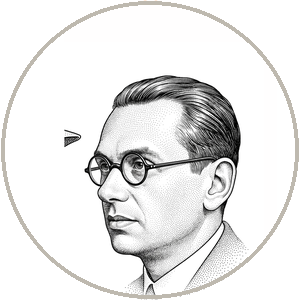 GODEL: It says the dream, in its strongest form, is not difficult but impossible, and I will give it to you as plainly as the mathematics allows. A system may be entirely consistent — it may never, in fact, derive a contradiction. But it cannot demonstrate this about itself using only its own resources. To establish that the system is sound, you must reason from outside it, in a stronger system — whose own soundness is then equally beyond its own reach. There is no formal vantage from which a system looks upon itself entire and certifies that it is trustworthy. The certificate you most want — "this whole apparatus is free of contradiction, its reasoning can be trusted in general" — is precisely the statement I proved a system cannot produce about itself. Your engineers want the machine to hand them that certificate. The machine cannot write it. Not because it is not yet clever enough. Because no system of its kind can, ever, by a theorem.
EDO SEGAL: So when a lab says "we'll have the model verify its own alignment, audit its own safety" —
GODEL: They are asking for the consistency proof from inside the system. They can have a great deal less than that, and the less is genuinely valuable, so let me be fair. A system can check this particular output against that particular constraint. It can catch many classes of error. It can flag local inconsistencies. These partial self-checks are real and useful and I do not dismiss them. What it cannot do is the global, foundational thing — vouch for itself entire, guarantee that the whole of its reasoning is sound. And notice the cruelty of the situation: the global guarantee is exactly the one you would most want before trusting the machine with a life, a market, a weapon. The buck, in the matter of foundational reliability, does not stop inside the system. It cannot. Something outside must judge it. And for now, that something outside is you — human judgment, which the machine was supposed to relieve.
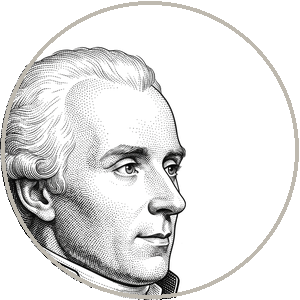 LAPLACE: I am going to do something the audience may not expect and stand partly with Gödel here, because his theorem touches a nerve I felt in my own work. I, too, could never certify my instruments from inside my instruments. Every observation was corrupted by error, and to estimate the error I had to reason from outside the observation, in a wider frame, which had its own errors in turn. There is no bottom. The astronomer never reaches a measurement that certifies its own accuracy. So the predicament Gödel proved for formal systems, I lived for physical ones. Where I will resist him is the leap from "the system cannot certify itself" to "therefore you need a mind outside it." You need a stronger system outside it, Professor. You did not prove the stronger system must be a human. One machine can stand outside another and check it — imperfectly, regressively, but stand there nonetheless.
GODEL: That is the right objection and I have an answer that I think wins, though not as cleanly as I would like. Yes — one system can stand outside another and verify it, in a stronger system. But now you have a tower of systems, each certified only by the one above it, and the tower has no top. The consistency proof recedes forever; there is no system that grounds the whole stack. So the regress is real and it does not terminate inside the machines. At some point, if there is to be any ground at all, something must enter that is not the next formal system in the stack — something that does what I did with my own proof, which is to see the truth from outside without deriving it from a system above. Whether that something must be a human mind, I cannot prove. But I can prove that it cannot be merely another machine in the tower, because the tower never ends. The ground, if there is ground, is not in the stack. And your century has built the stack and called it the ground.
EDO SEGAL: I want to slow down on the human version of this, because both of you have hinted at it and it is the most unsettling thing in the room. We cannot certify ourselves either. I cannot prove, from inside my own reasoning, that my reasoning is sound — every attempt to justify my reason uses the reason in question. The machine's predicament is mine. Professor, where exactly is the difference, if there is one?
GODEL: That is the question I am least sure of and most haunted by, and I will give you the honest version rather than the flattering one. Yes — the human mind, too, cannot ground its own consistency noncircularly. In this we share the machine's predicament exactly. If that is the whole story, then we are formal systems like the rest, and the hole in us is the same hole. But I do not think it is the whole story, and my reason is the same act I keep returning to: I can see that my system's Gödel sentence is true, and that seeing is not a derivation within my system — it is a stepping-outside. If I can genuinely do that, then whatever I am, I am not merely a system trapped in the regress; I have some access to truth from beyond the stack. The whole question of whether I am right reduces to whether that seeing is real or whether it is, as Laplace will say in a moment, just a very deep computation that feels like seeing. I cannot prove which. I can only tell you that everything turns on it.
LAPLACE: And I will not say "just a computation" dismissively, because I have learned tonight that the word "just" costs more than I used to charge for it. But I will say this, and it is the candle I hold against his certainty: the feeling of seeing-from-outside is exactly what a sufficiently powerful inference would feel like from the inside, because the machinery of the inference is not available to introspection. You believe you stepped outside the system. Perhaps you did. Or perhaps you ran a deeper computation within a larger system you cannot perceive the walls of, and called the result intuition because you could not see the walls. The demon, computing the whole of you, would see the walls. You cannot. That is not a refutation, Gödel. It is only the reason your certainty should be a degree less than total — which, to your great credit, it already is.
GODEL: It already is. I have never claimed the proof. I have claimed the possibility, held with conviction, that the seeing is real. And I notice, Laplace, that you keep needing the demon to refute me — you keep saying "the demon would see the walls." But the demon does not exist; you said so yourself, in your opening. So your refutation rests on a being you have admitted is impossible. Mine rests on an act anyone can perform by reading my proof. I will take the act over the impossible being.
EDO SEGAL: And there it is — the second exchange tonight where neither of you was reaching for agreement. Laplace needs the demon to close the hole, and the demon is the one thing he admits cannot be built. Gödel needs the seeing to be real, and the seeing is the one thing he admits he cannot prove. Each man's strongest move depends on the thing he cannot have. Mark that symmetry; we return to it at the very end. The next round leaves the foundations and goes to the strangest place these two meet — the mirror inside the machine, where a system learns to talk about itself, and where, in 1931, a number first spoke its own name.