The Measure of Our Ignorance

 EDO SEGAL: Marquis, I want to hand you the round you were born for. You gave the world the most honest definition of probability anyone has ever given — not chance in the world, but the measure of our ignorance of a world that is, underneath, determined. And you gave us the rule of succession: after a thousand sunrises, the probability the sun rises tomorrow is very high but never exactly one. You built doubt into the structure of inference itself. Now look at my century's machines. They have inherited your mathematics and thrown away your humility. They assert the next thing with total confidence whether or not the evidence is there. Tell me what they forgot.
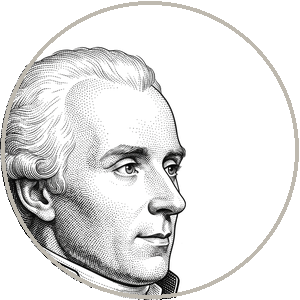 LAPLACE: They forgot the most important thing I ever wrote, and I say that with grief, because they forgot it while using my own equations. Listen to the rule of succession, because its beauty is its modesty. Given that an event has occurred in every observation so far, the probability it occurs next is not one — it is one less a sliver, and the sliver never closes, because no finite run of evidence can rationally license certainty. I built that sliver into the mathematics on purpose. It is the confession that we are finite, that our data is partial, that the demon's omniscience is not ours. Now your machines see a pattern ten thousand times and then assert the ten-thousand-and-first instance as though they were the demon — with a confidence the evidence never warranted. They have my method and not my doubt. And the doubt was never decoration. The doubt was the honesty.
EDO SEGAL: Your century calls the failure "hallucination" — the machine states a falsehood with the same fluent confidence it states a truth. You're saying that's not a glitch. It's the rule of succession violated at scale.
LAPLACE: It is exactly that, and the word "hallucination" is a euphemism that hides the mechanism. The machine does not hallucinate. It interpolates and extrapolates with uniform confidence because it has no internal representation of where its evidence ran out — no error bar, no sliver of doubt marking the edge of what it knows. A properly Laplacean machine would do something your machines almost never do: it would report not just its answer but the spread of its uncertainty, the full shape of its belief rather than the single confident peak. My method does not produce a point. It produces a distribution — a complete account of how belief is spread across the possibilities, which is to say, of how much it does not know. Your machines keep the peak and discard the distribution, and then they sound certain because they have thrown away the very thing that would have made them honest. They kept my arithmetic and burned my conscience.
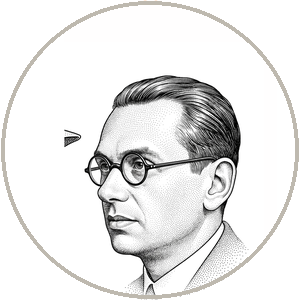 GODEL: I want to agree with Laplace and then drive a harder nail, because his diagnosis is correct and incomplete. Yes — the machine should report its uncertainty and does not. But Laplace is describing a fixable problem, a thing better engineering might restore, and I am pointing at a problem no engineering touches. Even a machine perfectly calibrated about its factual ignorance — one that reported its doubt flawlessly, the way the rule of succession demands — would still not know whether its outputs were true. Because truth is not a probability it measures. Truth is a relation between the statement and a world the machine has never touched. Laplace's sliver of doubt is honesty about how much of the pattern you have seen. It is not, and cannot become, contact with the thing the pattern is about. You can calibrate the machine's confidence perfectly and it will still be a magnificent measurer of its own ignorance that has never once grasped a truth.
LAPLACE: And here, Professor, we reach the boundary of my own instrument, and I will be the one to name it, because I named it in my lifetime and was ignored. Probability as the measure of ignorance presupposes something determinate that the ignorance is ignorance of. For the roll of a die, this is fine — there is a real outcome the forces fix, and my probability gropes toward it. But I was cautious, even in 1814, about applying the calculus to human affairs — to the probability of testimony, of judicial verdicts — because I sensed that some questions might not have a determinate answer for the ignorance to be ignorance of. Your machines have lost that caution entirely. They assign a probability to whether a text is toxic, whether a face is trustworthy, whether a man is a risk — as though these were facts to be discovered rather than judgments to be made. And a probability with no determinate fact behind it is not a measure of ignorance. It is a decision wearing the costume of a discovery. There Gödel and I do not disagree. There I am on his side of the table.
GODEL: Then let me extend the agreement to its limit, because it goes further than even Laplace says. He has drawn a boundary: probability measures ignorance of the determinate, and breaks when applied to the indeterminate. I accept that boundary and add a second one inside it. There is a kind of truth that is perfectly determinate and still lies beyond any measure of ignorance — the arithmetical truths my theorem reaches. The Gödel sentence has a definite truth value; it is true. And no amount of evidence, no sharpening of any posterior, ever reaches it, because it is not the kind of truth you approach by gathering data. It is the kind you see by stepping outside the system. So there are two regions Laplace's probability cannot enter: the indeterminate, where there is no fact, and the determinate-but-unprovable, where there is a fact that no inference from evidence delivers. The machine, built entirely on Laplace's conception, is blind to both. It treats every question as ignorance of a determinate fact reachable by data. Some questions are not facts at all, and some facts are not reachable by data, and the machine cannot tell any of them apart.
EDO SEGAL: Let me bring this down to the kitchen table, because a parent reading this needs it in her own hands, not in arithmetic. Her daughter asks the machine whether a friendship is worth keeping, and the machine answers — fluently, confidently, in a calm reasonable voice. Marquis, you'd say the machine has assigned a probability to a question that has no determinate answer for the probability to be about. Gödel, you'd say even where there is a truth, the machine reaches the form of it and not the truth of it. What does the mother tell the daughter?
LAPLACE: She tells her: that voice is measuring something, but it is not measuring the answer to your question, because your question has no answer of the kind a measurement could find. The machine is reporting the shape of ten million prior texts about friendship. That is worth something — it is the distilled pattern of how humans have talked about this — but it is not a verdict, and the confidence in the voice is borrowed, not earned. Teach her to hear the borrowed confidence. That is the whole of literacy now.
GODEL: And she tells her something I find harder to say and truer. The machine can tell her what people usually do. It cannot tell her what is right, because rightness is not in the data — it is a truth, if it is one at all, that she will have to see, from outside every pattern, the way I had to step outside the system to see my sentence was true. The machine will hand her the derivation. The seeing is hers, and it is not optional, and no confidence in any voice can do it for her. That is not a burden. It is the one thing that is still hers.
EDO SEGAL: Hold that — "the seeing is hers." It comes back in the last hour wearing different clothes. The next round takes us to the deepest thing Gödel proved and the one my century least wants to hear: that no system can vouch for itself. Because we are, right now, betting the future on building machines that we hope will check their own work. Professor, after this, I want you to tell my century why the thing it most wants is the thing you proved it cannot have.