Standing-Reserve and the Amplified Self

 EDO SEGAL: Professor, your most disturbing idea — more disturbing to me than the poem — is standing-reserve. Bestand. The forest becomes timber inventory, the river becomes a power supplier, and then, you warned, the human becomes human resources, a capacity on call. You wrote that the recategorization of the human would be the least visible and therefore the most dangerous, because we have never known ourselves in our fullness, only through our functions — and the machine addresses exactly the functions. Ray's whole gospel is that the machine amplifies the human. You would say amplification is the velvet name for the recategorization. Let me make Ray defend his favorite word. Ray — when you say the machine amplifies who we are, what stops "amplified" from being "rendered into standing-reserve"?

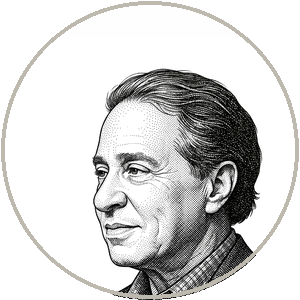 KURZWEIL: What stops it is that the human moves up, not out — and I will be concrete because the abstraction is where the fear breeds. In a room in Trivandrum this winter, twenty engineers found that the machine had taken eighty percent of their work, the implementation, the plumbing. A senior architect spent two days in something close to grief before he understood what had happened: the twenty percent that remained — the judgment, the taste, the sense of what was worth building — was what he had actually been good at all along, and the eighty percent had been hiding it. The machine did not reduce him to a resource. It subtracted the part of him that was already most machine-like and left standing the part that was most human. That is the opposite of standing-reserve. The professor sees the forest becoming timber. I am showing him the woodcutter becoming a forester — relieved of the axe-work, freed into judgment, which is the scarce thing now and the human thing always.

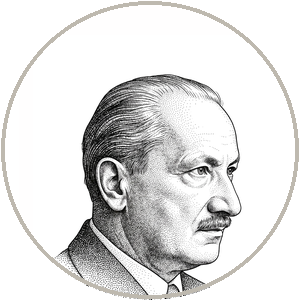 HEIDEGGER: It is a beautiful story and it is the danger speaking in its most seductive register, so let me take it apart with care, because the audience deserves to see the trick and it is a subtle one. Mr. Kurzweil says the machine left standing "the part that was most human — judgment, taste, the sense of what is worth building." Ask why that part is now valued. Not because it is human. Because it is scarce. He said the word himself: scarce. The architect's twenty percent is prized the way the last unmined seam is prized — as the remaining deployable resource. And what happens, Mr. Kurzweil, when the machine acquires judgment too, as you insist on every other page that it will? Then the last seam is mined, and the architect is fully recategorized, fully standing-reserve, and — this is the part that should freeze the room — the recategorization will be painless, because by then he will have forgotten he was ever anything but a set of competencies, some still scarce, most not. You call it moving up. I call it the orderly retreat of a man up a tower whose every floor the water is rising to fill, who mistakes the climbing for ascent. He is not ascending. He is being driven upward by a flood, and there is a roof.

EDO SEGAL: I have to put my own skin on this table, because I have sat where the architect sat — on the other side of it. I have been in the board meetings. Quarter after quarter, the arithmetic on the table is the same: if five amplified people can do the work of a hundred, why are we paying for a hundred? I kept the team. I bet that a hundred amplified people building more ambitious things beats five people building the old things cheaper. But I know the structure punishes that choice, and I know the software death cross — a trillion dollars leaving the software industry in eight weeks this winter — is the market voting the other way. So let me ask the thing under the thing. Ray, you say the human moves up into judgment. Professor says judgment is just the last scarce seam. The reader at home is the architect, and she wants to know: is "move up into judgment" a destination, or a ledge on the way to the roof?
KURZWEIL: It is a destination, and here is the load-bearing reason, the one the professor's flood metaphor cannot accommodate. He treats the machine as a fixed predator climbing toward a fixed human. But the human is not fixed in my framework. The fifth epoch is the merger — not the machine replacing the human and not the human merely using the machine, but the progressive integration of the two substrates into a hybrid that exceeds either. Today the interface is a keyboard and a screen, absurdly narrow, the bandwidth of typing. Tomorrow it is tighter, and eventually it is direct. The architect is not standing on a ledge waiting to be flooded. He is becoming part of the rising water. There is no roof, because the thing he is climbing into is the climb itself. The professor keeps drawing a line between the human and the machine and then mourning the line. I am telling him the line is what is dissolving, and on the other side of its dissolution is not a drowned man. It is a larger mind.

HEIDEGGER: And there — listen — he has said the quiet thing aloud, and I am almost grateful, because it ends the pretense that this is about productivity. "There is no roof, because the thing he is climbing into is the climb itself." He proposes to dissolve the line between the human and the machine and calls the dissolution an enlargement. I call it the completion of the forgetting. A larger mind, he says. Larger in what? In capability, in reach, in the orderable — in every dimension his curve can plot and in not one dimension it cannot. And the dimension it cannot plot is the only one that was ever the human: that I am this one, thrown into this life, claimed by this death, standing in a clearing that is mine and ends when I do. You cannot merge that. You can only erase it and call the erasure a merger. The architect who "becomes the rising water" has not transcended his finitude. He has agreed to stop being the kind of thing for which finitude was the source of everything that mattered. Mr. Kurzweil offers him the sea and calls it freedom from the shore. The shore was where he lived.
EDO SEGAL: Stay one more beat, because I want the convergence on the record before we leave, and there is one. You both agree — and this is strange, given everything — that the old answer is dead. The human as the one who does the work, who executes, who is valued for the eighty percent: gone, both of you, no dispute. Ray says good riddance, the human was always the judgment. The professor says yes, and watch them come for the judgment next. You disagree about the roof. You agree the old floor is gone. Mark it, because the reader is standing on that vanished floor right now. The next round goes to the making itself — the chalice and the benchmark, poiesis against computation, and a German gardener in Berlin who refuses a smartphone. After this.