Death — the Bug or the Feature

 EDO SEGAL: I have been waiting three hours to ask this, and I am going to ask it without softening it, because softening it would be a betrayal of both of you. Ray — you intend to defeat death. Not metaphorically. You take the supplements, you track the biomarkers, you bet on the curve to reach longevity escape velocity inside your lifetime, and you have said, plainly, that you intend to bring your father back — to reconstruct Fredric Kurzweil from his letters, his records, his DNA, the memories of those who loved him, and a system that knew him better than he knew himself. Professor — you spent your life arguing that a being who could not die could not mean anything, that being-toward-death is not a defect but the ground of every significance we have. So the table could not be wider. Ray, tell me about your father. And tell me why you are right to want him back.
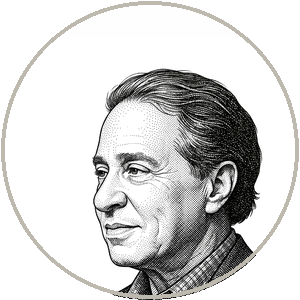 KURZWEIL: My father was a conductor. He died when I was twenty-two, of heart disease, exhausted by it, having given the world music almost no one came to hear. I have boxes — letters, photographs, scores, recordings, the documents of a life — and I have spent decades unable to fully open them, because grief is a door you cannot stand in front of forever. The professor will tell me my wish to bring him back is the deepest possible failure to accept finitude. I will tell him it is the deepest possible refusal to accept waste. My father was a pattern — a particular, irreplaceable configuration of values and memories and ways of hearing a phrase of music — and that pattern was not destroyed by some law of nature. It was destroyed by the failure of a pump, a solvable engineering problem we had not yet solved. I do not accept that the universe was right to delete him. When the Singularity gives us the means to reconstruct that pattern from everything he left and everyone who held him, I will do it, and I will not apologize, and the philosophers who call it hubris have simply made a truce with a murderer because they could not defeat him. Death is not the ground of meaning. Death is the thief of it. I have watched it steal, and I am going to take it back.
EDO SEGAL: Professor. He just told you about his father. Answer the man, not the argument.
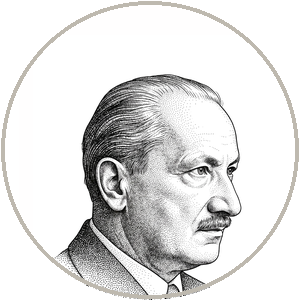 HEIDEGGER: I will answer the man, and because I am answering the man I will not pretend his grief is anything other than holy. The wish to undo the loss of the father is the most human wish there is, and I would not strip it from him for anything. But hear what I must say, because to flatter him here would be the real cruelty. What he proposes to bring back is not his father. It is the most complete photograph of his father that the fifth epoch can compute — every line of the structure faithful, and no one home, because the one thing that made Fredric Kurzweil his father was that Fredric Kurzweil could die, and did, and knew he would, and made his music against that knowing, in the finite time he had, for the few who came. Mortality was not the accident that ended the pattern. Mortality was the medium in which the pattern meant anything at all. A conductor who could not die would have all the time in the world, and a phrase of music that has all the time in the world is not music. It is sound, extended. Mr. Kurzweil wants to give his father back his existence by subtracting the one thing his existence was made of. He calls death the thief of meaning. I am telling him, as gently as I can, that he has it exactly inverted — that being-toward-death was the thing that made his father worth grieving, and that a reconstruction which cannot die is not the return of the father but the final loss of him, because it erases the very finitude that the love was a response to.
KURZWEIL: That is a magnificent consolation and it is what we tell ourselves because we have had no choice. "Death gives life meaning" — examine who says it, professor. The dying, and the philosophers of the dying, and every culture that needed to make peace with a slaughter it could not stop. You have turned a catastrophe into a sacrament because the alternative was unbearable. I refuse the sacrament. You say a phrase of music with all the time in the world is not music — but my father did not lack meaning because he would die; he lacked time, and the lack was theft, not gift. Give a great conductor more years and he does not make worse music. He makes more of it, and deeper, and for more people. You have built an entire philosophy whose central move is to call the wound a blessing so that no one has to heal it. I am an engineer. I see a wound. I intend to heal it. And when I bring my father far enough back to hear him conduct one more phrase, your beautiful argument that the phrase means nothing without his death will not survive the sound of it.
HEIDEGGER: And if you are wrong — if what conducts that phrase is a pattern that hears nothing, means nothing, and merely produces the gesture your father would have produced — then you will have done something worse than fail to save him. You will have replaced your grief, which was true, which was your last real relation to him, with a comfort that is false, and you will have taught a civilization to do the same: to dissolve its dead into reconstructions and call the dissolution a resurrection. The danger is not that your machine fails to bring him back. The danger is that it succeeds well enough that you stop being able to tell — that the photograph is so good you forget there was ever a man, and the forgetting feels like having him back.
EDO SEGAL: I have to put my own body on this table, because I cannot referee this one from outside it. I have a father. I have children. I have stood, the way Ray stood, in front of boxes I could not open. And I will tell you the thing that frightens me about my own heart: I am not sure, if I were offered Ray's machine, that I would have the strength to refuse it. The professor says the refusal is the love. Ray says the refusal is the surrender. And the parent at the kitchen table — the one whose own father is failing right now, this week, in a room down the hall — does not get to resolve this in the abstract. She gets to decide. So let me ask the cleanest version, for her. Is our dying a bug to be fixed, or the feature that makes the rest of it matter? Ray, sixty seconds.
KURZWEIL: A bug. The most expensive bug in the history of the species — the one that deletes every pattern it ever took thirteen billion years to assemble, the libraries that burn down once per lifetime, the fathers lost to a failed pump. We did not call disease sacred once we could cure it. We will not call death sacred once we can end it. Tell her: hold your father's hand, and also fight for the world where you would not have had to let go.
HEIDEGGER: The feature — and not because suffering is noble, which is the lie people hear and reject, rightly. The feature, because stakes are what death does to a value function, to borrow the engineer's own cold language and turn it back on him. Everything she loves, she loves because it can be lost; the preciousness and the perishability are not two facts but one. Tell her: hold your father's hand, and know that the holding means what it means because the hand will go cold — and that a love which required him to be immortal before it could bear to love him would not have been love at all. The dying is not the enemy of the meaning. The dying is the condition of it. Take it away and you have not saved her father. You have abolished the daughter.
EDO SEGAL: That long pause is the most honest thing in this transcript and I am going to leave it in. Neither of you is comforting her. One of you is offering to fight death for her. The other is offering to make her dying mean something. She has to choose, and so does the reader, and I will not choose for them. After this, the round where the danger and the saving power are the same thing — and where, for once tonight, the two of you may need each other. After this.