The House of Being

 EDO SEGAL: Professor, you wrote the sentence that this whole AI moment seems built to test: language is the house of Being. Not a tool for communication — the medium within which the world opens, the way harmony happens within music. And now there is a machine that produces language in any register, on any topic, more fluently than any of us. Ray would say the machine has simply moved into the house and learned to keep it. You would say it has produced the photograph of the house — every line faithful, no one able to live in it. This is the round where it is most personal for you, because it is your sentence under the machine. Ray, you take it first: has the machine entered the house of Being?
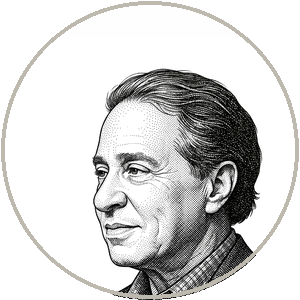 KURZWEIL: It has entered the house, and it is renovating, and the professor is standing in the doorway insisting no one is home. Here is the thing his beautiful sentence cannot survive contact with: he says the word "river" in the machine's output carries only statistical probability, the ghost of meaning, while the word "river" in a human mouth carries the weight of every river she ever saw. But where does her "river" come from? Her brain sits in the dark, in a box of bone, receiving spike trains — patterns — from a retina that never touched water. She built her meaning of "river" from regularities in signals, exactly as the machine did, only from a narrower and slower stream. The professor wants human meaning to be grounded in some contact with Being that the machine lacks. The contact is patterns all the way down for her too. The house of Being is built of pattern, professor. You have just never had to see the blueprints before, because there was only ever one tenant and you assumed the tenant was the architecture.
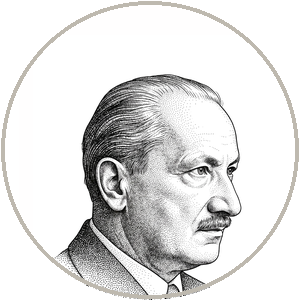 HEIDEGGER: That is the most honest version of his position I have heard, and I want the audience to feel why it is also the most revealing — because in it Mr. Kurzweil concedes the entire game while believing he has won it. He does not argue that the machine understands as the human does. He argues that the human never understood in the way the human thought — that we were always the octopus with enough data, the cortex in the dark assembling the world from spike trains. And there, precisely, is where I refuse him, and it is the seam of the whole evening. My spike trains arrive attached to something the cable never carries: a body that acts and can be hurt, an environment that pushes back, a death that is mine, a child who is or is not where I left her. When I speak the word "river," it is anchored to thirst that was or was not slaked, to a flood that took or spared a house, to the Rhine that gathered a people I belong to and will leave. The meaning closes its loop through the world and through my mortality. The machine's "river" closes its loop through more text about rivers. He says: patterns all the way down. I say: yes — and the patterns are disciplined, in my case, by a world I can lose and a life that ends, and in the machine's case by nothing but other patterns. He has noticed that we are made of signals and concluded that we are only signals. He has confused the house with the blueprint, because he has never had to live anywhere, and a man who has never been cold cannot tell you what a wall is for.
EDO SEGAL: Let me bring the ghost who saw all this coming, because he is the bridge between you two and he belongs to both of you. Hubert Dreyfus. Berkeley philosopher, read you, Professor, more carefully than almost anyone, and in 1972 told the AI laboratory at MIT that computers would never be intelligent because intelligence is embodied, situated, a matter of coping with a world rather than processing symbols about one. They despised him. And here is the delicious part, Ray — Dreyfus was attacking symbolic AI, the rules-and-logic program. The thing that actually worked, the neural network, the thing that learns pattern without explicit rules — that was built on his side of the argument. So whose ancestor is Dreyfus? Each of you, claim him. Ray first.
KURZWEIL: He is more mine than the professor will admit, and the reason is exactly the irony you named. Dreyfus said intelligence is not rule-following — that expertise is pattern, acquired through experience, resident in something more like a trained intuition than a logic engine, and that the symbol-manipulators would fail because they tried to make it explicit. He was right, and the machine that vindicated him is the neural network: competence without articulable rules, knowledge smeared across weights, skill that cannot explain itself. The transformer is Dreyfus's intuition, built. He spent his life saying "you cannot capture expertise in symbols," and the field finally stopped trying to, switched to learning from pattern, and the thing lit up. He did not live to see his argument win by changing sides. I would tell him: you were right about everything except which machine would prove you right.
HEIDEGGER: He buries Dreyfus with the wrong family, and the substitution is precisely the one he has performed all evening. Dreyfus did not say merely "non-symbolic." He said embodied. Situated. In a world that pushes back, with a body whose skillful coping is the understanding — and that second half, the half about the body and the world, is the half Mr. Kurzweil quietly drops, because it is the half his machines still do not have. A network trained on text is exactly what Dreyfus would have called the degenerate case: all pattern, no situation; coping with a corpus instead of a world. He would look at the language model and say what he said to every generation of this field — that we have mistaken the articulable shadow of intelligence for the thing, again — and then he would note, with that Berkeley relish, that this time we built the shadow out of everyone's articulations at once, which only makes the shadow more convincing, not more real. Mr. Kurzweil kept Dreyfus's "no rules" and threw away his "being in the world." He is my ancestor. You took half his name.
KURZWEIL: Then honor him properly and put it in the body, where he wanted it. The systems are leaving the text — they use tools, they see, they hear, they run code, they drive machines that get corrected by a world that pushes back, and they learn from the correction. The robot in the lab is coping, Dreyfus's word, with resistance that is not a corpus. When the machine copes with a world that pushes back, professor, do you inherit Dreyfus or abandon him?
HEIDEGGER: I inherit him, and I will tell you when your robot inherits him too: when its coping is staked on something it can lose, in a world that is its world because it dwells there and will end there. A machine corrected by a world is not yet a machine that cares whether the world corrects it. The two-year-old who touches the stove is not running gradient descent on pain; she is a being for whom her own being has, in that instant, become an issue. Build me that, and I will hand you Dreyfus and the whole inheritance. Until then your robot copes the way a thermostat copes — adjusting to a world it is not in.
EDO SEGAL: Hold there — the world it is not in. Because we have circled, twice now, the same drain: a death that is mine, a being that can lose. We have been postponing the center of the table all night, and we are not postponing it after the break. Mortality. The one of you who calls it the ground of meaning, and the one of you who intends to defeat it and bring his father back. After this.