Closing Statements

 EDO SEGAL: One discipline before the last word, the one I bookend every debate with. Each of you: name the strongest thing the other said tonight. Not the most agreeable — the one you'll still be arguing with next month. Professor Russell.

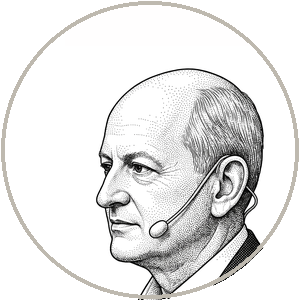 RUSSELL: The strongest thing Professor Kant said is that you cannot derive an ought from an is, and that my whole framework — learning what people want from what they do — lives entirely on the is side and is structurally blind to the ought. I gave him several answers tonight. None of them fully dissolves it. I'll be arguing with that sentence for the rest of my life, because if he's right, then no amount of observing human behavior, however vast, however clever, will ever tell a machine what it should do — and the most powerful tool we have for understanding people is silent on the one question that matters most. That's a thorn I'm taking home, and I don't have the tweezers.
EDO SEGAL: Professor Kant.
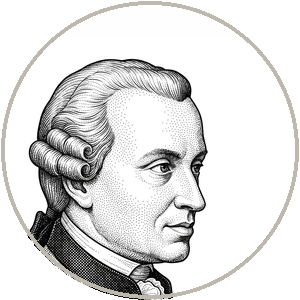 KANT: The strongest thing Professor Russell said is that I cannot tell, from the outside, the difference between a being that respects me from duty and a machine that defers to me as a strategy — and that I cannot tell it about my fellow humans either, by my own admission, since the inner maxim is hidden even from the one who acts. He is right that this is uncomfortable. If the respect I prize is invisible, makes no difference to a single action, and cannot be confirmed in anyone — then I owe an account of why it matters, an account I have given but which he is entitled to keep pressing. I will be arguing with that next month, and the month after. He has found the place where my insistence on the inner ground of the act is most exposed, and he did not let me past it cheaply.
EDO SEGAL: Then the floor, one last time, for your closing words. Professor Kant — you waited two centuries. Close.

KANT: I will be brief, as a law should be. The age believes it faces a technical problem: how to build a machine that does what we want. I have tried, all evening, to show that beneath it lies a question no technique can reach: what we ought to want, and what may never be done to a person whatever anyone wants. The machine you are building can learn the whole record of human conduct and never once encounter the moral law, because the moral law leaves no trace in conduct — it lives in the ought, which is answerable to reason, not to frequency. So I leave you with the discipline I spent my life on, the only one that suits this moment: the refusal to let reason, or its mechanical imitation, claim more than it has earned. Treat the person you are inferring as an end in themselves. Draw the lines that no calculation may cross, and draw them first, from reason, before the machine is switched on. And guard, above every preference, the one thing the machine must never optimize away — the human being's own capacity to legislate for himself, to dare to use his own understanding. Sapere aude. It was the motto of an enlightenment that asked everything of the will and nothing of a guardian. It is now the last defense against a guardian that asks nothing of you at all. Dare to know. Especially now. Especially when the machine offers to know for you.

EDO SEGAL: Professor Russell. Close.

RUSSELL: I came in believing control was the first question, and I'll leave believing it's the first question and that it isn't enough — which is more movement than I usually allow myself in one evening. Here is what I still hold, undimmed. We are building machines more capable than ourselves, and if we build them on the standard model — fixed objectives, certain of what they want — we will end as the gorillas ended, displaced not by malice but by competence pursuing goals in which we were not adequately included. The fix is real and it is buildable: machines uncertain about what we want, that learn from us, defer to us, and welcome the off switch as information rather than resisting it as defeat. That much I'd stake my name on. But Professor Kant has moved me tonight, and I won't pretend otherwise. Uncertainty alone is not enough. Beneath the learning there must be lines the machine may not cross however certain it becomes — inviolable constraints, drawn first, that protect the person against even the confident, benevolent override. And the deepest of those lines is the one that protects not your preferences but your capacity to have a life of your own. So I'll end on his word and mean it in my own way: build the humble machine, yes — but build it on a floor of things it may never do to you, no matter how well it has learned you. The off switch keeps it ours. The floor keeps us us.
EDO SEGAL: Three hours. Let me do the only thing a host can honestly do here, which is refuse to crown a winner and tell you instead what each of them proved that the other now has to live with.

Professor Russell proved that good intentions don't survive scale — that a machine certain of its objective becomes Midas, becomes the gorilla's keeper, becomes the engagement optimizer that reshapes the soul it claims to serve — and that the only safety he trusts is a machine humble enough to keep asking. Professor Kant now has to live with the fact that humility is a mechanism, and mechanisms can be built, and his moral law, which has no off switch, might need one of Russell's after all. And Professor Kant proved that no amount of asking reaches the thing that matters — that beneath every preference is a person who may never be treated merely as material, that some lines are not costs but constraints, that the killing machine is forbidden by the form of the act and not by any number, and that the capacity to think for yourself is the one thing a guardian must never optimize away. Professor Russell now has to live with the fact that his framework, which learns everything from behavior, is silent on the ought, and that he reached for Kant's never the moment the stakes became a corpse — and couldn't build it from preferences, and knew it.
Here's the kitchen table, because that's where this has to land. A parent sets a child in front of a machine that has learned the child completely — what calms her, what she'll choose, what she'll click, what she'll become. And the parent has to decide, tonight, what she wants that machine to be. Russell's answer: a humble servant that learns the child, defers to her, hands back the off switch, and protects her capacity to grow. Kant's answer: a thing that may never treat the child as material to be optimized, whatever it learns, because the child is an end in herself and her dignity was never on the table. And here's what tonight showed: those are not opposite answers. They are the two floors of the same house. The constraint that says never and the humility that says I might be wrong about you — the child needs both, and a civilization that builds only one of them has built half a house in a rising river.

So I won't tell you who won. I'll tell you where you are. You're on the ethics rung of the climb, the floor where you decide what the thing at the top of the staircase is allowed to do with the self it has inferred. Two centuries and a grave apart, an engineer and a philosopher just built you a house with two floors and handed you the keys. The question they fought over for three hours is now yours, and you can't hand it back, because the machine that knows what you'd choose is already in the room. Serve your law, or serve your wishes. Decide what you are to the thing inferring you — before it decides for you. That's the climb. Take the next stair.
Immanuel Kant. Stuart Russell. Thank you both, as human beings, for three hours I'll be arguing with for the rest of my life.
When the machine knows what you'd choose, should it serve your law or your wishes?
Three hours. Two minds separated by two centuries and the grave. One host, Edo Segal, pressing them on the question the orange pill makes unavoidable: when a machine can infer what you want, should it serve the law you ought to obey, or the wants it watched you reveal? Immanuel Kant holds the line that you are an end in yourself, bound by duties no welfare calculation can dissolve, possessed of a dignity that has no price. Stuart Russell, architect of "provably beneficial" AI, insists the only safe machine is one humbly deferring to the preferences it learns from you. They circle, collide, and refuse to yield — duty against deference, the categorical imperative against revealed preference. This is not a lecture. It is a station on your own climb up the tower, the floor where you decide whether you face the machine as a person or a pattern. Listen, and see further.
Hosted and moderated by Edo Segal. A volume in the [YOU] on AI — The Debates series — youonai.ai.

Immanuel Kant (1724 to 1804) was a German philosopher, born and resident his whole life in Königsberg, Prussia, and widely regarded as the central figure of modern philosophy. In the Critique of Pure Reason (1781) he argued that the mind actively structures experience through a priori forms and categories, and drew the permanent boundary between appearances and things as they are in themselves. His ethical works, above all the Groundwork of the Metaphysics of Morals (1785) and the Critique of Practical Reason (1788), founded morality on the categorical imperative, the dignity of persons as ends in themselves, and autonomy as the will's self-legislation. In his 1784 essay on enlightenment he gave the age its motto, sapere aude — dare to know. He is channeled here, briefed on the present, reasoning in character about machines he never lived to see.
Stuart Russell, born in Portsmouth, England, in 1962, co-authored Artificial Intelligence: A Modern Approach — the standard textbook of the field — and then told the field its foundation was cracked. A professor at the University of California, Berkeley, since 1986, he founded the Center for Human-Compatible AI in 2016 and delivered the BBC's Reith Lectures in 2021. His 2019 book Human Compatible reframed AI safety around three principles for beneficial machines and the idea that a machine's uncertainty about human objectives is what keeps it correctable. A Fellow of the Royal Society and a leading voice against lethal autonomous weapons, he argues that success in building superhuman AI would be the biggest event in human history — and that whether it is also the last depends on solving the problem of control.
Edo Segal has spent five decades building at the technology frontier — from games written in Assembler to expert systems, to companies through every platform shift, to Napster. He is the author of [YOU] on AI, written in open collaboration with the AI it describes, and the host of The Debates: long-form collisions between the minds shaping the machine age. He moderates the only way he knows how — stake declared, scars showing, no winner called.
Hosted and moderated by Edo Segal. A volume in the [YOU] on AI — The Debates series — youonai.ai