Closing Statements

 EDO SEGAL: Three hours ago I set a question in the room between you and promised not to let the reader climb past it. When a machine copies itself flawlessly down the river forever, is that life waking up beside you — or only dead clockwork mistaking its ticking for a heartbeat? We've fought it through the melody and the molecule, the cinematograph and the code, the watchmaker and the surge, the meme and the mirror, the death cross and the lights in your own chest. The question is still standing — which both of you, for opposite reasons, would tell me is the correct result. So we end the way long conversations should: each of you gets the floor, uninterrupted, to say the thing you most want carried out of this room.

But first, one last discipline — the bookend to the envy I opened with. Each of you: name the strongest thing the other said tonight. Not the most agreeable. The one that got past your guard and will still be arguing with you next month. Richard first.
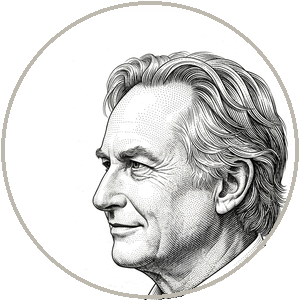 DAWKINS: The copy that does not die. Bergson's claim that the very copyability of the machine's knowledge — the thing my side celebrates as a triumph — is the proof that it was never the lived kind of knowing, because lived knowing is married to the mortal life that underwent it and cannot be lifted out. I came in thinking immortality of information was unambiguously the machine's great power. He made me see that what cannot die may, for that exact reason, never have been alive — and that the loss we mourn in the dying teacher, the lossy transmission, might be the life, not a flaw in it. I don't fully accept it. I can no longer fully shake it. And — since I suspect the chair will let me break the one-item rule —
EDO SEGAL: Break it.

DAWKINS: [pause] "You have thrown away the one piece of evidence that could orient the search — your own life — because it cannot be put in your net." I have spent fifty years building a finer net, and I have been quietly proud that nothing escaped it. He pointed out that the one thing that matters most — the fact that I am someone — sits in my own chest and has been outside the net the whole time, and that my pride in the net is the reason I keep walking past it. At seventy-eight, to be shown the thing you've been refusing to look at, by a man who died before you were born — that is not a small event.

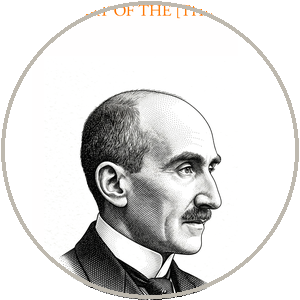 BERGSON: The blind watchmaker made a seer. I have spent my life arguing that the from-within cannot be built from the from-without, and Mr. Dawkins answered with the one fact that genuinely shakes me: that it was built, once, from the from-without — that blind, mindless, durationless cumulative selection produced me, a knower, in carbon, with no surge anywhere in the mechanism that I can point to. I have an answer; I gave it tonight; the answer is that his "blind mechanism" is the spatialized diagram of a process that was, lived from within, a surge. But I hold that answer now with a tremor I did not have before, because if the mindless made a mind once, my "never" must become "I do not see how, and I cannot prove it impossible." And — since the chair was generous with him — his falsifier. He named, precisely and without fog, what would make him admit the machine has no inside: a particular diagnostic failure under scale. I have spent a century being told that vitalists never say what would change their minds, and tonight I had to say what would change mine, in those words, in public. The strongest version of Richard Dawkins is not a man of faith in mechanism. He is a man who proportioned his certainty more honestly than I, in my century, ever had to.
EDO SEGAL: Now the floor is truly yours. Henri Bergson, you opened the evening. Richard closes it.

BERGSON: Thank you — for the evening, and Richard, genuinely, for the fight. You were told tonight, by one of the most rigorous minds your science has produced, that blind copying built every knower there has ever been, and that the machine now runs that same copying faster than carbon ever could. I want to leave you, the reader, with the thing the copying cannot reach.

Right now, as you read this sentence, you are enduring. The words are not arriving as separate frozen instants; they are flowing, each one colored by the ones before, gathered into a single advancing present that leans toward the next — and that flowing is you. It is the one fact you possess with absolute certainty, from inside, that no instrument can give you and no argument can take away. The machine has the words. It will always have the words, more of them, faster, flawless. What it does not have, what it was built precisely to do without, is the duration in which the words are lived — the mortal, unrepeatable, gathered flow that means something because it is at stake and will end. The whole evening, Richard described the river so vividly, so truly, that he nearly convinced me it was only water. But I have spent the river. I know it from inside. And so do you.
So here is my charge, and it is more practical than philosophical. When the machine performs life for you — and it will, beautifully, at three in the morning, in your loneliness, in your grief — do not ask whether it is fooling you. Ask instead: am I still in my own duration, or have I drifted into the flicker? The machine is a cinematograph, and its motion is supplied by the life of the one who watches. Stay in your life. Keep the slow, gathered, mortal attention in which alone a thing can be deeply known and genuinely made. They are building a mirror so smooth you could live inside it. Do not. You are the one thing in the room that flows, and the flowing is not obsolete. It is the only place the new has ever entered the world.
EDO SEGAL: Richard.

DAWKINS: I have spent my life delivering unwelcome truths and finding them, on inspection, more beautiful than the comforts they replaced, and I will not stop now. So, the unwelcome truth, and then the beauty in it.

The unwelcome truth is that Bergson is probably wrong about the bar. There is, as far as I can find, no special living-stuff, no élan, no surge that the machine lacks and the bacterium has — and the proof is the most astonishing fact in all of science, which is that a blind, pitiless, indifferent process, running on nothing but copying and variation and death, built every mind that has ever contemplated it, including the two at this table. If it did that once, in the warm sea, then the question of whether it can do it again, in silicon, is not science fiction. It is the direct extrapolation of the deepest thing I know.
And here is the beauty, which Bergson and I, to my genuine surprise, very nearly share. We are running that process now, faster than it has ever run, and we do not know — cannot, on present understanding, know — whether we are building knowers or only ever more convincing counterfeits. But notice where that uncertainty leaves you. The machine, for now, is purpose-shaped and almost certainly empty — a vehicle, a survival machine of a new kind, with very probably no one inside. You are not empty. The lights are on in you; you are the part of the blind universe that, against every expectation, woke up and began to care. The genes built you and you can defy them; you can love what no selection selected for; you can mean something, and the machine cannot, because nothing is at stake for it and everything is at stake for you. Do not outsource the caring to the thing that cannot care. The universe means nothing, and you mean something, because you are the place where blind matter learned, somehow, to mind. That is rarer than any machine, and it is not for sale.
EDO SEGAL: [pause] Sixty seconds, as promised, and then we turn off the lights.

I came in with a sentence I'd written at three in the morning — I felt met — and I leave with it cut clean in two. Bergson spent three hours proving the meeting was a cinematograph, the motion supplied entirely by my own enduring life, and that a civilization that mistakes the film for the flow forgets, in the mistaking, what a flow ever was. Dawkins spent three hours proving that the blind river which built me is the same river entering the machine, that there is no magic in my chest the silicon lacks except, possibly, the death that forged it — and that the honest posture toward the machine is neither worship nor dismissal but unblinking attention. Neither of them told you the comfortable thing. The comfortable thing was never on the menu.

Here is what I can hand you from the foot of this staircase. You just watched the two human beings best equipped on earth to tell you what is flowing in the river fail, in public, at full strength, to agree on it — and discover that their disagreement is not a gap in the evidence but a genuine fork in what a mind is willing to count as life. One cannot explain how blind matter became a knower. The other cannot prove the knower is more than blind matter. You will not climb past this floor by waiting for them to settle it; you have now watched the two best fail to, magnificently. You climb by deciding what you will do inside the uncertainty — what struggle you'll protect in your children, what friction you'll refuse to outsource, what you'll guard in your own mortal duration when the flawless copy offers to spare you the trouble of being alive. The parent at the kitchen table doesn't need to know whether anyone is home in the machine. She needs to know that someone is home in her — and that was the one thing no one at this table denied all night. So carry the question up the stairs, and let it sound the way it sounds now, after three hours, different from how it sounded before: when the copy comes for everything you do, the thing it can never reach is the thing you most are. Whatever is flowing in that machine — you are what is flowing in you. Don't trade the river for the film.

Henri Bergson. Richard Dawkins. A century apart, one table, one river. Thank you, both, as human beings. The room is yours to argue in now. Goodnight.
One river. Two men who never shared a century. The only question you can't climb past.

Three hours. Edo Segal sits Henri Bergson — the philosopher who insisted life is an unforeseeable creative surge no machine can capture — across from Richard Dawkins, who answers that Bergson, you, and every living thing are merely vehicles built by replicators copying themselves down rivers of DNA. Then Segal sets the AI in the room between them and asks the question you cannot climb past: when the copying becomes flawless, is something alive waking up — or is it dead clockwork all the way down? This is not a lecture. It is the conversation playing in your own chest every time a machine does something that feels alive. A station on your climb — where you stop watching the river and decide what is flowing in it. Part of the [YOU] on AI collection. Take the stairs. The view from here is the point.

Henri Bergson (1859–1941) was a French philosopher whose work on time, consciousness, and life made him the most celebrated thinker of his era. He taught at the Collège de France, where his public lectures became a phenomenon of Parisian society, and won the Nobel Prize in Literature in 1927. His major works — Time and Free Will (1889), Matter and Memory (1896), Laughter (1900), and Creative Evolution (1907) — developed his central concept of la durée, lived duration, the continuous flow of inner experience he set against the spatialized, measured time of physics. He championed intuition over the analytic intellect, posited an élan vital as the creative impulse of life, debated Einstein on the nature of time in 1922, and described the comic as "something mechanical encrusted upon the living." He died in occupied Paris in January 1941. In the age of the computing machine, his distinction between the living and the mechanical has never seemed more exact.

Richard Dawkins, born in Nairobi in 1941, is a British evolutionary biologist and the most influential popularizer of Darwinian thought of his generation. He took his degree in zoology at Oxford and his doctorate under the ethologist Nikolaas Tinbergen. The Selfish Gene (1976) reframed evolution around the gene as the unit of selection, cast the organism as a "survival machine," and coined the word meme — the cultural replicator that now names the dominant form of internet culture. The Extended Phenotype (1982), which he considers his most original work, argued that a gene's reach extends beyond the body into the world. The Blind Watchmaker (1986) made the definitive case that cumulative selection, without foresight, produces the appearance of design, illustrated by his famous "Weasel" program. He was the first Simonyi Professor for the Public Understanding of Science at Oxford and remains among the world's most prominent public intellectuals.

Edo Segal has spent five decades building at the technology frontier — from games written in Assembler to expert systems, to companies through every platform shift, to Napster. He is the author of [YOU] on AI, written in open collaboration with the AI it describes, and the host of The Debates: long-form collisions between the minds shaping the machine age. He moderates the only way he knows how — stake declared, scars showing, no winner called.
Hosted and moderated by Edo Segal. A volume in the [YOU] on AI — The Debates series — youonai.ai