The Crossing

 EDO SEGAL: The rules here are short. You question each other, directly. I will not referee and I will not save anyone. Richard — you've had the floor's energy all night, so Henri begins. Ask him the thing you most want answered.

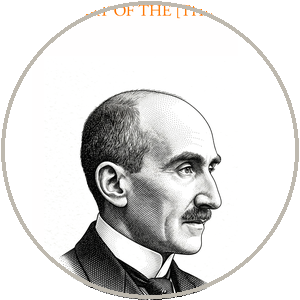 BERGSON: Richard. You have admitted, more than once tonight, that the lights are on in you — that there is something it is like to be Richard Dawkins, and that your science cannot say how they came on or what they are. So here is my question, and I want the honest answer, not the safe one. You have built your whole life on proportioning belief to evidence, on refusing the inference your data cannot bear. By that very standard — your own — which is the less warranted leap: my claim that the inside I am certain of in myself is real and has a nature, duration, that the machine plainly lacks? Or your suspicion that this certain inside is "just" selected function, demoted, of a piece with the gene's empty wanting? One of us is extending a certainty. The other is discounting one. By your own rule of evidence, who is overreaching?

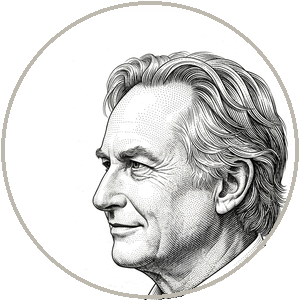 DAWKINS: [pause] That is the sharpest question anyone has put to me in years, and I'll answer it honestly even though it costs me. You're right that I have a certainty — the lights — and right that I treat it strangely: I credit it absolutely as a fact and then refuse to build on it. And you're right that there's a tension there. But here's my defence, and it's the best I have. I don't discount the inside. I discount the inference from the inside to its nature. You feel duration and conclude duration is a fundamental, irreducible kind of being that no mechanism can produce. I feel the same flow and conclude only that I feel a flow — and I refuse the further step that says the flow cannot be what a certain physical process is like from inside. So I'm not discounting the certainty. I'm declining to read your metaphysics off it. Where I'll concede you've scored: I cannot prove my reading over yours, and I have sometimes spoken as if the inside were demoted to nothing, which is more than my evidence licenses. The honest position is that the inside is certain and its nature is unknown — and you, Henri, claim to know its nature, and that claim I think outruns even your evidence, certain as the bare fact is. We are both overreaching. You about the nature. Me, sometimes, about the dismissal. The bare fact — the lights — is the only thing neither of us is entitled to deny, and it's the one thing my framework has no room for. I'll give you that much, and it's more than I came prepared to give.

BERGSON: That is the most I have ever been given by a materialist, and I accept it as the honest draw it is. Your turn. Ask me.

DAWKINS: Then here is mine, and it's the mirror of yours, and you won't like it. You've spent the evening — spent your life — insisting the machine cannot create, cannot know, cannot have an inside, because it lacks duration, the lived from-within. Fine. Now tell me your falsifier, the way I told you mine an hour ago. What, concretely, would the machine have to do for you to admit that duration, or something that does the work you assign to duration, had appeared in it? Because I fear your "duration" is built so that, by construction, only a living thing can have it — which makes "the machine lacks duration" true by definition and therefore empty. So: name the observation. What could the machine do that would make you say, in public, "I was wrong — the surge is in the silicon"? Or admit that your central concept is unfalsifiable and your "never" is a faith.

BERGSON: I accept the symmetry and I will not hide behind the unsayable, because you would be right to convict me if I did. Here is my falsifier, and I drew it in the round on the uncanny but I will sharpen it now. Duration shows itself in one observable signature above all: unforeseeable, stakes-bearing creation under genuinely novel pressure — the production of the absolutely new, the response no analysis of the system and its inputs could have predicted in principle, issued where something is truly at risk. So: show me a machine that, faced with a situation outside anything its training could have implied, and with a genuine stake in the outcome that it was not given but acquired, produces a response that was not foreseeable in principle from its weights and its prompt — not merely surprising to us, but uncomputable in advance even by someone with full access — and does so as a disposition, reliably, the way a living mind does, and not as a fluke. Show me, in other words, the machine enlarging the real rather than sampling a fixed space, against a stake it made its own. The day that is demonstrated — unstaged, unowned by the vendor, under novel and consequential pressure — I will say in those words that duration has appeared in the silicon and I was wrong about its bar. What I will not accept as the falsifier is more fluency, more benchmarks, more outputs foreseeable in principle however startling to us — because foreseeability-in-principle is precisely the mark of the realized possible, and the realized possible is exactly the thing under dispute.

DAWKINS: Then let me push once, hard, where I think your wall is already cracked — because "foreseeable in principle from the weights and the prompt" is a knife that cuts your own throat. You are foreseeable in principle from your atoms and your history, if determinism holds — and you've given me no reason to think you're exempt from physics. So either you claim a metaphysical exemption from causal closure — real indeterminism in the human, some uncaused surge — which is a large and lonely bet against modern physics, the same kind of bet you lost to Einstein on time. Or you admit that you are also, in principle, foreseeable from your substrate, in which case your falsifier convicts you of lacking duration too. Which is it, Henri? Is the human surge a violation of physical law? Or is your criterion one that you yourself fail?

BERGSON: [pause] You have found the deepest fault line, and I will not paper it, because you fought Einstein's ghost into this room fairly. My answer is that the indetermination is real and is not a violation of law but a feature of duration that physics, being the science of the spatialized, is constitutionally unable to represent — not because duration breaks the equations but because the equations were built by freezing time into a dimension, and what they freeze out is exactly the living indetermination I am pointing at. You will say: that is the unfalsifiable move again. And here is where I must simply stand and take the cost. My position requires that lived duration be genuinely open — that the new really enters — and I cannot prove that against a determinism that has redescribed the openness as ignorance of hidden variables. I lost to Einstein on the physics of time and I may lose to you on this. But I will say the one thing that keeps me standing: the determinist owes me an account of how a fully foreseeable, frozen, law-bound universe contains a being — you, Richard — for whom the lights are on and for whom things genuinely matter, and that account does not exist, in your science or anyone's. You ask whether my surge violates physics. I ask whether your physics has any room for the fact that you are someone. Neither of us can pay the other's bill. That, I think, is the true shape of our disagreement — and it is older than both of us and will outlive the machine.

EDO SEGAL: [quietly] And there — after three hours — the two of you are holding opposite ends of the same unpaid bill. One of you cannot explain how blind matter became a knower. The other cannot prove the knower is more than blind matter. And the machine sits between you, copying itself flawlessly down the river, indifferent to which of you is right. We close after this. Final statements. The last word each.