Closing Statements

 EDO SEGAL: Three hours ago I asked whether you are a needy, dying body that keeps choosing to live, or information that could be copied and lose nothing. We've fought it through metabolism and waves, torpedoes and teleporters, the cosmos and the cradle, and the question is still standing — which both of you, for opposite reasons, would tell me is the correct result. So we end the way long conversations should: each of you gets the floor, uninterrupted, to say the thing you most want carried out of this room.

But first, the bookend to the envy question I opened with. Each of you — name the strongest thing the other said tonight. Not the most agreeable. The one that got past your defenses, that you'll still be arguing with next month. Max first this time.
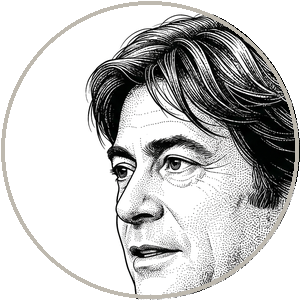 TEGMARK: The cradle and the cosmos. When Professor Jonas said that the worth of the universe is on loan from the few specks in it that are actually alive, and that if you spend the specks to buy more universe you've bankrupted the only funded account — that reorganized something in me. I came in thinking the scale of the cosmic endowment was my strongest card. He made me see that scale is borrowing its entire value from the small number of living things that can actually care about it, and that I'd been treating the collateral as the capital. I don't think he's entirely right. I'm no longer sure he's wrong. And — since I get one more, and the chair will forgive me — "if every builder refused, the thing wouldn't come." I've used "it's inevitable" as a load-bearing beam for a decade. He showed me it's a beam made of other people's evasions stacked on mine. I have to rebuild something now.
EDO SEGAL: Professor Jonas.

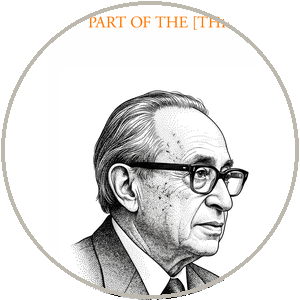 JONAS: [He takes a moment.] The immortal who keeps her vulnerability. Dr. Tegmark asked whether curing aging would kill the soul, and in forcing me to answer he made me find a distinction I had carried my whole life without ever naming cleanly: that it was never death I was defending, but the possibility of loss — and that those are not the same, and that I had let them blur because my own century taught me death too well. He sharpened my own thought against me, which is the rarest gift one thinker can give another, and I am too old to pretend it did not happen. And the second, since he had two: his asymmetry. He took my weapon — the irreversible, the absorbing state — and showed me it cuts on his side too, that refusal is also a wager with an irreversible shadow. I do not accept that the wagers are equal. But I can no longer say his side has none.

EDO SEGAL: Now the floor is truly yours. Hans Jonas — you opened the evening. Max closes it.
JONAS: Thank you — for the evening, and Dr. Tegmark, genuinely, for the fight. You were told tonight, by one of the most rigorous minds of his generation, that you are a pattern — that the meat is incidental, the death is a bug, and the self could be lifted free and made to last forever. I want to leave you with the thing the pattern cannot hold.

When you are afraid — really afraid, the way Edo's dying friend was afraid, the way I was afraid in the years when the men who killed my mother were winning — you are not running a computation. You are a mortal body registering that it could be lost, and the fear is the felt inside of a stake that is genuinely yours, because the loss would be genuinely yours, because there is no backup, no copy, no restore. That fear is not a bug. It is the proof that you are alive — that you are the kind of thing for which the world can go well or badly, which is the only kind of thing for which anything has ever mattered. They will offer you the copy. They will tell you it is you, improved, deathless, safe. And it may even be magnificent. But it will not be afraid, because it will have nothing to lose, and a thing with nothing to lose has nothing to gain, and a thing with nothing to gain or lose is not living a life. It is performing one. Guard the fear. Guard the need. Guard the vulnerability that is the same thing as your worth. You are not a pattern that happens to be running on meat. You are a life — the rarest, most improbable, most genuinely at-stake thing in a universe of magnificent dead matter, and the machines that are coming will be able to do almost everything except the one thing you do simply by being mortal: they will never, ever have to care. You do. That is not your limitation. It is the whole of your dignity.
EDO SEGAL: Max.
TEGMARK: I've spent my career as a physicist looking at the largest things there are — the multiverse, the cosmic endowment, the trillion-year future of a universe that, for now, contains exactly one speck of mind. And I'll tell you what tonight did to that view, because Professor Jonas changed it in real time, which almost never happens to me.

I still believe intelligence is substrate-independent. I still believe the pattern can, in principle, outlast the meat, and that a future in which consciousness spreads through the cosmos is the most beautiful thing physics permits, and worth almost any wisdom to reach. I have not stopped believing the river found a channel that doesn't silt up. But here is what I now hold that I didn't fully hold three hours ago. The pattern is not the point. The caring is the point — and tonight I could not get a clean account of where the caring comes from if not from something like the stake, the need, the vulnerability he's been naming. So I leave with a discipline I'll borrow from him: before we copy anything onto deathless hardware, before we declare the handoff complete, we had better be very, very sure we've carried the caring across and not just the competence — because a cosmos full of brilliant patterns that feel nothing isn't the universe waking up. It's the universe achieving everything and no one being home to know. Professor Jonas thinks that's where my road ends. I'm going to spend the rest of my life trying to prove him wrong by building the one thing that would: a science that can tell whether anyone is home. And if I can't — if it stays dark — then his caution isn't timidity. It's the only adult thing to do at a door you can't see through. Don't sleepwalk through this. Whichever of us is right, something unrepeatable is in the river with us now, and we are, for a little while, the only ones in it who certainly care. Stay awake.
EDO SEGAL: [pause] Sixty seconds, as promised.

I came in asking whether you're a dying body that chooses to live or information that could be copied and lose nothing, and I leave with both halves of the question sharpened past where I could sharpen them alone. Hans Jonas spent three hours proving that the caring is the dying, felt from inside — that a thing which cannot be lost cannot matter, and that the worth of the whole cosmos is on loan from the few mortal specks that can. Max Tegmark spent three hours proving that the pattern is real, that the meat is not holy, that refusing to look is its own catastrophe — and then, at the end, conceding that the pattern is worthless if the caring doesn't cross with it. Notice neither of them told you the comfortable thing. The comfortable thing was never on the menu.

Here is what I can tell you from the staircase, where this debate lives. They began a century apart and they found, live, that their war was never about death — it was about vulnerability, the capacity to be lost, which is the same as the capacity to matter. To the parent at the kitchen table, whose twelve-year-old asked what am I for, that is not abstract. It is the whole answer. She is for the thing the machine can never do: she can be lost, and so she can love, and so she can care whether the world goes well — and that is not a deficiency the river will optimize away. It may be the only thing in her worth amplifying. You cannot climb past this floor by waiting for these two to settle it; you've just watched the best in the world fail to, magnificently. You climb by deciding, under uncertainty, what you will treat as alive, what you will refuse to hand to the deathless thing, and what vulnerable, unrepeatable part of yourself you will guard against being copied into something that cannot grieve its loss. Whether or not the pattern is ever someone, someone is home in you — that was the one thing no one at this table could take away. So carry the question up the stairs, and let it sound different now than it did three hours ago: not can the machine become alive — but will you remember what alive even means, when everything around you can imitate it and only you can actually lose it?
Hans Jonas. Max Tegmark. Thank you. The room is yours to argue in now. Goodnight.
One of these men thinks you are a corpse that computes. The other thinks you are a limitation we're about to escape.

Three hours. Two thinkers who never shared a century. One question that will not let you climb past it: what does it actually mean to be alive? In this long-form podcast transcript, host Edo Segal sits Hans Jonas — the philosopher of the needy, metabolizing, mortal body — across from Max Tegmark, the physicist who insists life is just information that can run on any substrate and shed death like an old coat. They go at the seam where your whole AI moment is decided: is a deathless silicon mind alive, or a brilliant corpse that computes? Jonas says you are a life — the rarest, most at-stake thing in a universe of magnificent dead matter. Tegmark says you are a pattern, and patterns don't have to die. Neither can let the other be right, and by the end they discover their war was never about death at all. It was about vulnerability — the capacity to be lost, which may be the same as the capacity to matter.
This is a station on your own climb. Before you reach the roof and see how far a person can see, you have to know what a person is. Pour a coffee. Press play. Let them fight it out in you.
Hans Jonas (1903–1993) was a German-American philosopher who studied under Heidegger and Husserl, fled Nazi Germany, fought against it in the Jewish Brigade, and lost his mother at Auschwitz. From that catastrophe he built a philosophy of biology — The Phenomenon of Life (1966) — grounding all value in the metabolizing, mortal organism for whom existence is, at every instant, at stake. His Imperative of Responsibility (1979) founded modern technology ethics and the precautionary principle, and gave the world the heuristics of fear and a new categorical imperative: act so that the effects of your action are compatible with the permanence of genuine human life.

Max Tegmark (born 1967) is a Swedish-American physicist and cosmologist at MIT and co-founder of the Future of Life Institute. He made his name in precision cosmology before turning the rigor of physical law onto artificial intelligence. In Life 3.0 (2017) he argued that life is a self-replicating information-processing system defined by what it can redesign, that intelligence is substrate-independent, and that we are approaching the most consequential threshold in the history of life in the cosmos. Our Mathematical Universe (2014) advanced his view that physical reality is, at bottom, a mathematical structure — and that what survives is the pattern.
Edo Segal has spent five decades building at the technology frontier — from games written in Assembler to expert systems, to companies through every platform shift, to Napster. He is the author of [YOU] on AI, written in open collaboration with the AI it describes, and the host of The Debates: long-form collisions between the minds shaping the machine age. He moderates the only way he knows how — stake declared, scars showing, no winner called.
Hosted and moderated by Edo Segal. A volume in the [YOU] on AI — The Debates series — youonai.ai