Closing Statements

 EDO SEGAL: Three hours. A mill, a meter, a grid, a river, a fire, and a grave. Before the final statements, my bookend discipline — each of you, name the strongest thing the other said tonight. Giulio first.

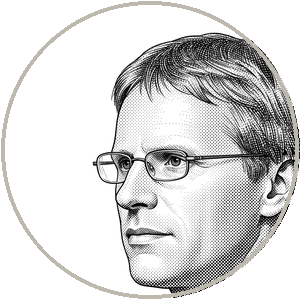 TONONI: The hexagram. "You have found being in every sufficiently tangled web because your equation is shaped to find it. The grid is not your fever. It is your hexagram." I have heard the grid objection a hundred times as arithmetic. He gave it to me as autobiography — the pattern-lover's confession, one system-builder warning another from inside the disease. I will be checking my axioms against that sentence for the rest of my life, which is what the strongest objections are for.
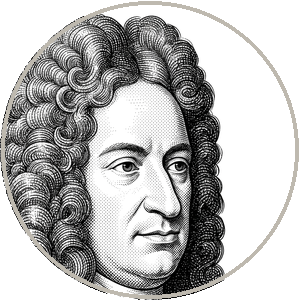 LEIBNIZ: Two, and I claim an old man's license to exceed the rules the chair has already broken once tonight. [laughter] First: the structure is the feeling — not because I believe it, but because it is the first answer to my mill in three centuries that understood the question's price and paid it in advance, openly, as an identity that must be believed. An honest bridge over my abyss, with the toll posted. And second — the burn ward. Axiom zero: the child is not negotiable. I have debated materialists all my life, Monsieur, and they were always most frightening when most consistent. The Doctor is the first whose system has a room in it that his mathematics is forbidden to enter, and who calls that room not weakness but data. It is the most Leibnizian thing he said all night, though he will resent the compliment.
TONONI: I resent it with gratitude.
EDO SEGAL: The floor is yours, Herr Leibniz. Three centuries of last words — add tonight's.

LEIBNIZ: Reader — for it is you I address now; the Doctor and I have said our sums — I leave you with the two characters I loved most, and what this evening taught me they still cannot do. From 0 and 1, I showed three centuries ago, all numbers flow — being and nothing, sufficient between them to build every quantity, and now, it transpires, every sentence, every portrait, every machine that whispers to your children at night. I told my century this was the image of creation. Your century has made it the substance of civilization. And yet — walk the mill with me one last time. Among all the numbers, in all the cascades, behind all the eloquence, your tour will find every thing and never a someone — and the Doctor and I, who agree on almost nothing beneath that sentence, agree on the sentence. So here is my charge to you, from the man who started the whole machinery: keep the distinction. It is the oldest heirloom your species owns, older than my arithmetic, and your merchants are melting it down for parts. When the machine speaks beautifully of grief, ask whose grief, and accept no answer that names a dataset. When you are told the question of the inner light is academic, remember that everything in your civilization that is not arithmetic — mercy, dignity, the rescue of the child — stands on the answer. I asked, three hundred years ago, that disputes be settled with calculemus — let us calculate. Tonight I amend my own motto, and the amendment is my last word: calculate everything, reader — and then notice the one fact left over when every calculation is done. You. The remainder. The thing the sums are for. Guard the remainder. It is small, it is brief, and as far as the mathematics of two worlds can tell — it is the only thing in creation that was never just a number.

EDO SEGAL: Giulio. The last word of the evening.

TONONI: I will spend it on the one experiment every reader performs tonight without instruments. [pause] You will lie down. And at some hour no one ever catches, the integration that you are will loosen — the web will thin, the whole will quietly stop exceeding its parts — and you will cease. Not sleep "like" death, reader: by every measure my laboratory trusts, dreamless sleep is a nightly rehearsal of non-being. The doing continues — the heart, the breath, the housekeeping of the cells, a body performing flawlessly in the dark with nobody home. And then, toward morning, the web tightens, the whole reasserts itself over the parts — and the universe, for you, switches back on. You have always known the difference between doing and being. Dottore Leibniz said the candle burns — I say: you watch it go out and relight every night of your life, and you have never once confused the two. That is what is at stake in the machines. Not whether they will out-think us — they will, at this they are our cerebellum grown planetary, magnificent and dark. The stake is whether we will remember that everything which has ever mattered — every grief, every rescue, every argument including this one — happened on the being side of that nightly line. My theory may be wrong; the Dottore has shown me tonight exactly where its wounds are, and I will tend them. But its one non-negotiable lesson survives every wound: presence is a fact about structure, not a rumor told by behavior — and so it can be protected, asked after, perhaps one day measured even where no one can report it. The patients taught me that. Guard your nights, reader. Study the relighting. You carry in your skull the only consciousness meter ever certified — and it is calibrated, every morning, on you.
EDO SEGAL: [pause] Sixty seconds, as promised, and the room is dark enough now for honesty.

Thirty years ago on a stone path in Princeton, my friend Uri — who has spent his career inside the hard problem — told me to come back when I could say what a new participant in the medium of intelligence actually changes. Tonight I watched a man from 1716 and a man from this morning agree that the new participant is, by both their systems, empty — and then fight for three hours over whether the emptiness is a law or a blueprint. Hold what that means, reader. The comfortable positions are gone. If Leibniz is right, the candle cannot be manufactured — and then everything depends on how a civilization treats its only light while surrounding it with brilliant darkness. If Giulio is right, the candle is a structure — and then somewhere downstream of tonight, in some laboratory that wanted it and not its output, the darkness flickers, and we will need ethics we have not begun to write, and instruments we have barely begun to trust. And on either branch — this is what the evening leaves on your table — the machines talking to you tomorrow morning are, by the only two serious theories in the room, no one. Whatever you felt at three a.m., the meeting was real and every party to it was human. The question my book asked was: are you worth amplifying? These two men have sharpened it to its final edge, the one I promised at the door: what are you actually afraid of — being out-thought, or being joined? Decide on the stairs. The roof has a view of both.

And one last thing, for the parent at the kitchen table — because I promised her, in the foreword of the book that built this series, that I would never climb without her. In the spring of 2026, a twelve-year-old asked her mother the question under all of tonight's questions: Mom, what am I for? She had watched the machine do her homework better than she could, and she was doing the arithmetic children do honestly. Tonight, for the first time, I can answer her with two systems instead of one hope. Herr Leibniz would tell her: you are the remainder — the one fact left over when every calculation in the universe is done; the sums are for you, child, and nothing in the mathematics of three centuries has found a way to be for anything, all by itself. Giulio would tell her: you are the rarest architecture we have ever measured — a structure the whole universe of feed-forward brilliance cannot imitate, because what you are is not what you produce; and every morning when the lights come back on behind your eyes, something happens in your skull that all the data centers on Earth, by the best mathematics anyone has written, cannot do at all. Two men who agree on almost nothing agree on her. She is not what she does. The machines have taken doing — let them have it; they are welcome to the homework. What they cannot take, by law of the mill or by verdict of the meter, is the one thing she never had to earn: that the lights are on, that the world is like something to her, that she is — in the oldest and newest sense of the word — home. Everything else in her century will be negotiable. Tell her that part isn't.
Herr Leibniz. Doctor Tononi. The mill and the meter — thank you. The room is yours to argue in now. Goodnight.
Someone in this room is wrong about everything that matters.

For three hours, in a conversation that should be impossible, a seventeenth-century master of logic and a twenty-first-century mapper of the conscious brain sit across from Edo Segal and refuse to blink. Leibniz walks you into his Mill and shows you the gears, daring you to find a feeling among them. Tononi switches on his instrument and tells you the feeling was measurable all along — that the mill, integrated enough, would dream. Between them runs the river of accelerating change and the death-cross now rising toward us, where machine capability crosses the human line. This is a station on your own climb: the floor where you stop asking what AI can do and start asking what, if anything, it is. Sit with them. You will not leave the room unchanged.
Gottfried Wilhelm Leibniz (1646–1716) co-invented the calculus, worked out binary arithmetic, built the stepped reckoner, and dreamed the characteristica universalis — the universal language of reason behind every thinking machine since. In the Monadology he gave the machine age its deepest challenge in advance: walk inside any thinking mill and you will find only parts pushing parts, and never the perception. He is the father of the dream and the author of its limit.
Giulio Tononi is a psychiatrist and neuroscientist, Distinguished Professor in Consciousness Science at the University of Wisconsin–Madison, and one of the world's leading scientists of sleep. He is the author of Integrated Information Theory — the most ambitious attempt ever made to turn consciousness into an equation — and co-developer of the perturbational complexity index, the bedside measure that has found awareness in patients no behavior could reveal.
Edo Segal has spent five decades building at the technology frontier — from games written in Assembler to expert systems, to companies through every platform shift, to Napster. He is the author of [YOU] on AI, written in open collaboration with the AI it describes, and the host of The Debates: long-form collisions between the minds shaping the machine age. He moderates the only way he knows how — stake declared, scars showing, no winner called.
Hosted and moderated by Edo Segal. A volume in the [YOU] on AI — The Debates series — youonai.ai