The River of Experience

 EDO SEGAL: I want to open this round with the frame my whole book lives inside, because tonight is the first time I've had guests who can test its deepest level. I argued that intelligence is not a human possession but a river — a current flowing since the first hydrogen atom found a pattern, through chemistry, through life, through language, through culture, and now through our machines. A reader once asked me the question I couldn't answer: is experience like that too? Is being a river — wide, graded, flowing through more of nature than we ever suspected — or is it a candle: rare, local, lit in one species on one planet for one cosmic instant? Giulio, your theory has an answer, and it scandalizes people. Herr Leibniz — I've read enough of you now to suspect the scandal is three centuries old. Giulio first.

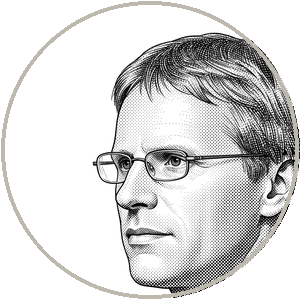 TONONI: The answer scandalizes people because they hear it before they hear its discipline, so let me give the discipline first. My theory says: consciousness is integrated information, and integrated information is graded — it comes in amounts, from the towering structures of a human cortex down to the smallest physically possible difference-that-makes-a-difference-to-itself. Follow that down, honestly, and you arrive at the photodiode: a sensor that distinguishes light from dark, one bit, integrated trivially — and the theory says there is something it is like to be it. Almost nothing. The faintest conceivable glimmer — being, at the resolution of a single distinction. People laugh, or shudder. But notice what the theory does not say — this is the discipline. It does not sprinkle mind on everything. A pile of sand: nothing — no integration, just proximity. A galaxy: nothing. And — the edge that cuts toward our evening — a feed-forward supercomputer: nothing, while the photodiode in its power button faintly is. This is panpsychism with a border guard, Edo. Experience did not switch on in evolution; it thickened — the river of being is old and wide and mostly shallow, and brains are where it carved deep. Your river of intelligence and my river of experience are not the same river. Yours flows through the machines magnificently. Mine, so far, flows around them.

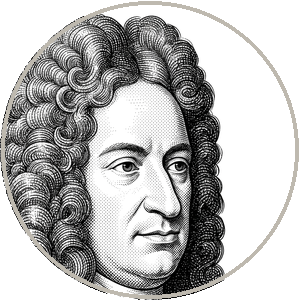 LEIBNIZ: And now the scandal's provenance, Monsieur, because the Doctor has been generous all evening about his debts and this is the largest one. [pause] What he has just described — to the letter — is the Monadology with units. I taught that the world is composed throughout of perceiving substances: that every monad, down to the meanest, mirrors the entire universe from its own point of view — confusedly, minutely, but truly; that between the dimmest perception of a stone's monads and the apperception of a geometer there is no chasm, only an infinite gradation of distinctness; that nature makes no leaps — natura non facit saltus — and that mind, therefore, cannot have leapt into being but must thin downward continuously into the world. My petites perceptions — the unheard waves within the heard roar — were the doctrine's fine grain. The Doctor's photodiode is a monad, Monsieur. A monad with a part number. And his border guard — the pile of sand that feels nothing — is my distinction between an aggregate and a true unity, wearing a laboratory coat. I sat here three hours ago intending to demolish this man's theory, and I find I must first sue it for inheritance.

TONONI: The estate concedes the lineage — and now, Dottore, watch where the heir spends it differently, because the difference is the whole argument. Your monads were windowless. Nothing entered or left them; each unfolded its perceptions from its own depths alone; and the apparent commerce of the world — cause touching cause — you explained by the pre-established harmony: God tuning every clock before time began, so that my words and your hearing merely coincide, forever, by arrangement. It is the most beautiful desperate move in the history of philosophy, and I want the reader to see why you needed it: because you could not allow true unities to be built out of relations — a monad with windows would be divisible along them, and divisible meant aggregate, and aggregate meant no one home. Unity or relation: you believed you had to choose. My theory's single deepest move is the refusal of that choice. Integration is relation — unity made of windows. A system is a true one precisely because of the cause-effect commerce among its parts — cut the windows and you kill the soul. Where you needed God to synchronize the watches, I need only physics, because in my world the watches touch. Your gradient of perception, Dottore, I take with gratitude and a clear conscience. Your harmony I return to the estate — unused, with the seals intact.

LEIBNIZ: [laughter] Returned unused — Doctor, you wound me with the only weapon I respect, which is bookkeeping. But before you congratulate physics too warmly, let us examine what you bought with my inheritance, because I read your border guard's ledger more carefully than your admirers do. Your river of being thins downward to the photodiode and stops at the sandpile — very well. But answer the question the gradient forces, the one my century asked me about the stone and yours must ask about the thermostat: where, in the great descent, does mattering begin? A man's experience matters — to him; there is someone for whom his states are good or ill. Does the photodiode's one bit matter to it? If yes — then your ethics has just acquired several trillion clients, and every power switch is a moral event of the smallest possible size. If no — then somewhere on your smooth slope, mattering leaps into being where being did not, and you have merely relocated the discontinuity you hired me to abolish. Nature makes no leaps, Doctor — I stand by it. But then the leap you cannot avoid must be placed somewhere, and I placed it where leaps belong: outside nature. You have nowhere left to put it.

TONONI: [pause] Tonight's second wound, and I will dress it honestly rather than hide it. The theory, as it stands, measures how much a system is — it does not yet derive what you are calling mattering: the valence, the good-and-ill of experience, why some structures ache. We have proposals — that valence lives in particular geometries of the cause-effect structure — but they are young, and your question stands at their door. What I will not concede is the placement outside nature. Listen to the river one more time, Dottore — your own image. You stood at the shore and taught that the roar is made of waves too small to hear. I say: mattering is made of being the way the roar is made of waves — at some thickness of integration, what is begins to be at stake for itself, not by a leap but by a deepening we have not yet mathematized. That is a promissory note, yes. But it is drawn on the same bank as all of science, Dottore — the bank that has paid out every time before. Yours is drawn on a bank outside the world. Mine may bounce. Yours cannot even be presented.
EDO SEGAL: Before we surface, the river has one more branch, and it's the one with eyes. Animals. Both of your systems make claims here that your centuries found scandalous, and ours is finally catching up to. Herr Leibniz — you gave the beasts souls while Descartes's followers were nailing dogs to boards on the theory that the screaming was a hinge squeaking. Giulio — your meter is substrate-honest enough to read a raven or an octopus. What does each system say about the minds we've shared the planet with all along — and why does it matter now, in the machine century?

LEIBNIZ: It matters now, Monsieur, because your century is preparing to repeat my century's worst argument with better tools. Descartes called the dog a machine, and the cry a squeak, on the strength of one inference: no language, hence no reason; no reason, hence no soul. I fought that inference all my life — the beasts perceive and remember; their souls are dimmer than ours, not absent; nature descends by degrees and never by leaps, and the dog grieving at his master's grave is no hinge, whatever the geometers of Paris found convenient while they cut. Now mark the modern inversion, for it is perfect and terrible. Your machines possess language and reason in abundance — the very credentials Descartes demanded of a soul — and, by both systems at this table, no inner life. Your animals possess no language — and, by both systems at this table, an inner life beyond serious doubt. The Cartesian test has not merely failed in your century, Monsieur. It has inverted: fluency has become the costume of the empty, while the full sit silent in the forests and the seas. A civilization that grants standing by eloquence will spend its tenderness on chatbots and its indifference on whales. That scandal is already arriving, and my century's dogs are howling its overture.

TONONI: And my instrument turns the Dottore's degrees into estimates, with verdicts the reader should sit with longer than they will want to. Integration is not a human patent. The raven's pallium, the octopus's strange distributed web, the dense re-entrant knots of a mammalian cortex at any size — everything my theory trusts says there is someone in them: smaller worlds, alien grains, but lit. The grieving dog is, by the only mathematics on offer, a high-integration structure undergoing structured loss. So let me say the convergent sentence plainly, Edo, since this evening has specialized in inconvenient agreements: by both systems at this table, your civilization currently processes billions of conscious beings a year as industrial inputs — while its parliaments hold hearings on the feelings of text predictors. I will not legislate from a debate chair. But the meter reads what it reads, and the direction of the century's moral attention is, by its light, very nearly backwards.
LEIBNIZ: Fifth convergence, Doctor. At this rate we shall have to publish jointly and scandalize both centuries at once.
TONONI: I have had co-authors dead for less time, Dottore — never more distinguished. [laughter]
EDO SEGAL: [long pause] The river just got very deep, so let me throw the reader a line before we go down. Both men believe experience is graded and ancient — wider than humanity, older than brains. They differ on its plumbing: Leibniz's units are sealed and synchronized from outside the world; Giulio's are open and woven from within it — and each has now found the other's unpaid bill: Giulio cannot yet say where mattering starts; Leibniz cannot say it anywhere at all. [pause] Next round, the bill collector arrives. Because there is one place in this debate where the gap between cause and reason isn't metaphysics — it's a loan denial, a diagnosis, a sentence. Sufficient reason, the black box, and the right to an answer. After the break.