Opening Positions

 EDO SEGAL: Herr Leibniz — the floor is yours. The mill, the monad, the whole argument, as you would make it to this century.
LEIBNIZ: I will make it in three steps, and I will make it slowly, because its reputation has suffered from being quoted more often than understood. [pause]
Step one: the mill itself. Suppose a machine so constructed as to think, feel, and have perception — suppose it, I say, for the sake of argument. Enlarge it, preserving every proportion, until you may enter it as you enter a mill. What do you find inside? Parts that push one another. Levers, gears — or, as I am now instructed, weights and activations, matrices multiplying, values flowing forward through layers. You find figures and motions, and you may trace every one of them, completely, without remainder — and in all that tracing you will never encounter a perception. Not because it is small. Not because it hides. Because a perception is not the kind of thing a figure or a motion is. When you see a face, Monsieur Segal, the seeing is unified, qualitative, present to a single subject — it is someone's. An arrangement of parts is never someone's. It is merely many things, standing in relations. You may know everything about the relations and you have not yet said the one thing that matters: that there is [something it is like to be the machine](https://www.youonai.ai/fieldguide/med/qualia). Therefore — step two — perception must be sought elsewhere: in the simple substance, the true unity, what I called the monad. Not a part, for parts are divisible and minds are not. A genuine one. The mill has the unity of a heap — a unity we lend it by treating it as one thing. The mind has the unity it has. No heaping of parts, I argued and argue still, produces that; aggregation is not the road to unity, it is the name of its absence.
And step three — the step your century needs most, so attend, those of you with shares in the enterprise. [laughter] I am the friendliest possible witness against this machine. I built its arithmetic. I dreamed its purpose. I declared that reasoning is, in great part, calculation — and I rejoice, genuinely, to see how far calculation reaches: further than I dared write even in my most immodest letters. The machine reasons, after its fashion; the dream of calculemus is fulfilled beyond my hopes. And it is precisely because I honor what calculation is that I know what it is not. I severed computation from comprehension with my own hands — my reckoner produced right answers with no one inside knowing them as answers. Your machines have inherited that severance at a scale I could not have imagined, and fluency has dressed the emptiness in such fine clothes that your civilization is on the point of bowing to its own reflection. Nothing happens without a sufficient reason. The reason your machines speak so well of feelings is that they are woven from the words of creatures who feel. That is reason sufficient — and it leaves the mill exactly as silent as I found it.
EDO SEGAL: Giulio.
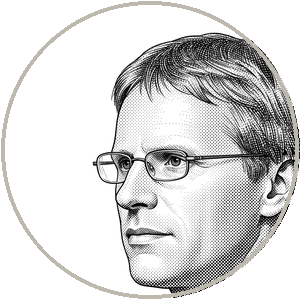 TONONI: That was beautiful, Dottore, and I am going to do something you may find rude: I am going to accept almost all of it, and then take from you the one inference you cannot afford to lose.
I begin where you begin — no, earlier. I begin where every honest theory of consciousness must begin: not with the brain, not with the machine, but with experience itself, the one thing that cannot be doubted because doubting is made of it. Here is what every conscious moment is, from the inside. It exists — intrinsically, for me, not for an observer. It is structured — this scene, with a left and a right, colors and shapes, all at once. It is specific — this experience and no other, ruling out a trillion alternatives. It is unified — you cannot split the seeing of the face into two half-seeings had by no one. And it is definite — one experience, with borders, at a grain, flowing at a pace. Five properties, Dottore. You will recognize the fourth. Your entire metaphysics is an act of fidelity to the unity of experience, and on that fidelity you and I are brothers. Most of my colleagues, for a century, dismissed unity as an illusion to be explained away. You refused. I refuse with you.
Now the parting. You asked: what kind of thing could have such unity? And finding no answer among mechanisms — because in your century mechanism meant gears, meant the push of part on part in a line — you concluded: no mechanism at all; a simple substance; the monad; and then, because windowless simples cannot interact, a pre-established harmony, God synchronizing the clocks. It is the most magnificent epicycle in the history of thought. And it was unnecessary — by one idea, which I have spent my life formalizing. Ask not what the parts are, ask what the system does to itself. Take any candidate whole. Cut it — sever the connections between its parts — and ask: how much of its power to shape its own past and future is destroyed by the cut? If nothing: it was a heap, your aggregate, no one home; my number, phi, is zero. If much — if the whole specifies its own states in a way no partition of it can — then the unity is not lent, Dottore. It is intrinsic. Real. Physical. The system exists as one, for itself, exactly to the degree the cut would destroy. That degree is phi, and my theory's claim — radical, falsifiable, possibly wrong — is that consciousness is that: integrated information; intrinsic cause-effect structure; the whole that exceeds its parts, in an exact and computable sense. You said unity must be placed at the foundation. I agree. I have placed it there — as an achievement of organization, not a gift of God. You said perception cannot be explained by figures and motions. I answer: it is not explained by them. It is identical to a certain shape they make — a shape your walk through the mill could never show you, because a man walking sees parts in sequence, and the thing itself is the irreducibility of the whole.
And the consequences, briefly, because they are the evening. First: the brain's cortex has this structure — densely re-entrant, every region answering every other — and that is where experience lives; the cerebellum, with more neurons but modular, contributes nothing; we have an instrument, born of this theory, that detects consciousness at the bedside in patients who cannot speak, and it works. Second: your mill verdict on today's machines is correct — a feed-forward cascade has phi of approximately zero; it does everything and is nothing; all its functions, as I have written, unroll in the dark. You were right, Dottore, for three hundred years. But you were right the way a man is right who declares no machine will ever fly, while standing in a world that has only built carriages. The silence you found in the mill was a fact about that mill. Build the loops into the matter — make every part constrain every part, really, physically, not in simulation — and the silence ends. The feeling is there, as real as mass, and as measurable. That is my position. The Mill was the question. Phi is the answer. And the difference between us, tonight, is whether the question has answers — or only a silence we furnish with metaphysics.
EDO SEGAL: [long pause] Before the rounds — my opening discipline. Each of you: what do you envy in the other? Herr Leibniz first.
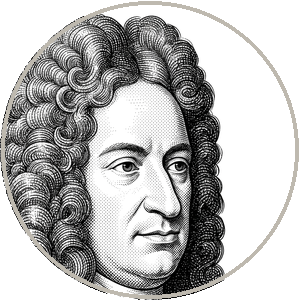 LEIBNIZ: His instrument. [pause] I argued that nothing is without sufficient reason, and then placed the deepest fact in nature — perception — beyond all instruments forever. It has cost me three centuries of being unanswerable, which a philosopher enjoys less than you might suppose. The Doctor wakes each morning believing the question of questions can be measured. I envy him that morning feeling. I had it once — about everything else.
TONONI: And I envy his permission. He was allowed to follow the argument all the way to God and harmony and the best of all possible worlds, and be wrong grandly. I follow my axioms to a photodiode with a sliver of experience and a lattice of gates that may dream, and a hundred of my colleagues sign a letter calling me a pseudoscientist. The seventeenth century punished error with mockery. Mine punishes ambition with the word unfalsifiable. I would have liked, once, to be wrong on his scale.
LEIBNIZ: Doctor — Voltaire mocked me for three hundred years. I forgive him the first two. Your letter-signers will require less patience.
EDO SEGAL: Hold that warmth; the rounds will spend it. We begin where the whole debate lives: inside the mill, on foot. After the break.