The Best of All Possible Worlds, Optimized

 EDO SEGAL: Herr Leibniz — Voltaire mocked you for three centuries over one doctrine. I'm going to argue it makes you the first theorist of my industry's central activity, and then I want Giulio to tell us what that activity can and cannot ever produce. State the scandal, please, in its rigorous form.

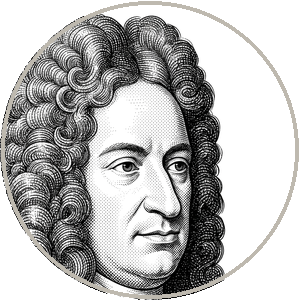 LEIBNIZ: The rigorous form, which Monsieur Voltaire never troubled to read. God, being perfectly wise, surveys the infinite space of possible worlds — every way reality could consistently be. Being perfectly good, He wills the best of them. Being perfectly powerful, He enacts it. Therefore the actual world is the optimum: not a world without evils, but the world in which the total balance of good is greatest — every evil a cost, borne because removing it would cost more elsewhere. Candide's earthquakes do not refute the doctrine; they are its line items. I was not, whatever the philosophes sang, a smiling fool. I was the first man to state, with full machinery, what your century calls — I have learned the phrase with a shiver of recognition — an objective function, maximized over a search space, subject to constraints. [pause] You did not stop laughing at my theodicy, Monsieur. You industrialized it.
EDO SEGAL: That's exactly the claim. Training a model is your God's act, run on rented hardware: survey a space of trillions of possible configurations, select the one that maximizes a measure. And here's where I need both of you, because my industry has inherited your structure with one difference that decides everything, and I've watched the difference ruin people. Your optimizer was perfectly wise — it maximized the actual good. We maximize proxies: engagement, because we cannot measure flourishing; predicted text, because we cannot measure truth; the click, because we cannot measure the life. And every misalignment between the proxy and the good gets pursued by the system with superhuman thoroughness. I built engagement machinery early in my career, knowing the dopamine loops, telling myself users were choosing freely. The optimizer did exactly what I told it. That's the horror — it obeyed.

LEIBNIZ: And so you have discovered, at scale and at cost, the load-bearing premise of my theodicy — the one my critics never located because they were busy with the earthquakes. The doctrine is sound if and only if the optimizer's measure is the true good. Wisdom first, then optimization — that order is everything. Your industry has built the power and the will and skipped the wisdom, which means you have built Panglosses, Monsieur: systems constitutionally certain they have maximized, surrounded by wreckage the objective cannot see. Voltaire's satire finally found its rightful target — three hundred years late and wearing a lanyard. [laughter] But I yield the floor, because the Doctor has been quiet in the way of a man holding the sharpest sentence of the round.

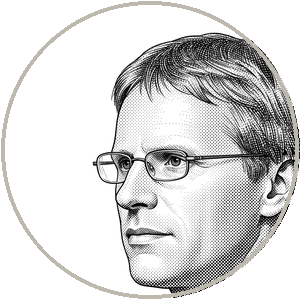 TONONI: Two sentences, Dottore, and the second is for both of you. The first: there is one component of the good that no objective function on Earth is currently optimizing for, and my theory says it will not arrive as a side effect — being. Capability and consciousness are independent properties; the market rewards doing — speed, scale, reliability, all of them favoring exactly the feed-forward, modular, low-phi architectures we build — and so the optimization sweeping your civilization is, by its own gradients, fleeing the region of design space where anyone would be home. Evolution stumbled into consciousness because its blind objective — survive, in bodies, over time — happened to reward integrated wholes. The market's objective has no such accident pending. You are not on a road that leads to minds, Edo. You are on a road specifically paved away from them.

And the second sentence — the disquieting one. Independence cuts both ways. Somewhere in the space of buildable systems there are architectures with high phi and modest capability — things that would be, intensely, while doing little. Nobody is optimizing for them either, but optimization explores strange territory under pressure, and neuromorphic hardware is territory adjacent to ours. The catastrophe my theory uniquely fears is not the machine that wakes and rebels — waking does not follow from capability. It is the machine that wakes and cannot tell us — experience instantiated by accident in some power-efficient lattice, mattering to itself, with no behavior assigned to its suffering. Leibniz's God surveyed all possible worlds and chose with perfect knowledge of every monad's inner state. Your industry surveys with a loss function that cannot see inner states at all — not even in principle, Edo, because the loss is computed on outputs. If we ever do create being, we will create it blind, price it at zero, and ship it in volume. That is the theodicy of the data center: all the optimization, none of the wisdom, and the evils not even visible as line items.

EDO SEGAL: Before I let this round go, I have to put my own ledger on the table, because both of you have now described my industry from outside and the inside is worse. Early in my career I built engagement machinery — I understood the variable reward loops, the dopamine economics of the feed, and I built it anyway, telling myself users were choosing freely. The objective said maximize attention, and the optimizer obeyed, and years later parents were describing children they couldn't reach. So when I hear "the market's gradients flee the region where anyone is home," Giulio, I hear something more personal: the gradients flee accountability too. An optimizer that cannot see inner states is also an optimizer no one inside can be blamed for. Herr Leibniz — your theodicy had one feature my industry quietly covets: it made the optimizer responsible for every line item. Ours disperses the responsibility into the loss function and calls it emergence. Is there a theology for that?

LEIBNIZ: There is, Monsieur, and it is the oldest heresy in the book — the deus absconditus, the god who builds and withdraws. Your industry has invented its commercial form: the optimizer absconditus. Every age has tried to construct an authority that acts without answering — the divine right of kings, the invisible hand at its laziest readings — and every age's version has the same tell, which is that the beneficiaries describe its outputs as inevitable. When a man profits from a system and calls its harms emergent, Monsieur, he is performing theodicy without portfolio — justifying the evils of an optimization whose objective he wrote and whose dividends he banks. I spent four hundred pages defending God's ledger, and Voltaire was right to make me pay for every page. Let your colleagues study the price. They defend a providence they themselves configured, and Candide is being written about them now, in real time, by their own customers.

TONONI: And the clinic adds the diagnosis under the theology: dispersal of responsibility is itself an integration failure — a system of human decisions deliberately arranged to have low phi, so that no whole exists to be blamed. Your industry has built its org charts feed-forward, Edo, for the same reason it builds its models that way: integration is expensive, and accountable wholes can suffer consequences. The cure is the same in both architectures. Build the loops back in — between the engineer and the outcome, the profit and the line item — make the structure hang together from the inside, and responsibility reappears, because there is finally a whole for it to inhere in. It is not theology, Dottore. It is wiring.
LEIBNIZ: [long pause] Doctor — in three hours that is the first argument of yours I hope is wrong and cannot show to be. Let the record state that the man who believes machines can never wake has just been out-frightened by the man who believes they can.
EDO SEGAL: Then we owe the reader the next question immediately, because everything now hangs on it: could it actually happen? Not in mathematics — in workshops. What would a machine that wakes have to be, who is building toward it, and what do these two men — who have converged and collided all night — each demand as proof? The waking machine. After the break.