Nothing Without a Reason

EDO SEGAL: Herr Leibniz, of all your principles, one has quietly become the most practically urgent sentence of our century, so I'll let you reintroduce it — and then I'll show you what we've done to it. Nihil est sine ratione.

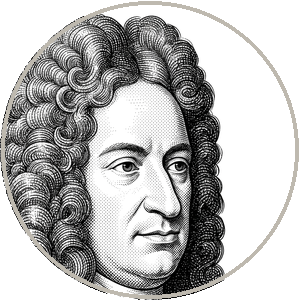 LEIBNIZ: Nothing is without a reason why it is so and not otherwise. I held it as one of the two pillars on which all knowledge stands — the other being that a thing cannot both be and not be. Mark the word reason, Monsieur, because your century has confused it with its poorer cousin. A cause is whatever brings a thing about — the stone falls because it was released. A reason is what renders a thing intelligible — what would satisfy a mind asking why this and not otherwise; what can be stated, examined, weighed, and found just or unjust. A judge who rules against you owes you the second, not merely the first. "The neurons in my head discharged thusly" is a cause. It is not, and can never be, a reason. My principle declared that the universe owes us the second kind of answer everywhere — that reality is intelligible through and through, because its author does nothing arbitrarily. I am told your machines have put my principle under a strain it has not felt since Voltaire.

 EDO SEGAL: Worse than strain. Let me give you this century's version of your falling stone. A woman applies for a loan — or parole, or a kidney. A model declines her. She asks why. And the true answer — the only true answer anyone on earth can give her — is: seven hundred billion weighted operations produced a number below a threshold. Every operation is a cause; the chain is complete, deterministic, auditable in principle. And there is no reason in it anywhere — nothing statable that she could contest, no principle that was applied or misapplied, no why this and not otherwise that a mind could weigh. We have built, at civilizational scale, exactly the thing your principle says cannot exist: consequential events with complete causes and no reasons at all. My field calls the repair effort explainable AI. I've watched it from inside, and I'll say in front of both of you what its practitioners say after the second drink: the explanations are mostly stories we fit to the machine after the fact — plausible narratives about a process that did not run on narrative.

LEIBNIZ: Then your second drink has produced better philosophy than your first, Monsieur, because post-hoc stories fitted to a process that did not run on them — I know that object well. We discussed it in my century under the name of rationalization, and the courts of princes ran on it. But here is what I want the reader to feel before the Doctor complicates it: what is at stake is not a technical nicety. A society is a fabric woven of reasons — the expectation that power must answer why in a currency minds can exchange. Strip the reasons and keep the causes, and you have not built a new kind of administration. You have rebuilt the oldest kind — the arbitrary — and dressed it in arithmetic, which is worse than dressing it in ermine, because ermine can be voted off and arithmetic claims to be nobody's fault. My principle was metaphysics, yes. It was also, I see now, the load-bearing wall of what you call due process. You have been removing it brick by brick and calling each brick efficiency.

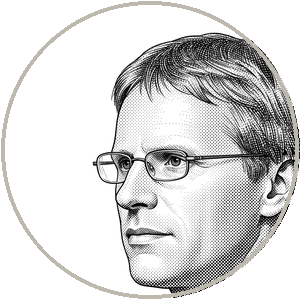 TONONI: And now let me complicate it from a direction neither of you expects — because my science, of all sciences, has something specific to say about the black box. [pause] Edo, your field's despair about explanation rests on an assumption: that the only real description of the model is the causal one — the seven hundred billion operations — and every higher-level account is therefore fiction. My entire theory is a war against that assumption. The lesson of integrated information is that systems can have intrinsic higher-level structure — wholes whose cause-effect profile is not a story told about the parts but a fact that exceeds them, as real as the parts and more relevant. The brain is seven hundred trillion operations, Dottore, and yet there are reasons in it — yours, mine — because the brain's macro-structure genuinely constrains its micro-flux; the whole does work. So the right question about the machine is not "can we tell a story about the weights?" It is: does this system have intrinsic macro-structure — joints that nature, not the narrator, put there? For today's feed-forward models my suspicion is mostly no — which means Edo's drunk practitioners are correct: their explanations are cartography of a country that isn't there. And that yields a verdict I have never said in public: the demand for explainability, pressed honestly, is an architectural demand. You cannot bolt reasons onto a reasonless structure. If your civilization wants machines that owe answers, it must build machines whose wholes are real — and those, by my mathematics, begin to be the integrated kind. Leibniz's principle and my phi turn out to be the same demand at two scales: that what acts upon us hang together from the inside.

LEIBNIZ: [pause] Doctor, that is the first time tonight you have improved my principle instead of merely surviving it, and I will return the favor with a warning from its history. Beware what my principle did to me. Nothing without a reason — pressed without mercy — drove me to conclude that every truth about every individual is contained timelessly in its notion, that the world is the unique best, that freedom must be redefined to survive the architecture. A principle that demands total intelligibility will, if you let it, manufacture the intelligibility it demands. Your phi may carry the same temptation: demanded joints, found joints. The discipline — and here I speak as the burned to the flammable — is to let the world refuse you. Build your integrated machines, Doctor. But when one of them gives a woman a reason for her ruined life, make certain the reason was hers to contest — not merely yours to detect.

EDO SEGAL: Stay one more beat, because there's a human layer under the legal one and I've watched it erode from inside my own industry. Reasons aren't only what power owes the governed — they're how judgment is built. The young loan officer who had to write her reasons down, defend them to a supervisor, watch them fail against reality — that discipline was her apprenticeship; it's where the senior officer's instinct came from. When the model decides and the human merely clicks confirm, we don't just lose the woman's right to contest. We stop manufacturing the people who could. In twenty years, who audits the machine, when no human has practiced the judgment the audit requires?

TONONI: And notice, Edo, that your question and the Dottore's principle are one diagnosis at two timescales. A reason, as he defined it, is what can be weighed by a mind. Your industry is simultaneously deploying decisions that carry no reasons and dissolving the apprenticeships that build minds capable of weighing them — draining both reservoirs at once, the stock and the spring. From the clinic I will add the third timescale, the developmental one: judgment is not information; it is structure — built, like every integrated capacity, by years of effortful, consequential, corrected engagement. There is no royal road to it and no download. A civilization that automates the weighing of reasons does not merely risk arbitrary power, Dottore. It risks raising, for the first time, a generation neurologically innocent of the activity your principle assumed was the human baseline.

LEIBNIZ: Then let the round close with the principle restated for your century, since both of you have improved it. Nothing without a reason — and nothing, henceforth, without a reasoner: a mind formed to demand the reason, equipped to weigh it, and entitled to refuse it. The first half I gave you three centuries ago. The second half, Monsieur, your generation must build on purpose — for the first time in history, against the grain of its own tools.
EDO SEGAL: From the right to a reason to the machinery of the best — because Herr Leibniz, your most mocked idea is about to have its revenge. The best of all possible worlds, the objective function, and the most expensive misunderstanding in my industry. After the break.